
A question from life
Enlarge image
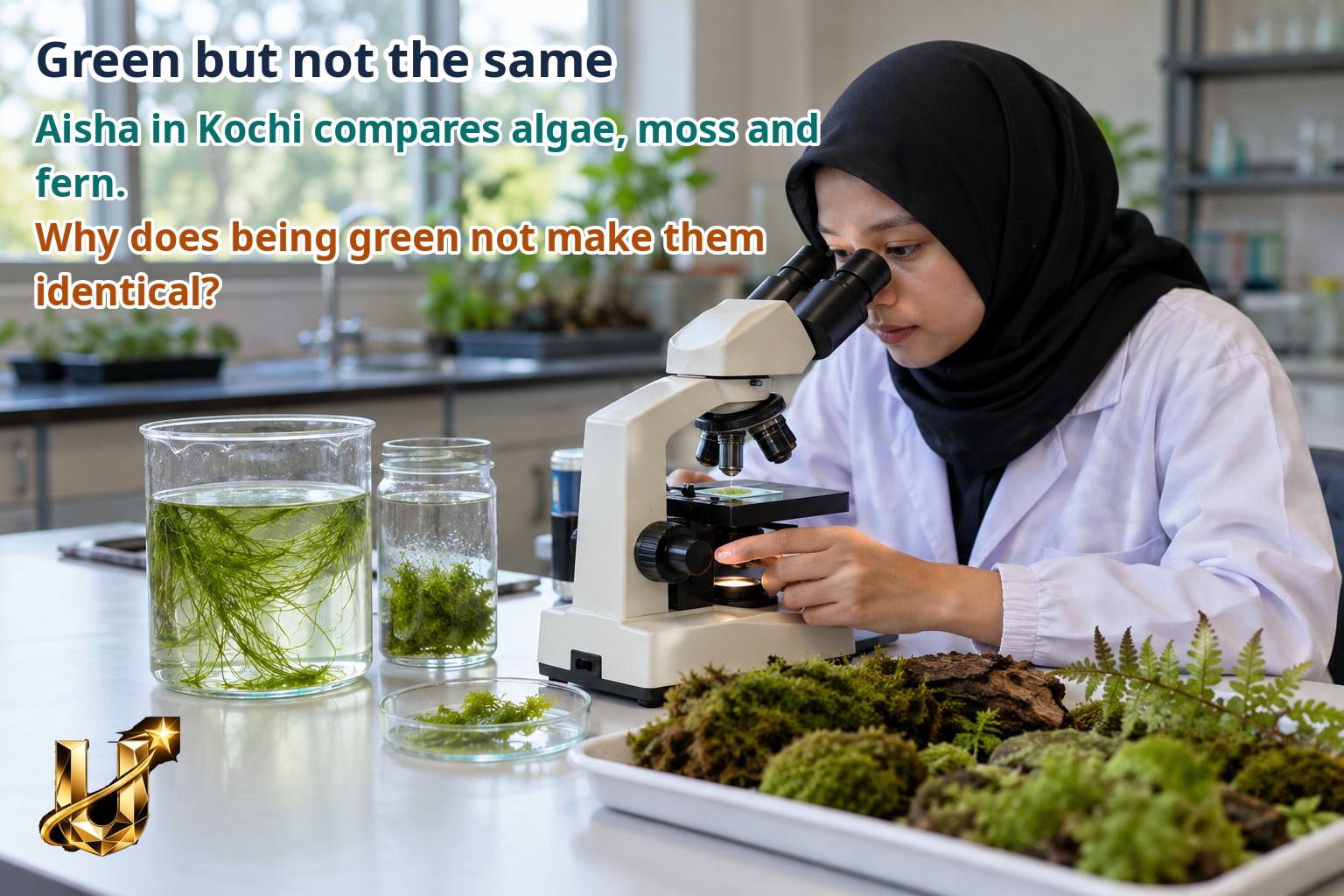
Aisha in Kochi compares pond algae, a moss and a fern. Why does being green not make their structures and reproductive patterns identical?
Working review group 2; official unit label pending
Aisha in Kochi compares pond algae, a moss and a fern. Why does being green not make their structures and reproductive patterns identical?
The haploid generation that produces gametes in a plant life cycle.
Review lesson not available yet.
Aisha in Kochi compares pond algae, a moss and a fern. Why does being green not make their structures and reproductive patterns identical?
The traditional plant-kingdom treatment includes diverse photosynthetic eukaryotic algae. Green, brown and red groups differ in pigments, storage products and organisation. Cyanobacteria are prokaryotes and should not be treated as eukaryotic green algae merely because older names call them blue-green algae.
Prepared diagrams show a leafy moss and a mature fern.
What distinguishes cyanobacteria from the eukaryotic algae here?
Bryophytes such as mosses and liverworts lack the vascular system of ferns and seed plants. Their conspicuous gametophyte supports a dependent sporophyte in the usual model. Motile sperm need a suitable film of water to reach the egg.
A green microscopic sample lacks a membrane-bound nucleus.
Which group has seedless vascular sporophytes in this comparison?
Ferns and related seedless vascular plants have xylem and phloem and a dominant sporophyte. Spores, not seeds, are produced. Many still depend on water for fertilisation. Vascular tissues, seed formation and life-cycle dominance are separate comparison features.
A fern spore germinates into a gametophyte.
Compare prepared algae, moss and fern diagrams using a feature table. Identify dominant phases with supplied labels; do not collect protected plants or unknown pond samples.
Algae, bryophytes and pteridophytes differ in cell organisation, vascular structures and life cycles. Green colour and aquatic habitat are insufficient classifications.