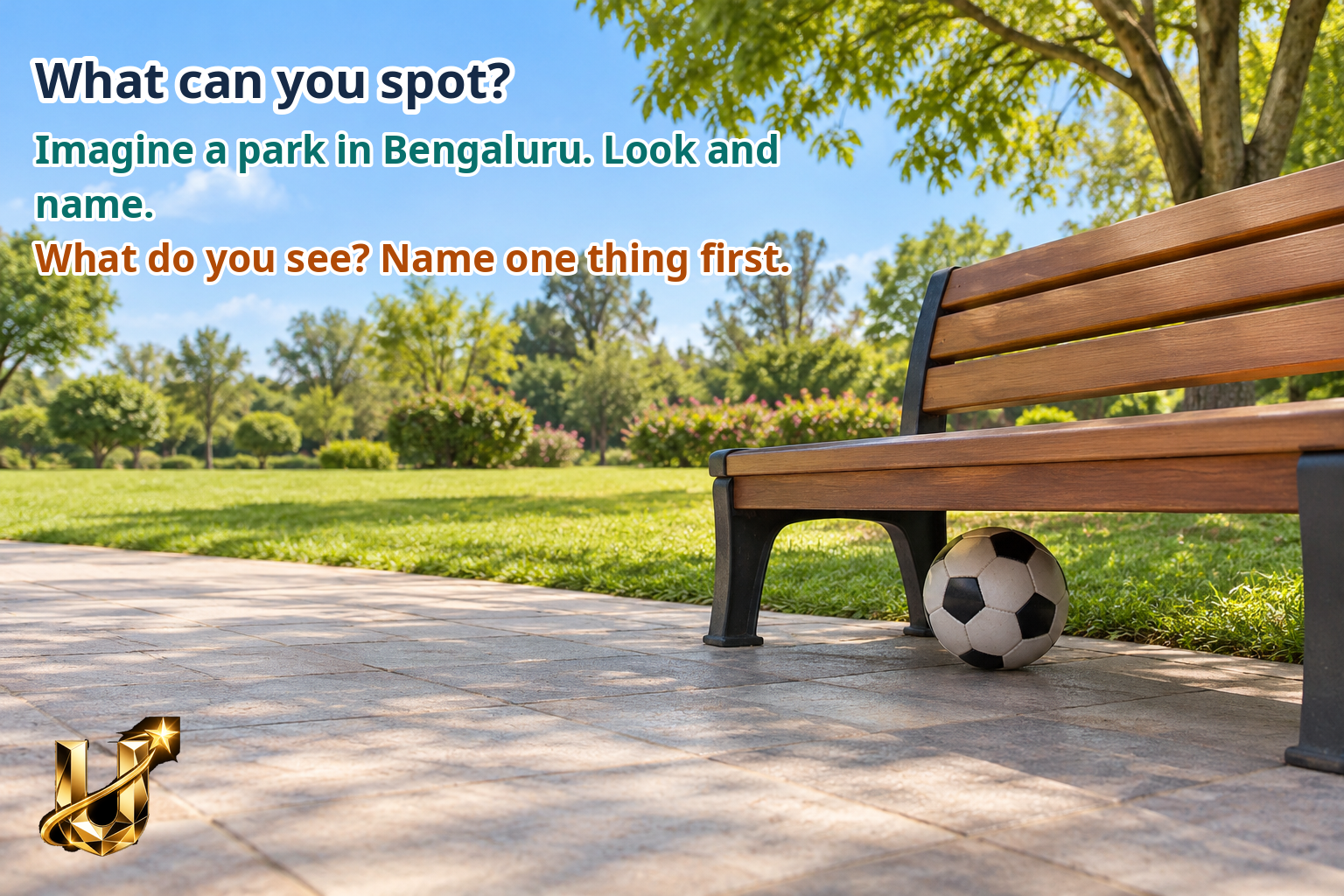
What can you spot?
Open Picture Time, including Fun with Numbers and Five Little Monkeys in your student book with an adult. First use this reading explanation and application. The later original examples practise language separately. Separate original practice context: Imagine a park in Bengaluru. A child sits near a tree. A bird rests on a branch. What would you name first?
Read the book: Picture Time, including Fun with Numbers and Five Little Monkeys
The chapter asks you to name animals in the book picture. Its fish rhyme counts upward and describes letting a fish go. Its monkey rhyme counts down as monkeys fall and bump their knees. Listen for words that rhyme, then use the book pictures to follow the order.
Practise with the book
Notice the two counting directions.
- The fish rhyme goes from one towards ten.
- The monkey rhyme starts with five and ends with no monkeys still in the tree.
- Tree and knee have matching ending sounds.
Name what you notice
A tree. A bird. A child. A bench. A naming word tells us who or what we are talking about. Listen and choose one thing. In a checked picture, use clues around an unfamiliar word. If an adult says bench while pointing to a long seat in the park, the scene helps you work out what bench means. Ask for the word again and check your idea.
Example 1: Name one thing
An adult says: Think of a bird sitting in a tree. What is the animal?
- Listen for an animal word.
- Say: bird.
- Add: This is a bird.
Build a small sentence
This is a tree. This is a bird. The bird is on the branch. Start with one thing, then say something about it.
Example 2: Say where
A ball is under a bench. Where is the ball?
- Find the thing: ball.
- Find the place: under the bench.
- Say: The ball is under the bench.