At the family table
Open The Food We Eat in your student book with an adult. First use this reading explanation and application. The later original examples practise language separately. Separate original practice context: Aisha sits with her family in Hyderabad. The water jug is near an adult. How can she ask for water kindly?
Read the book: The Food We Eat
In the book’s lunch scene, children bring different foods such as idli, paratha, chilla and fruit. One child has no lunch because the child’s mother is ill. Others offer some of their food, and the child thanks them. Share means give part to another person. Families’ foods can differ.
Practise with the book
Which actions show care in the lunch scene?
- The children notice that another child has no lunch.
- They offer food instead of judging the child’s family.
- The reply expresses thanks. An adult guides any real food sharing.
Name familiar foods
Rice. Roti. Dal. Fruit. Families eat different foods. We can name our food and listen respectfully to what others eat. Practise a pretend market conversation: Please may I have two apples? Here you are. Thank you. Two tells the seller how many. No real purchase is needed.
Example 1: Name a meal
Aarav has rice and dal.
- Name the first food: rice.
- Name the second food: dal.
- Say: I have rice and dal.
A polite request
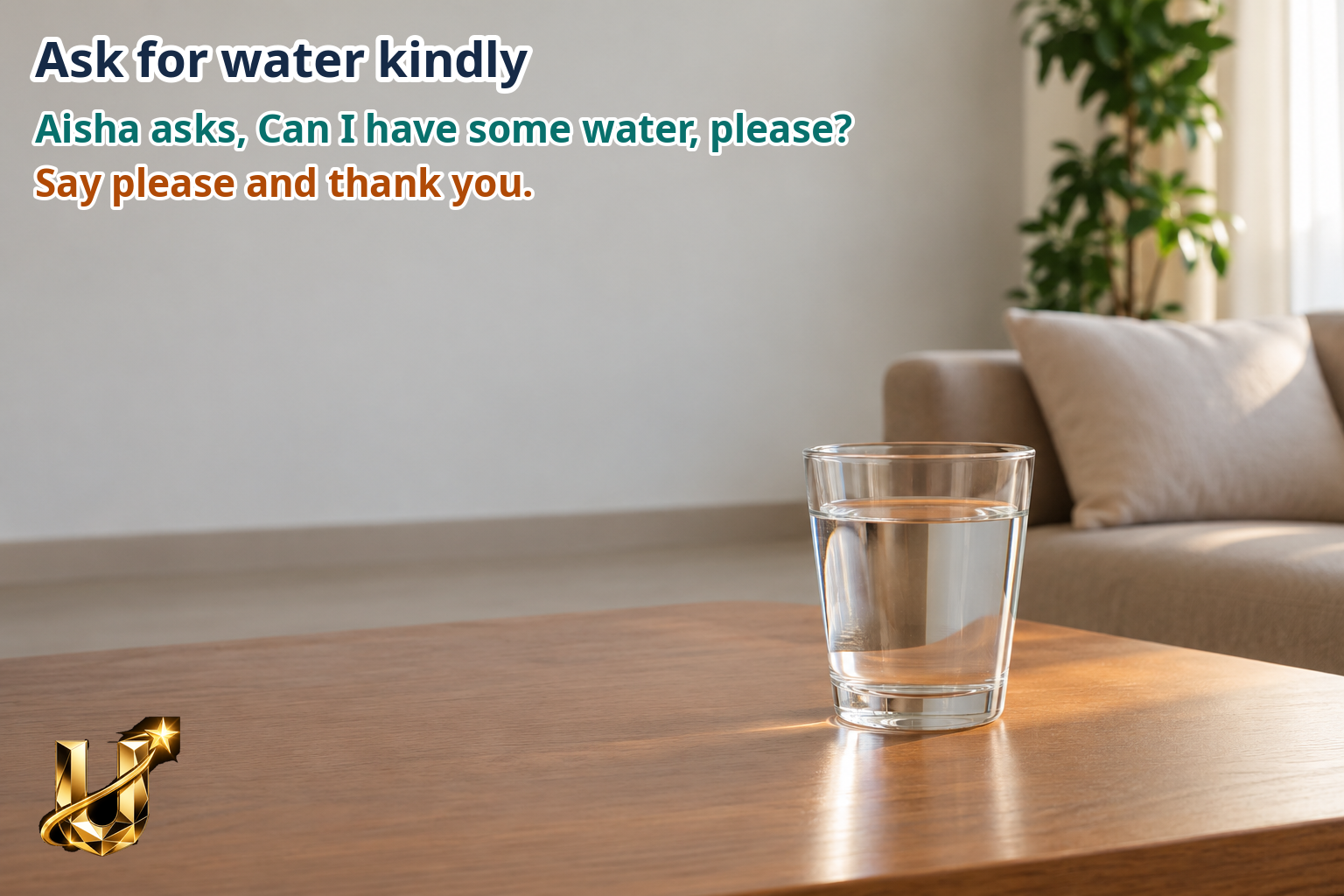
Please may I have some water? Here you are. Thank you. Ask clearly, wait for a reply, and thank the person who helps.
Example 2: Ask for water
The water is out of Aisha's reach.
- Ask an adult: Please may I have some water?
- Wait for help.
- Say: Thank you.
Listen and choose
Which is a polite request?