
Read an original practice text
Enlarge image
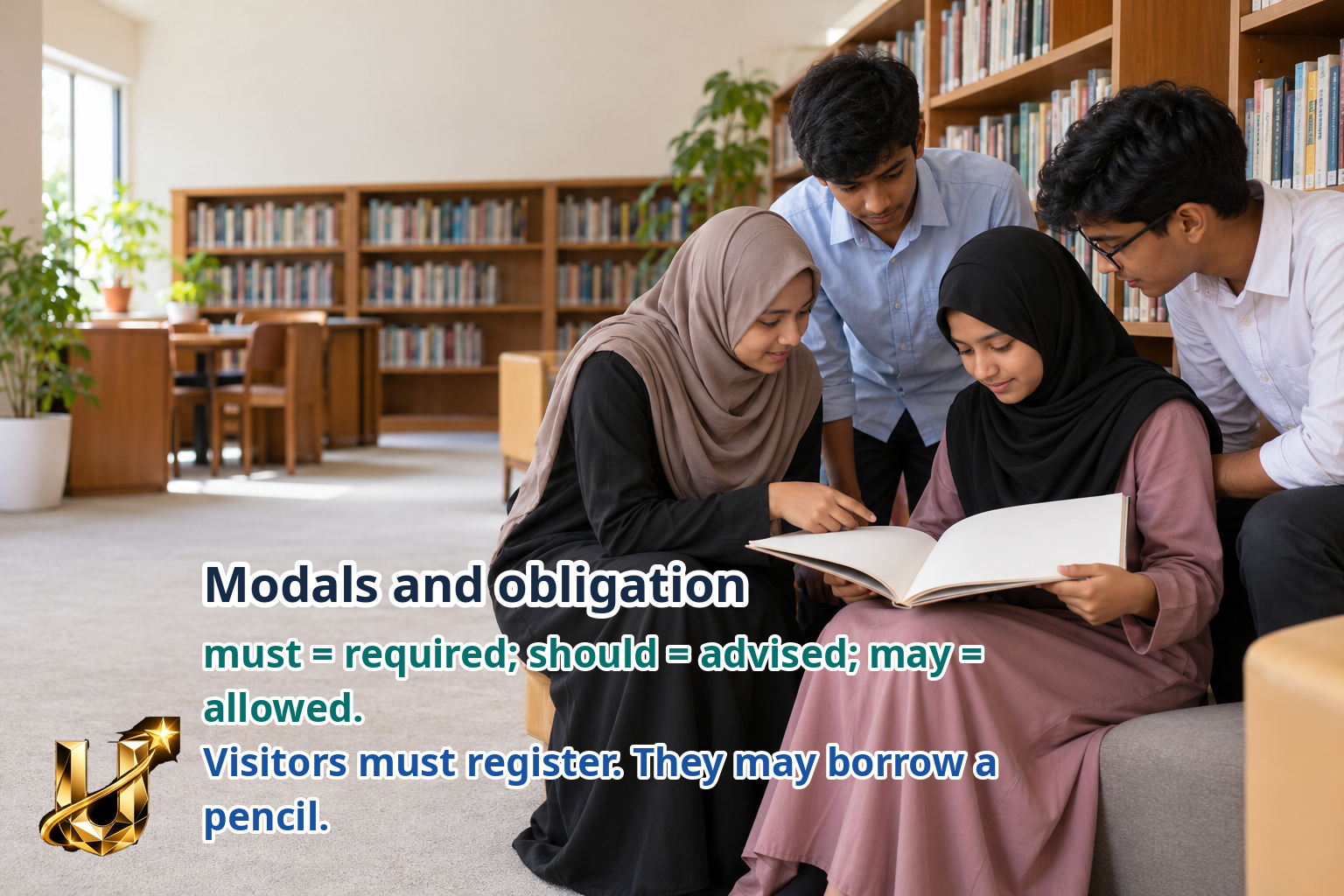
An original Pune notice reads: Visitors must register at reception. They may borrow a pencil. They should return borrowed materials before leaving.
Authored unit 2
An original Pune notice reads: Visitors must register at reception. They may borrow a pencil. They should return borrowed materials before leaving.
The function a modal has in context, such as requirement with must, permission with may or advice with should.
Review lesson not available yet.
An original Pune notice reads: Visitors must register at reception. They may borrow a pencil. They should return borrowed materials before leaving.
Must marks a requirement, may gives permission, and should expresses advice here. A modal's meaning depends on context; it is not simply a tense ending.
First identify a detail stated in the practice text.
Distinguish obligation, permission and advice when interpreting or editing a notice. The notice does not specify a penalty. A claim about the actual named textbook piece requires reading that piece; this practice scene is not its plot. Can can express ability and might possibility in suitable contexts. Must not prohibits an action; do not have to removes necessity. These meanings differ: You must not enter is not the same as You do not have to enter.
Explain what the detail suggests, then show why your wording is appropriately limited.
Which is a directly stated action or textual detail, rather than an interpretation?
A reader writes: May borrow requires borrowing. Evaluate and improve this response using the practice passage.
Which interpretation is best supported by the original passage?
Distinguish obligation, permission and advice when interpreting or editing a notice. Locate evidence, explain its effect or significance, and state what remains unknown. The notice does not specify a penalty.