Read an original practice text
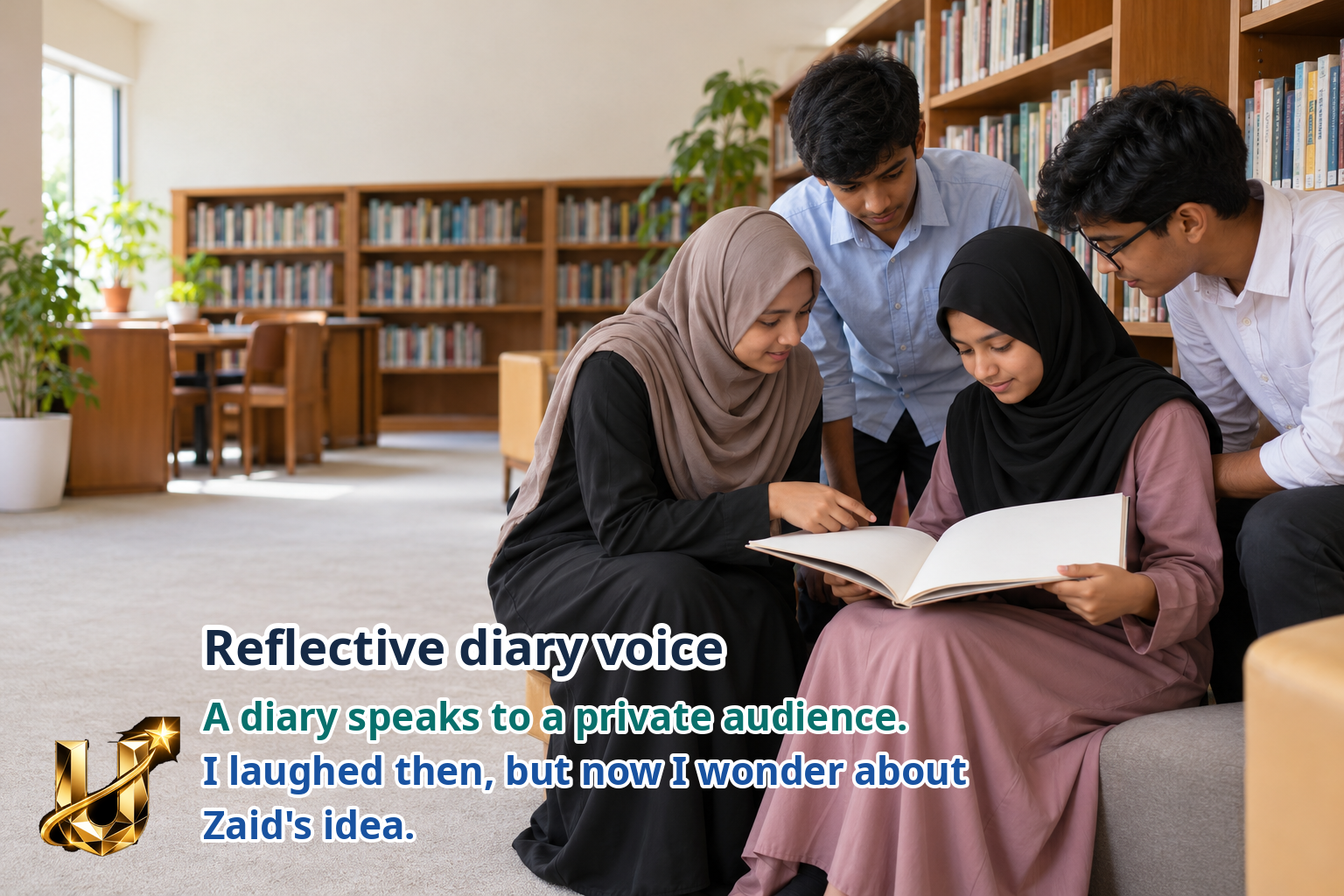
An original diary entry reads: Today I spoke too quickly during our Chennai club meeting. I laughed then, but now I wonder whether I left time for Zaid's idea. Tomorrow I will ask him before presenting mine.
The reading skill
A diary can place the immediate event beside later reflection. First-person voice offers a situated perspective; it does not independently establish what another person felt.
Example 1: Locate evidence
First identify a detail stated in the practice text.
- Read the practice passage again.
- Select the explicit detail: The writer plans to ask Zaid about his idea.
- Keep this observation separate from an explanation of its significance.
Control the scope of a claim
Separate the event, later self-questioning and the proposed next action. Zaid's feelings are not directly reported. A claim about the actual named textbook piece requires reading that piece; this practice scene is not its plot.
Example 2: Make a supported inference
Explain what the detail suggests, then show why your wording is appropriately limited.
- Locate the words supporting the interpretation in the original passage: An original diary entry reads: Today I spoke too quickly during our Chennai club meeting. I laughed then, but now I wonder whether I left time for Zaid's idea. Tomorrow I will ask him before presenting mine.
- Explain what they suggest: The writer reassesses earlier behaviour.
- Keep the conclusion within what these words establish.
Check 1
Which is a directly stated action or textual detail, rather than an interpretation?
Example 3: Evaluate a response
A reader writes: The writer knows Zaid felt angry. Evaluate and improve this response using the practice passage.
- Identify the reading error in this claim: The writer knows Zaid felt angry.
- Test it against the passage using this principle: A diary can place the immediate event beside later reflection. First-person voice offers a situated perspective; it does not independently establish what another person felt.