Read an original practice text
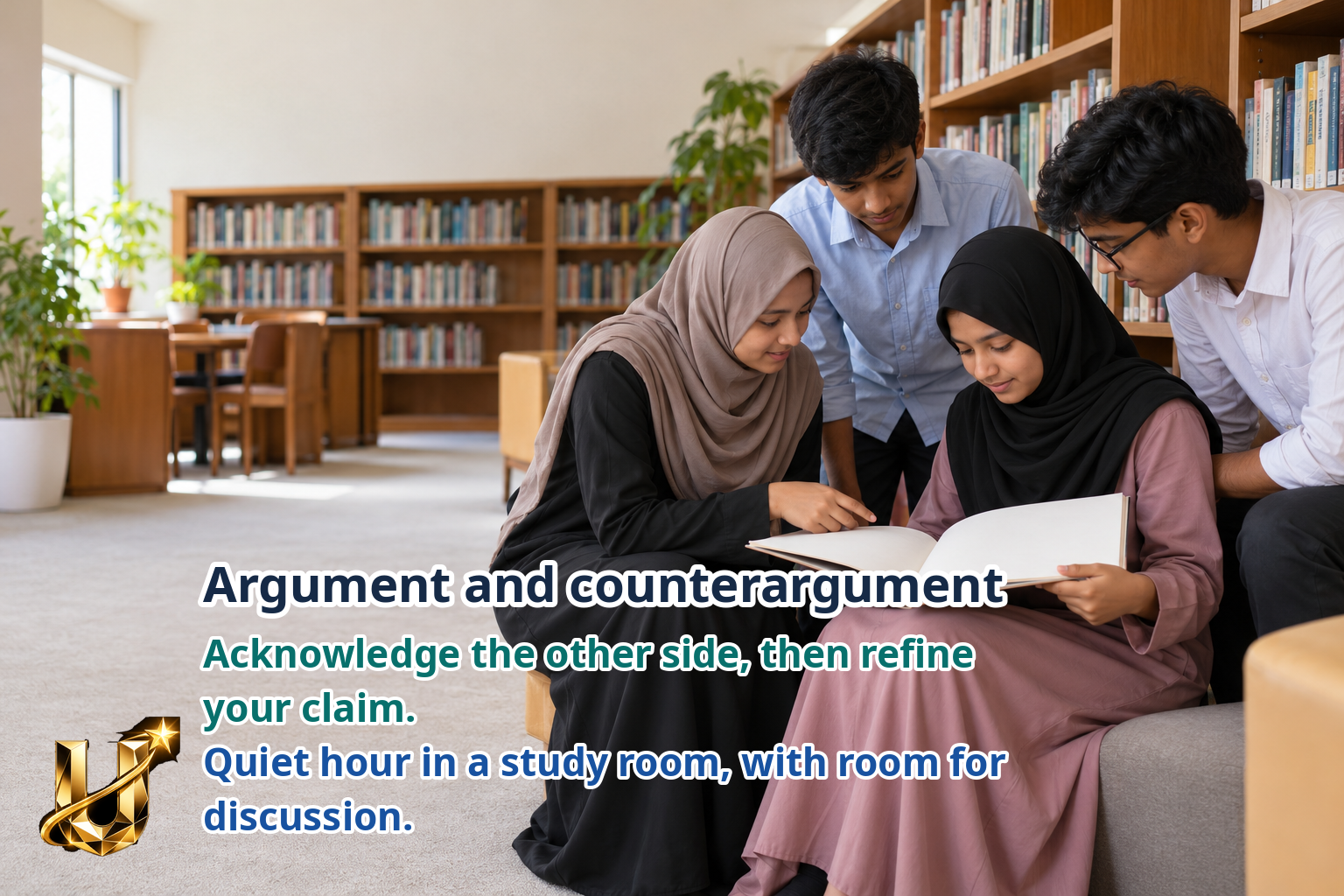
In an original Ahmedabad opinion paragraph, a writer supports a quiet hour in a shared study room. She recognises that group projects need discussion and proposes a separate table outside the quiet zone instead of banning conversation everywhere.
The reading skill
A discursive response can state a position, recognise a competing need and offer a qualified solution. Identifying a counterargument is different from assuming the writer has abandoned the main claim.
Example 1: Locate evidence
First identify a detail stated in the practice text.
- Read the practice passage again.
- Select the explicit detail: The writer supports a quiet hour.
- Keep this observation separate from an explanation of its significance.
Control the scope of a claim
Connect a main claim, a counterargument and the response to it. No evidence about every student's preferences is supplied. A claim about the actual named textbook piece requires reading that piece; this practice scene is not its plot. Current unseen reading includes a 400 to 450 word discursive passage and a 200 to 250 word case-based factual passage. Our short account develops one skill and does not replace these longer tasks.
Example 2: Make a supported inference
Explain what the detail suggests, then show why your wording is appropriately limited.
- Locate the words supporting the interpretation in the original passage: In an original Ahmedabad opinion paragraph, a writer supports a quiet hour in a shared study room. She recognises that group projects need discussion and proposes a separate table outside the quiet zone instead of banning conversation everywhere.
- Explain what they suggest: The separate discussion table addresses a competing need.
- Keep the conclusion within what these words establish.
Check 1
Which is a directly stated action or textual detail, rather than an interpretation?
Example 3: Evaluate a response