Original unit practice
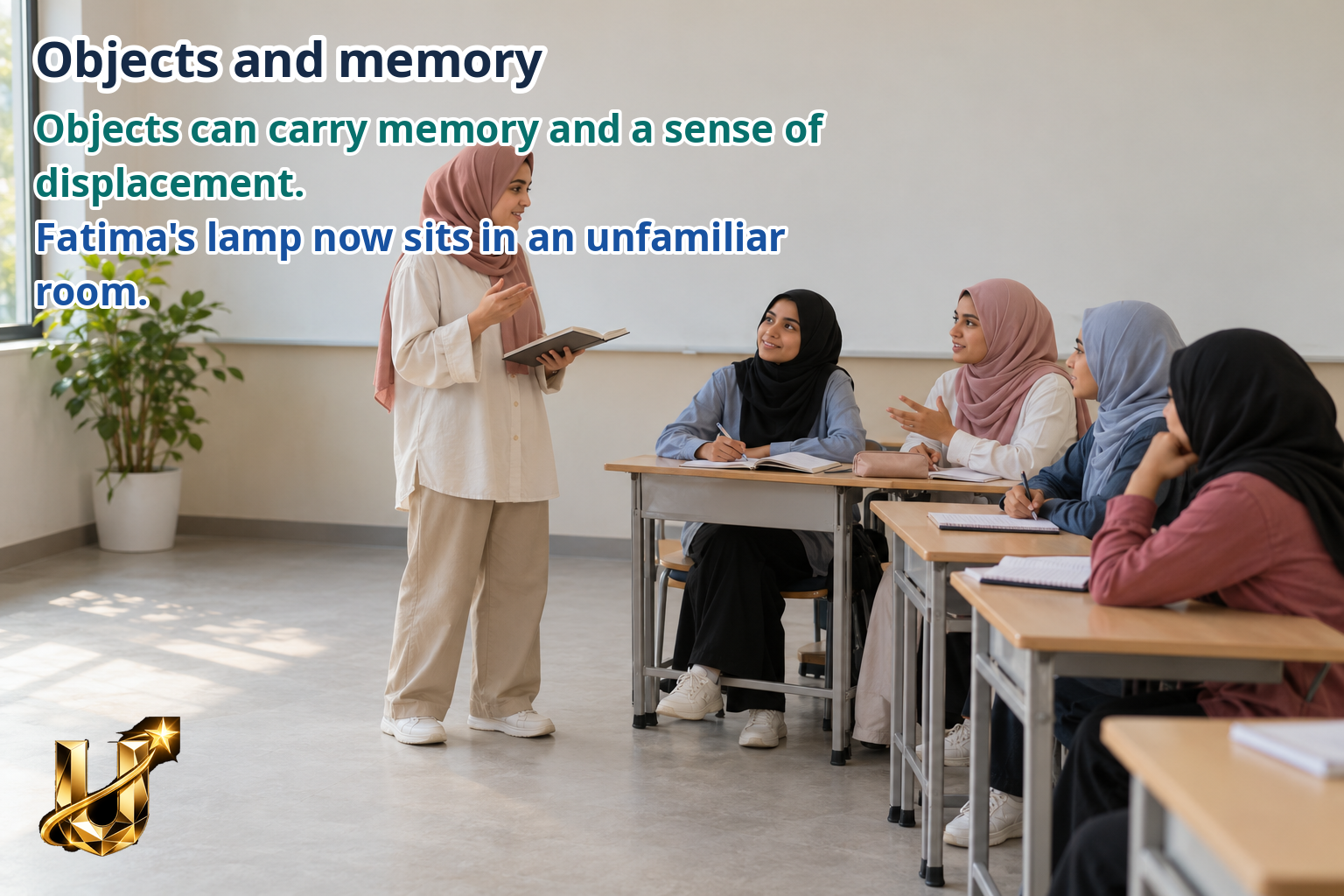
Study The Address in Snapshots. First use the prescribed-reading explanation and worked application. The later original scene is separate practice, not an extract from the reading. Separate original practice context: In an original Lucknow narrative, Fatima returns to a former home after a move. A lamp once stood beside family conversations; now it sits in an unfamiliar room among packed cartons. She reaches for it, pauses, and instead takes a family letter addressed to her. She says the room has kept the object but not the evenings around it. The passage does not explain the move.
Prescribed reading: people, ideas and development
In Marga Minco’s story, a woman returns after the war to the address where Mrs Dorling has taken her mother’s possessions for supposed safekeeping. Mrs Dorling first refuses access. On a later visit, her daughter admits the narrator, who recognises familiar objects in an unfamiliar arrangement. She decides not to reclaim them: recovering property cannot restore the family life destroyed by war.
Prescribed reading: style and words in context
The restrained first-person narration links ordinary household details with bereavement and displacement. Evasive means avoiding a direct response; estranged objects here feel unfamiliar despite being recognisable. The address begins as a possible route to the past and ends as something the narrator wishes to forget. Her decision does not excuse Mrs Dorling’s conduct.
Worked application to the prescribed reading
Why can recognition of the objects intensify loss rather than remove it?
- The objects are physically present, but the home and relationships that gave them meaning are absent.
- Their new setting makes the lost context more visible.
- The narrator’s departure distinguishes recovery of possessions from recovery of a former life.
The Address: Objects, displacement and memory
An object may carry symbolic meaning without having one fixed meaning for all readers. Trace how setting and personal relationships change its significance; support inference with a choice.
Example 1: Identify and apply
Identify an object and its contextual association.