Original unit practice
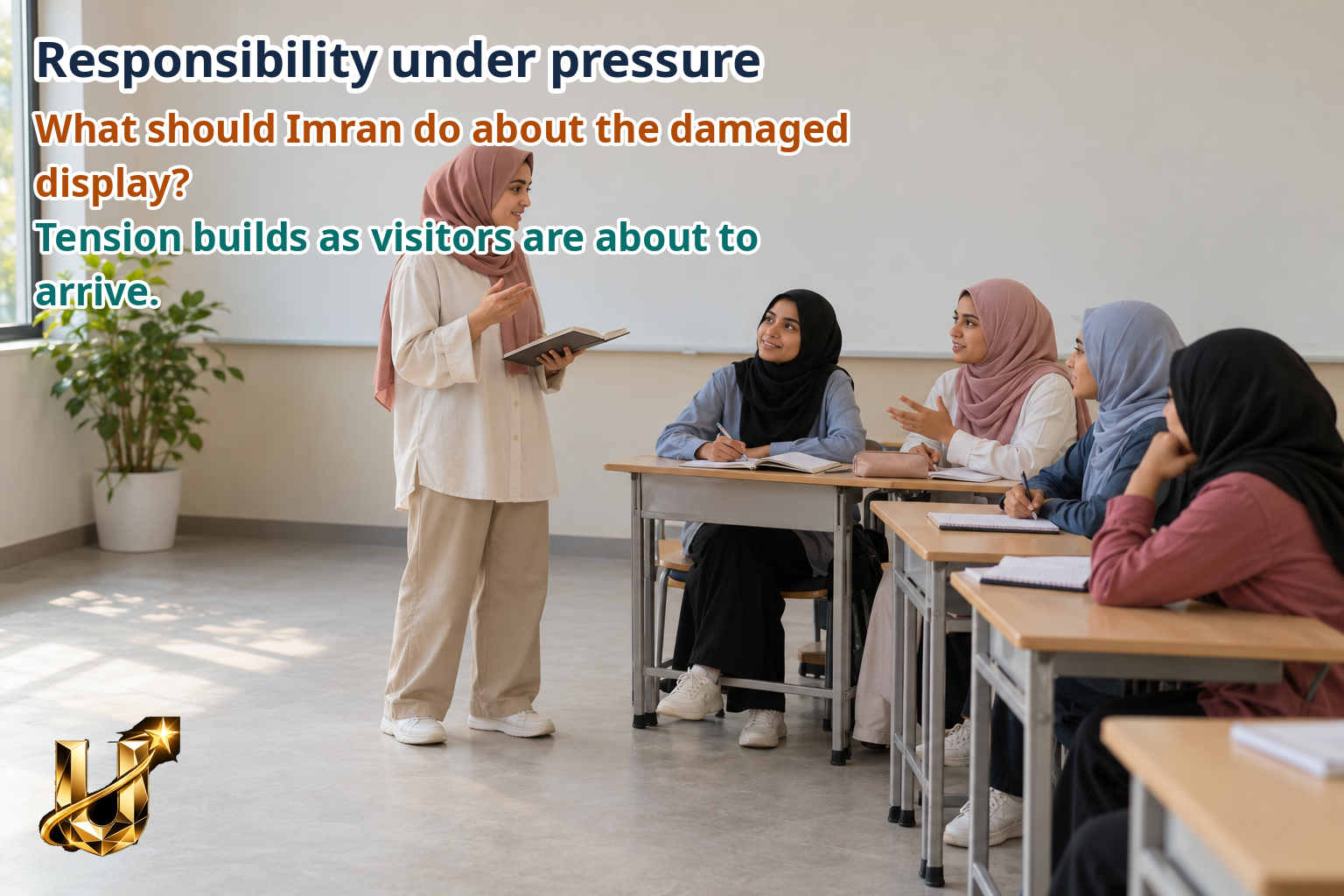
Study Birth in Snapshots. First use the prescribed-reading explanation and worked application. The later original scene is separate practice, not an extract from the reading. Separate original practice context: In an original nonmedical school narrative, Imran finds a damaged exhibition display shortly before visitors arrive. He first tries to steady it with his hands, then stops when he notices a loose support. He checks the instructions and asks an experienced teacher for help. Together they replace the support and test it before opening the area. The report records this repair, not a guarantee about every future problem.
Prescribed reading: people, ideas and development
A. J. Cronin’s account follows the young doctor Andrew Manson attending Susan Morgan after Joe Morgan calls him. A difficult birth puts both mother and newborn at risk. Andrew turns from his personal worries to professional responsibility, first stabilising the mother and then persisting until the child breathes. His relief concerns an achieved act of service, not merely a successful argument about his profession.
Prescribed reading: style and words in context
The narration follows Andrew’s attention and accelerates through the crisis, producing suspense. Listless means lacking energy; premonition means a feeling that something will happen. The story’s period medical procedures are narrative details, not instructions for present-day first aid. The title can suggest both the child’s arrival and renewed professional purpose.
Worked application to the prescribed reading
How does the ending change Andrew’s understanding of his work?
- He begins troubled and tired.
- The emergency requires concentration, judgement and persistence.
- The child’s recovery gives practical meaning to his vocation; the response should identify this change rather than claim he can guarantee every future outcome.
Birth: Professional responsibility and narrative tension
Trace pressure, deliberation and action. Distinguish perseverance from reckless certainty. An outcome can reward a character's effort without proving every similar case ends the same way.
Example 1: Identify and apply