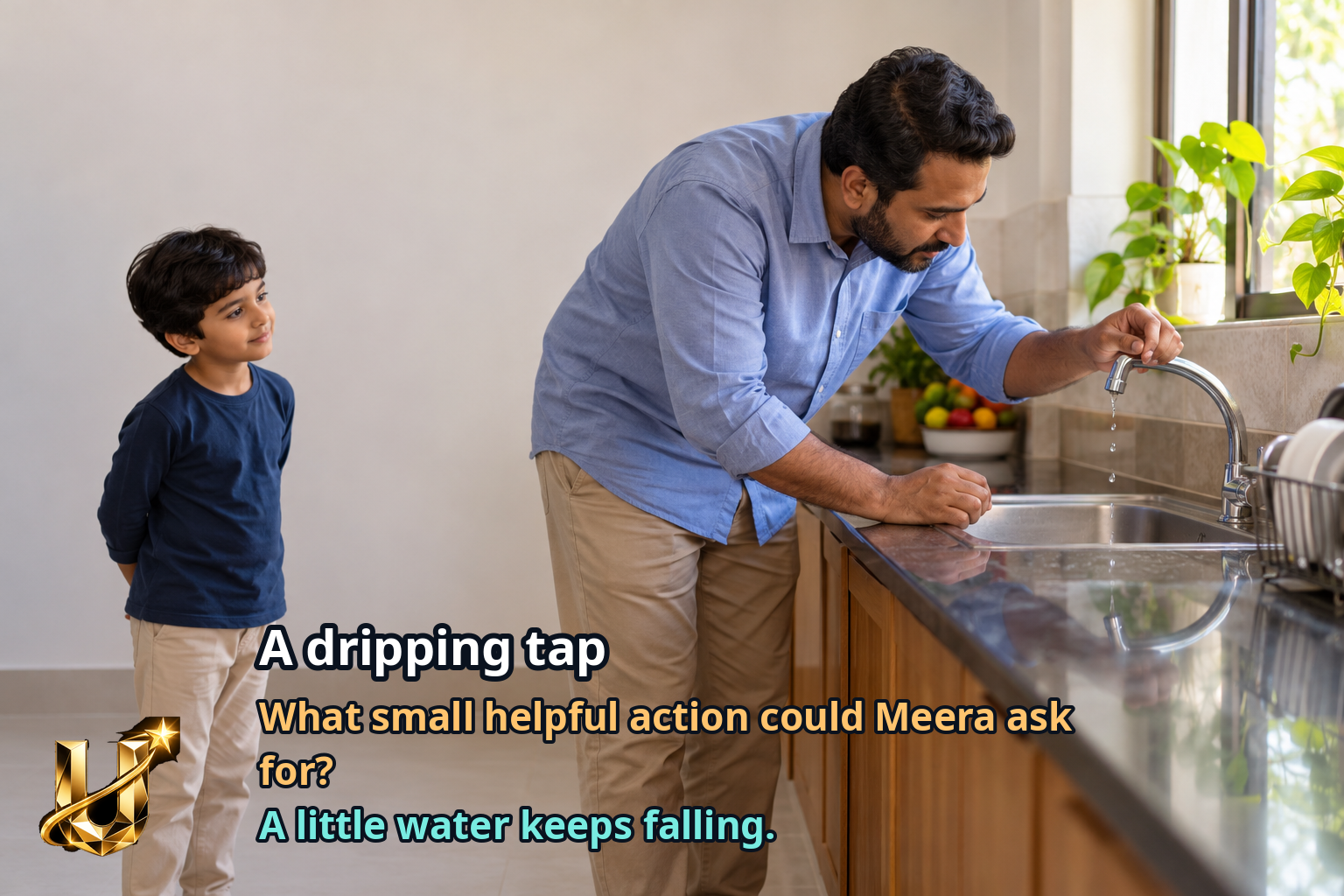
A dripping tap
Open Little Drops of Water in your student book with an adult. First use this reading explanation and application. The later original examples practise language separately. Separate original practice context: An adult notices a tap dripping in a Kochi home. Meera says, A little water keeps falling. What small helpful action could she ask an adult to take?
Read the book: Little Drops of Water
The poem places small drops and grains beside the ocean and land, then turns to small acts and words that bring kindness. Its repeated small-to-large pattern connects physical things with human conduct. Mighty means very powerful or large; pleasant means agreeable. The water theme supports the comparison, but the poem’s concern also includes kindness between people.
Practise with the book
Explain how the two parts of the poem connect.
- Many small drops or grains can form something large.
- Small caring actions can also contribute to happiness.
- The comparison gives value to small contributions without claiming they replace every larger form of help.
Talk about helping
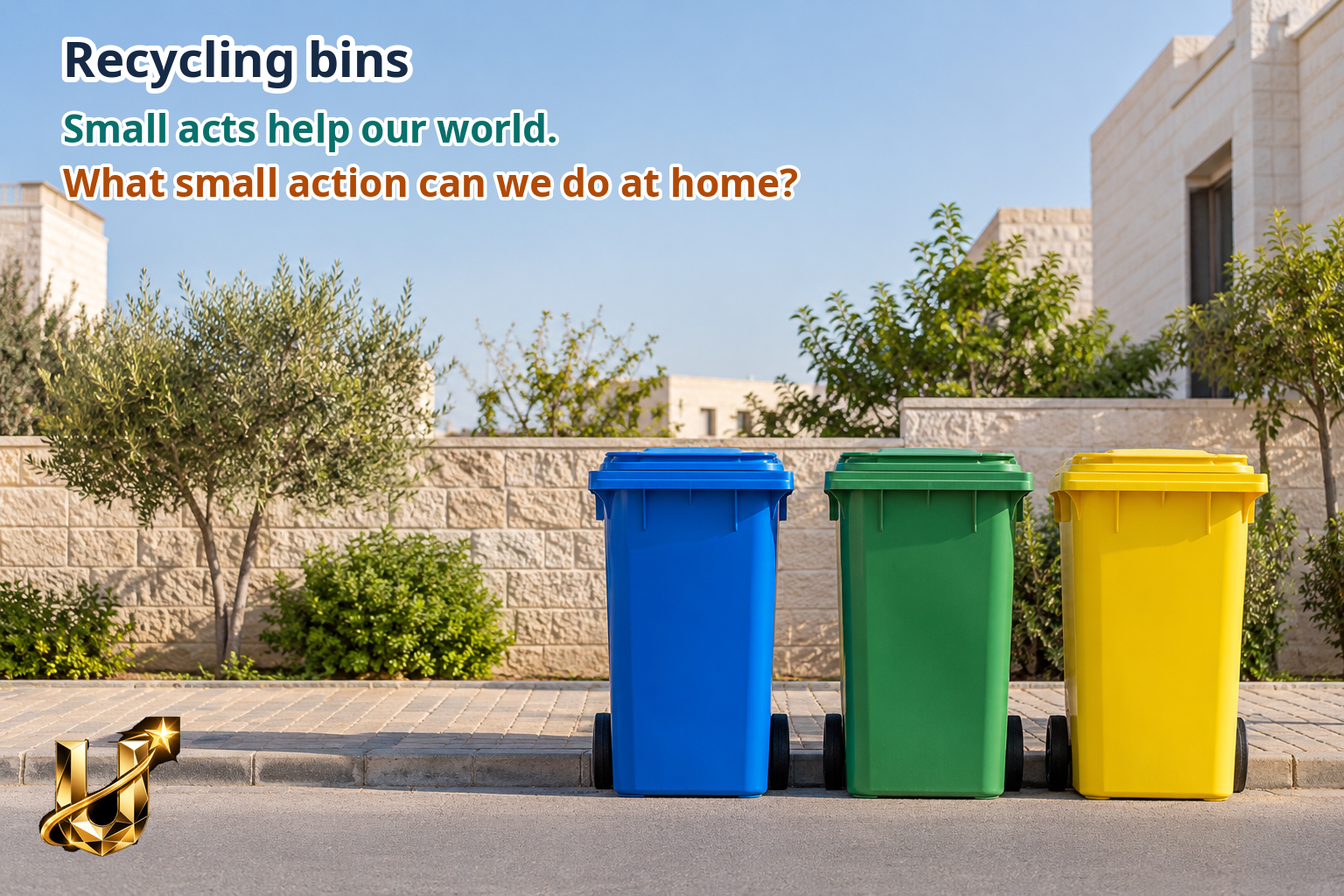
Small helpful acts can add up. Ask an adult to close a tap properly or repair a leak. Put used paper in the right place. These are language examples, not a claim that every problem can be solved by a child. Helpful deeds can show kindness as well as care for water. Invite someone to join a game or listen when they speak. A small action does not replace adult help with a large problem.
Example 1: Ask for safe help
Meera notices a leaking tap.
- She tells an adult.
- She asks: Please can you check the tap?
- An adult handles repairs; the child does not use tools.
Join ideas with and
I close my book and put it away. And joins two related actions. Listen for a rhyme too: drop and stop have matching ending sounds in the model pronunciation.
Example 2: Join actions
Aarav picks up his paper. Aarav puts it in the paper bin.