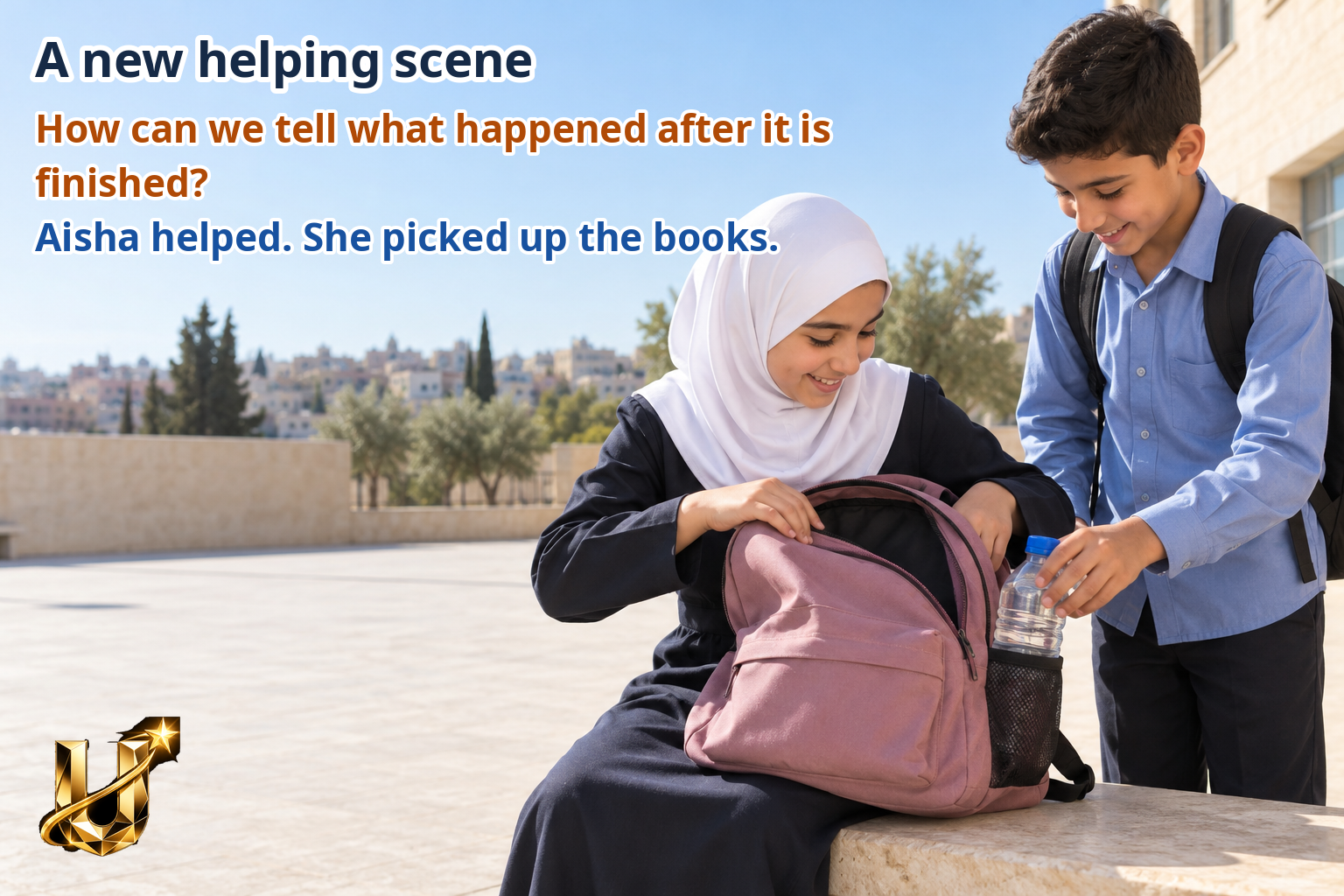
A new helping scene
Open Badal and Moti in your student book with an adult. First use this reading explanation and application. The later original examples practise language separately. Separate original practice context: In our new practice scene in Bhopal, Aisha notices that a friend's bag has opened. She helps collect the fallen books. How can we tell what happened after it is finished? Read the actual Badal and Moti story in your own book separately.
Read the book: Badal and Moti
Badal brings a cold, shivering puppy home and promises to care for him. Later Badal falls into a pit on a muddy route. Moti follows his scent and barks near the pit, helping the neighbours find him and pull him out. Scent means a smell that can be followed; relieved means no longer worried about a danger. Care and friendship connect the two episodes.
Practise with the book
How does Moti help without doing the whole rescue alone?
- His tracking leads the searchers towards Badal.
- His barking alerts them to the pit.
- The neighbours use a rope: locating Badal and lifting him out are different contributions.
Use simple past actions
Today I help. Yesterday I helped. Today I look. Yesterday I looked. For many action words, add ed to tell about a finished event. Some words change differently; do not apply ed to every verb.
Example 1: Change help
Aisha helps now. We describe yesterday.
- Start with help.
- Add ed: helped.
- Say: Aisha helped her friend.
Order a finished event
First, Aisha noticed the open bag. Next, she helped collect the books. Last, her friend thanked her. Noticed, helped and thanked tell about finished events. A statement can tell a finished event: She helped me. It ends with a full stop. A direct question asks something: Where are my books? It ends with a question mark.
Example 2: Order two events
Books fell before Aisha collected them.