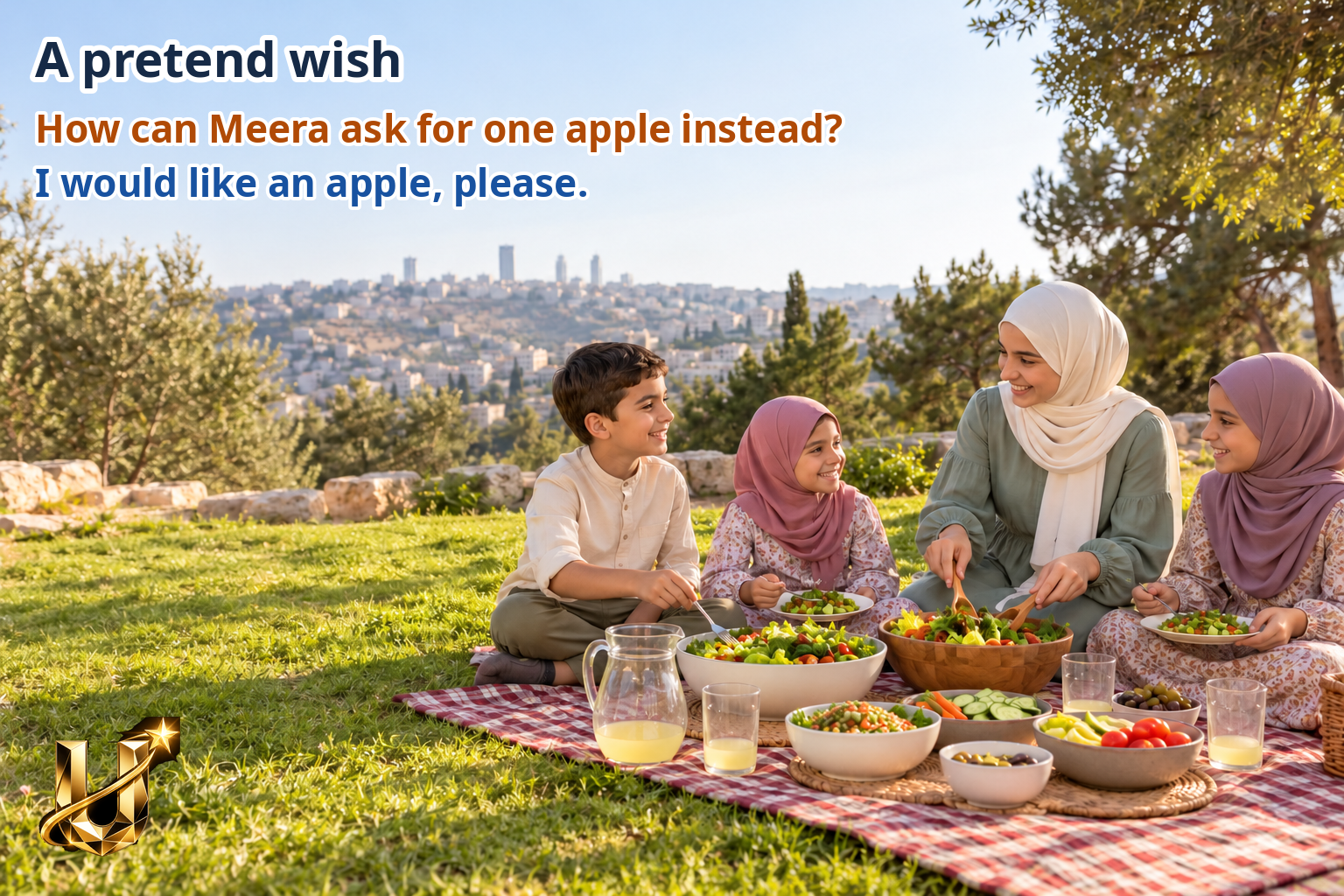
A pretend wish
Open Madhu’s Wish in your student book with an adult. First use this reading explanation and application. The later original examples practise language separately. Separate original practice context: In a new practice scene, Meera imagines a picnic with rice, fruit and water. She says, I would like some rice. How can she ask for one apple instead? Read Madhu's story in your own textbook separately.
Read the book: Madhu’s Wish
Sudha Murty’s story begins with Madhu sharing food with an old man. A magical reward lets him ask a tree for food only. After sweets, fruits and savouries, thirst makes him recognise what his careless wish excluded. He exchanges the food for water. Savouries are salty or spicy snacks; desperate means feeling an urgent need. The magical episode values careful choices and water, not a medical method for treating hiccups.
Practise with the book
What does the warning to think over the wish prepare us for?
- Madhu asks for food and nothing else.
- Later he needs water, which his wording excluded.
- The consequence reveals why he should consider needs beyond an immediate desire.
Use would like
I would like an apple, please. Would like expresses a wish or a polite request. Ask for one whole apple using an apple. Ask for an amount of rice using some rice.
Example 1: Ask for one
Aarav wants one apple.
- Apple is a countable item.
- Use an before its vowel sound.
- Say: I would like an apple, please.
Countable words and amount words
One apple, two apples: we can count whole apples. Rice in a meal is usually named as an amount: some rice. We can count grains when we say grains of rice. The wording changes what we are counting. A need is something important for living or wellbeing; a want is something you would like. A wish can be discussed respectfully. And adds a related idea; but introduces a contrast: I want to play, but I need to rest.
Example 2: Ask for an amount