Useful or beautiful?
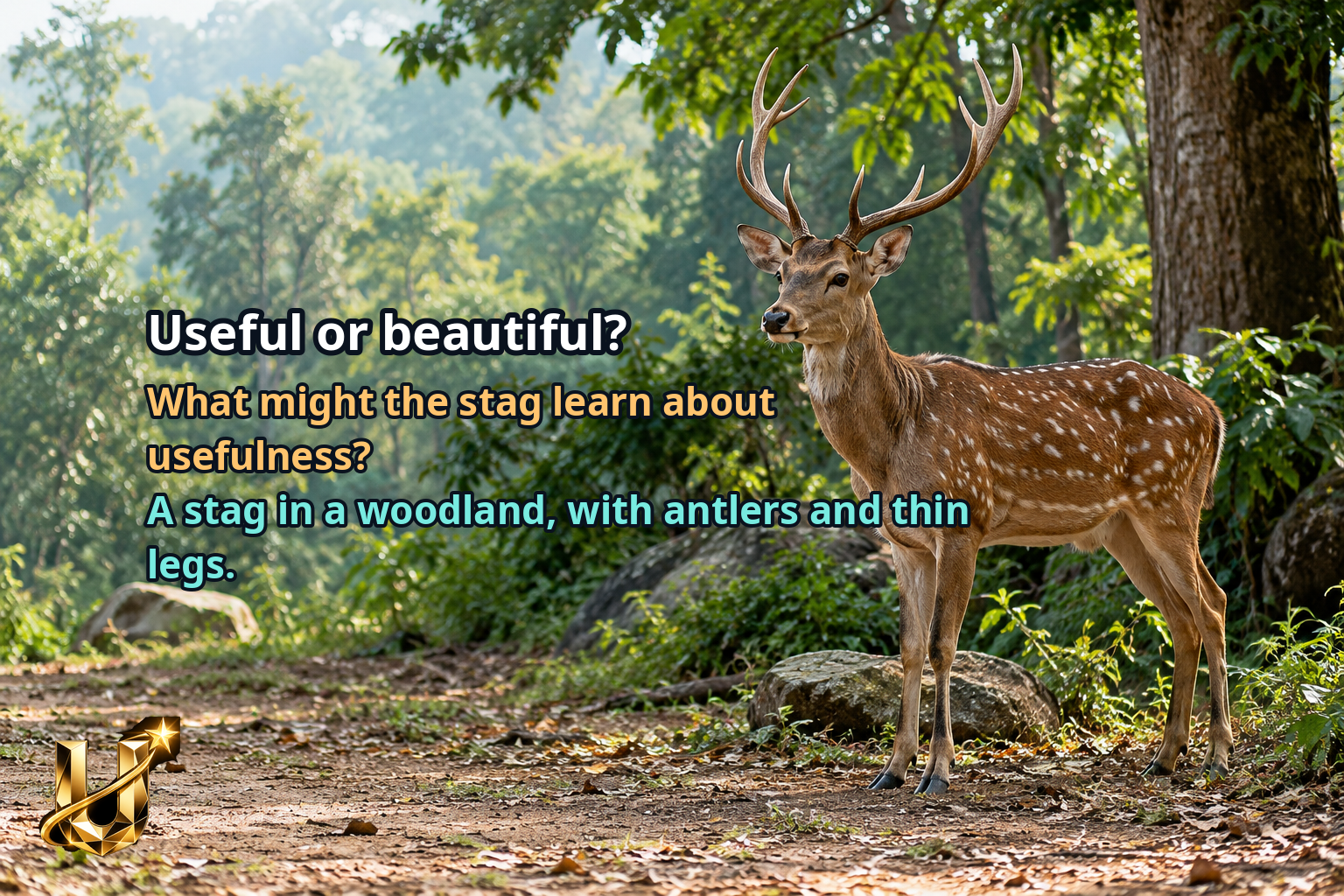
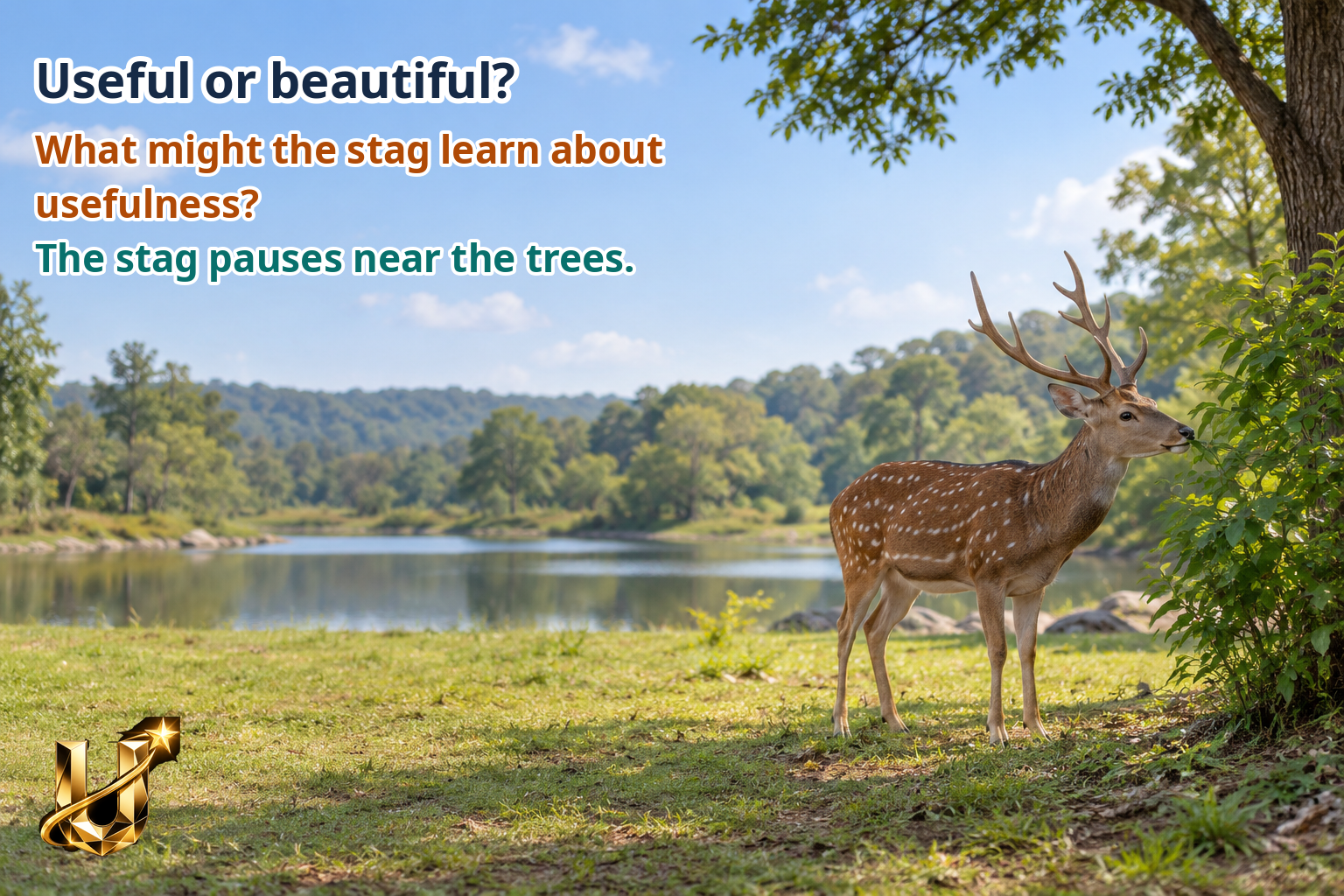
Open The Old Stag in your student book with an adult. First use this reading explanation and application. The later original examples practise language separately. Separate original practice context: In our new woodland story, a stag admires his antlers and dislikes his thin legs. Later, his legs help him move away from danger, while branches catch his antlers. What might he learn about judging usefulness? This is original support for a traditional fable theme.
Read the book: The Old Stag
The old stag is ill and needs the grass around his hillock. Visitors express concern but eat that grass themselves, leaving him weaker. When they recognise the harm, they seek food elsewhere and some bring leaves. Rain later restores the grass, and the stag recovers. Hillock means a small hill; tender grass is young and soft. The later antler-and-legs fable is separate practice, not this book story.
Practise with the book
Why are the visitors’ good wishes insufficient?
- Their words express concern.
- Their consumption removes the nearby food the stag needs.
- Their later conduct becomes more considerate when they stop taking it and help provide food.
Find a view and evidence
A character's opinion is what the character thinks. Evidence is an event that supports or challenges that view. The stag thinks his antlers matter most; later events make him reconsider.
Example 1: Find the first view
The stag admires his antlers.
- That is his opinion at the beginning.
- It is not proof that antlers are always more useful than legs.
- State: At first, he values their beauty.
Some past verbs change
See becomes saw. Run becomes ran. Feel becomes felt. These past forms do not use the regular ed pattern. Use a sentence to keep the meaning clear: The stag saw branches. He ran. A describing word can tell more about a naming word: thin legs. An adverb can tell how an action happens: The stag ran quickly. Not every word ending in ly is an adverb, and some adverbs do not end in ly.