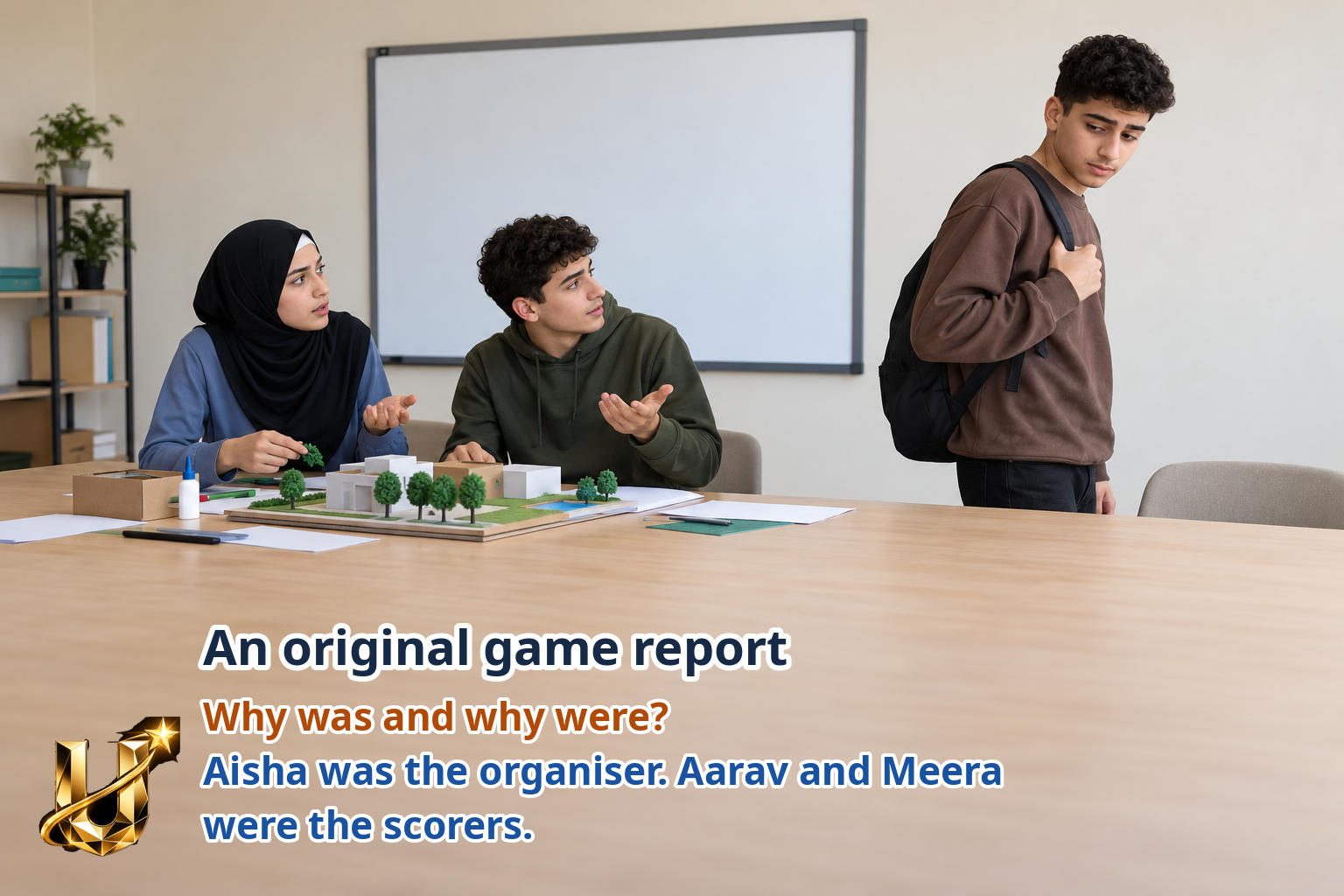
An original game report
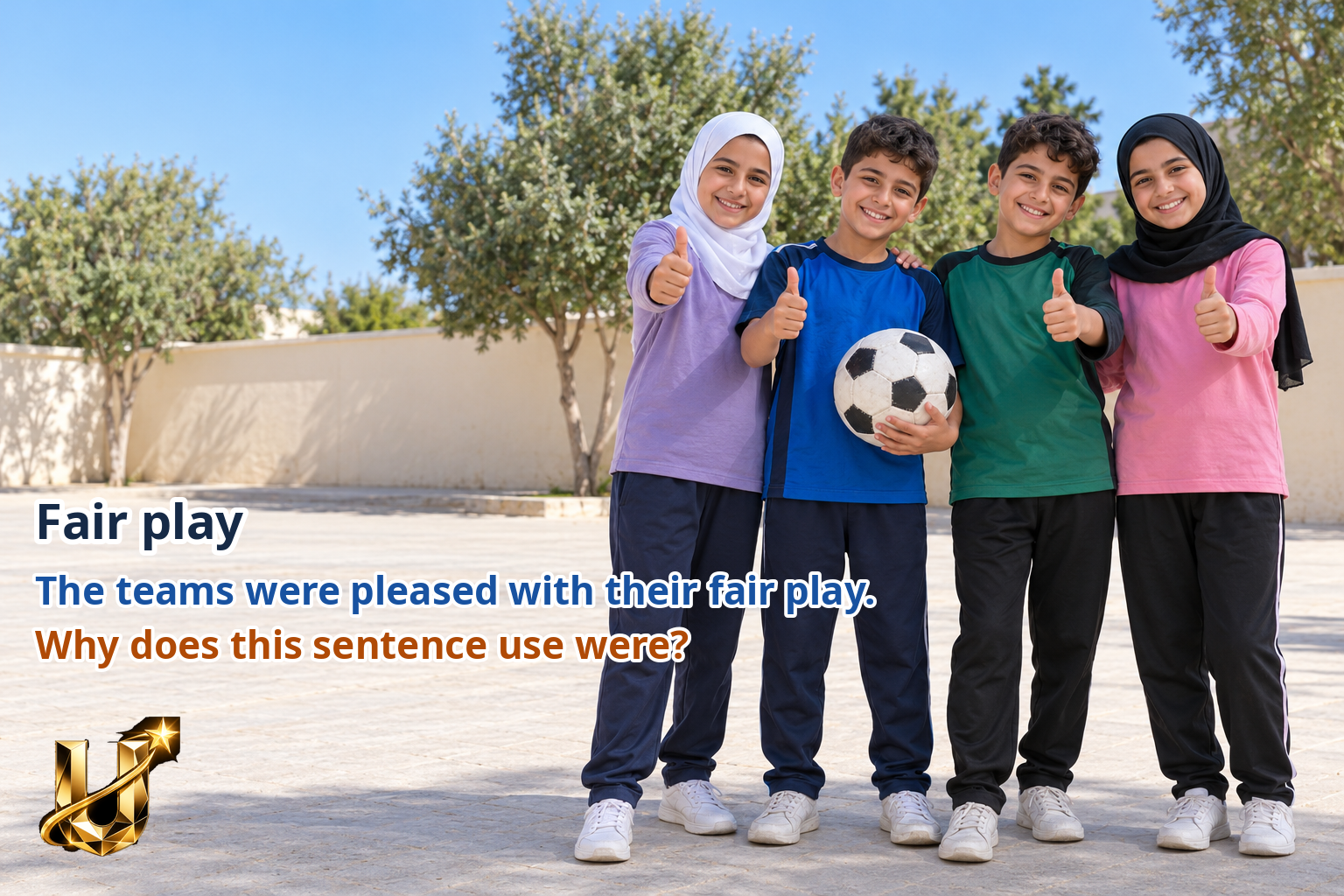
Open The Lagori Champions in your student book with an adult. First use this reading explanation and application. The later original examples practise language separately. Separate original practice context: In our invented class-game report from Jaipur, Aisha was the organiser. Aarav and Meera were the scorers. The teams were pleased with their fair play. Why does one sentence use was and another use were? This is not a rule guide to Lagori.
Read the book: The Lagori Champions
Ravi introduces Prakash to the group preparing for a match. Prakash knows the game as Satoliya. Deepa captains the Sundarpur Tigers against the Green Warriors. During play, teammates rebuild the stack and Prakash places the final stone before the whistle. Both teams shake hands afterwards. Opponent means the other team; dodged means moved to avoid something. The match story links coordination with respect beyond winning.
Practise with the book
How does the final stone illustrate teamwork?
- Several teammates place earlier stones and warn one another.
- Prakash completes a stack built through these contributions.
- The decisive final action depends on the group’s earlier work, not on one player doing everything.
Was for one in these examples
I was ready. Aisha was the organiser. He was a scorer. Was describes a past state with I, he, she, it or one named person in these examples.
Example 1: Describe one role
Aisha organised the invented game.
- Name one person: Aisha.
- Use was for the past role.
- Say: Aisha was the organiser.
Were for you and groups
You were ready. We were a team. They were pleased. Aarav and Meera were scorers. Use were with you even when speaking to one person, and with these plural subjects. Lagori is also known as a seven-stones game. It uses a ball and a stack of flat stones. This fact card supplies game vocabulary; our organiser-and-scorer scene remains invented. Ask a past-state question by changing the order: They were ready becomes Were they ready?