A ribbon in the sky?
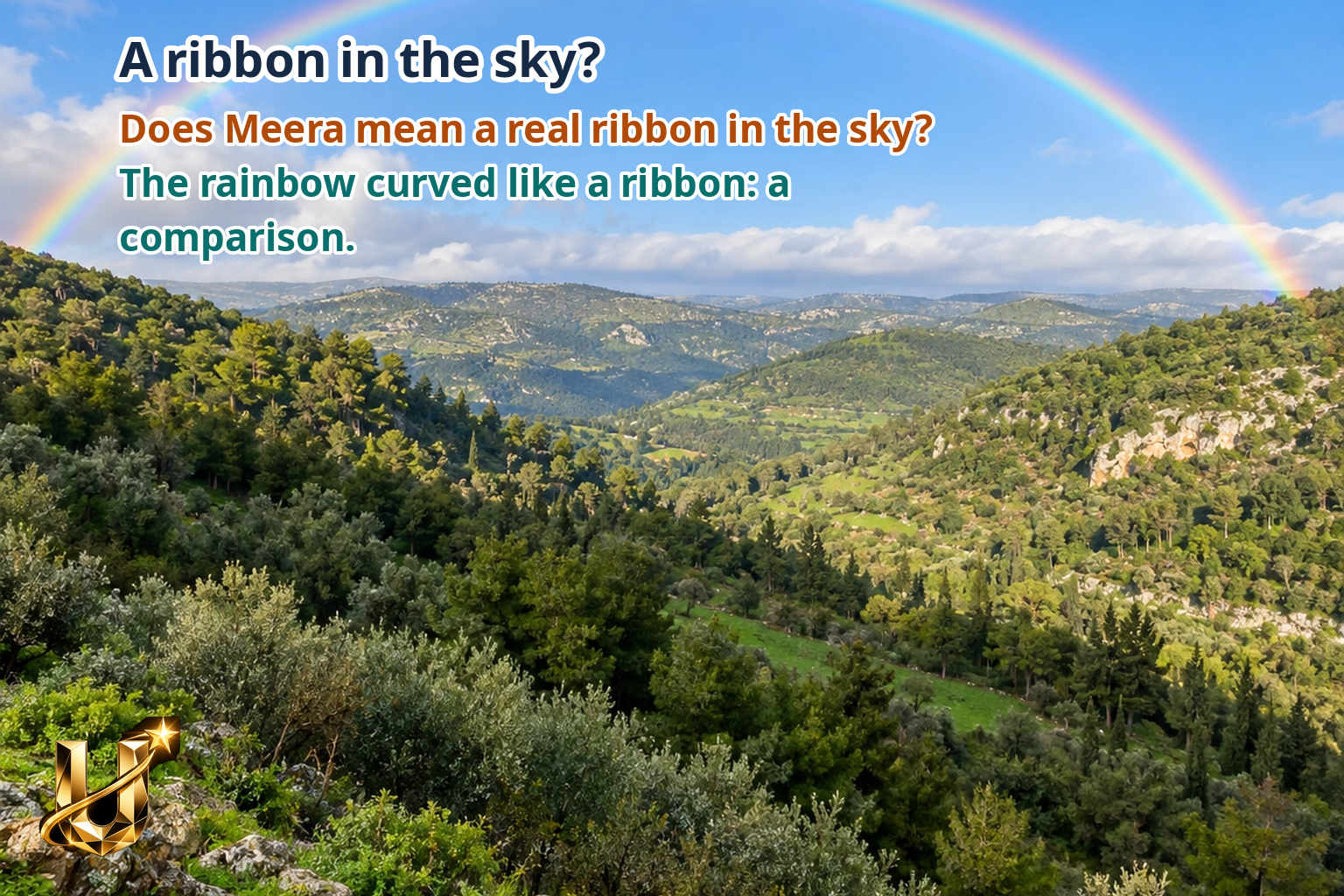
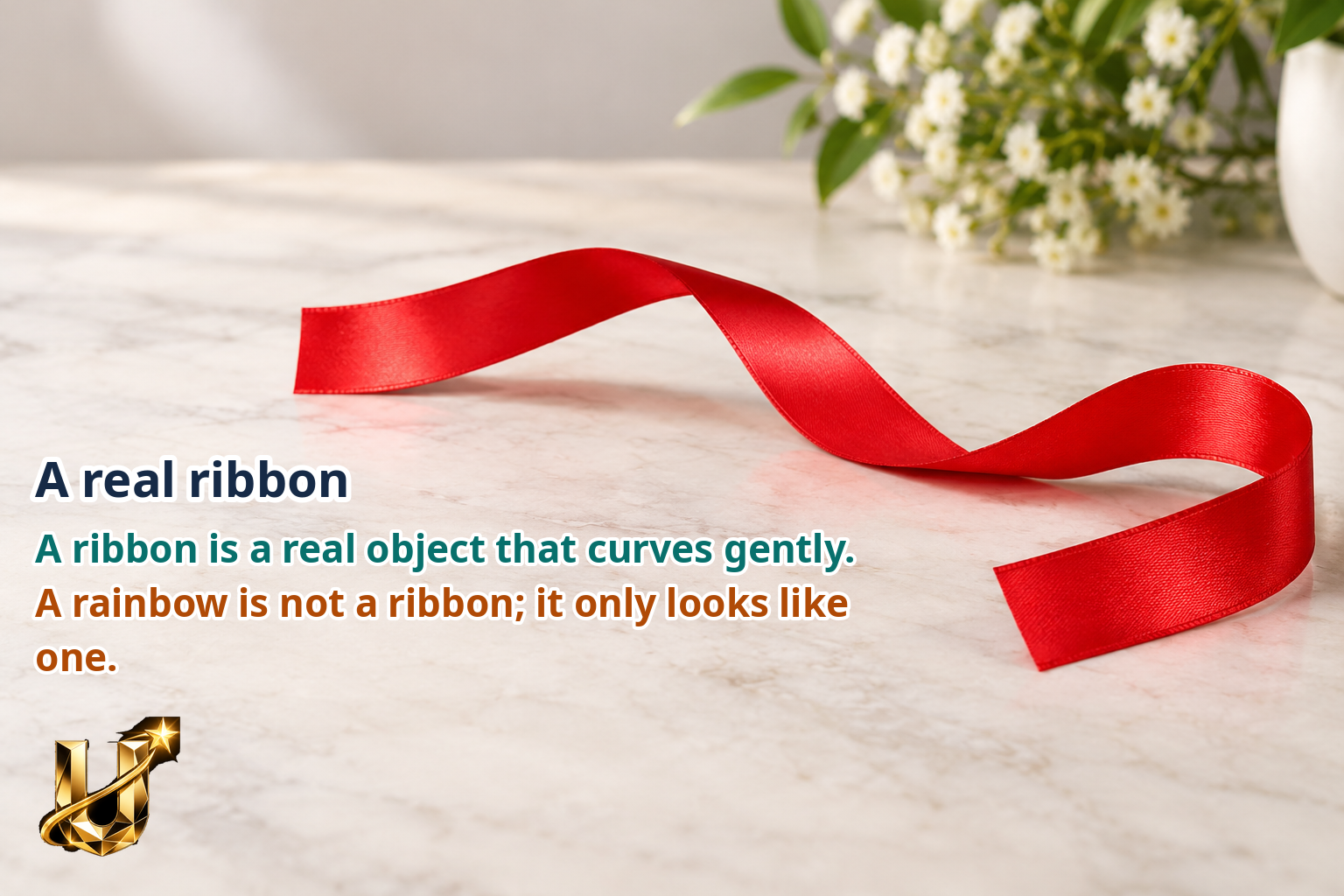
Open The Rainbow in your student book with an adult. First use this reading explanation and application. The later original examples practise language separately. Separate original practice context: In a new description from Kochi, Meera says, The rainbow curved like a bright ribbon. Does she mean someone put a real ribbon in the sky?
Read the book: The Rainbow
Christina Rossetti compares boats and ships with clouds, then human bridges with a rainbow arching across the sky. The speaker finds the natural sights more beautiful. Bow names the rainbow’s curved shape; overtops means rises above. The imagined road joining earth and sky expresses wonder, not a bridge a traveller can physically walk across.
Practise with the book
How do the comparisons develop the speaker’s preference?
- Clouds are set beside vessels moving on water.
- The rainbow is set beside a river bridge.
- In both pairs the speaker values nature’s beauty more highly, making a personal poetic judgement.
A comparison builds an image
A simile compares things using words such as like or as: curved like a ribbon. The comparison draws attention to a shared quality, such as shape. It does not turn one thing literally into the other.
Example 1: Find the comparison
The rainbow curved like a ribbon.
- Find like.
- Name the two things: rainbow and ribbon.
- Their curved band-like appearance is the intended similarity.
Explain the effect with evidence
A useful response names the comparison and says what it helps us imagine. The ribbon comparison helps us imagine a curved band of colour. Do not add a claim about sound, smell or size that the words do not support. In The bright rainbow appeared, rainbow is a noun, bright an adjective, and appeared a past-tense verb. It can replace the rainbow as a pronoun in the next sentence. Bright and dim contrast here. A rainbow is natural; a bridge is human-made.
Example 2: Separate literal and figurative