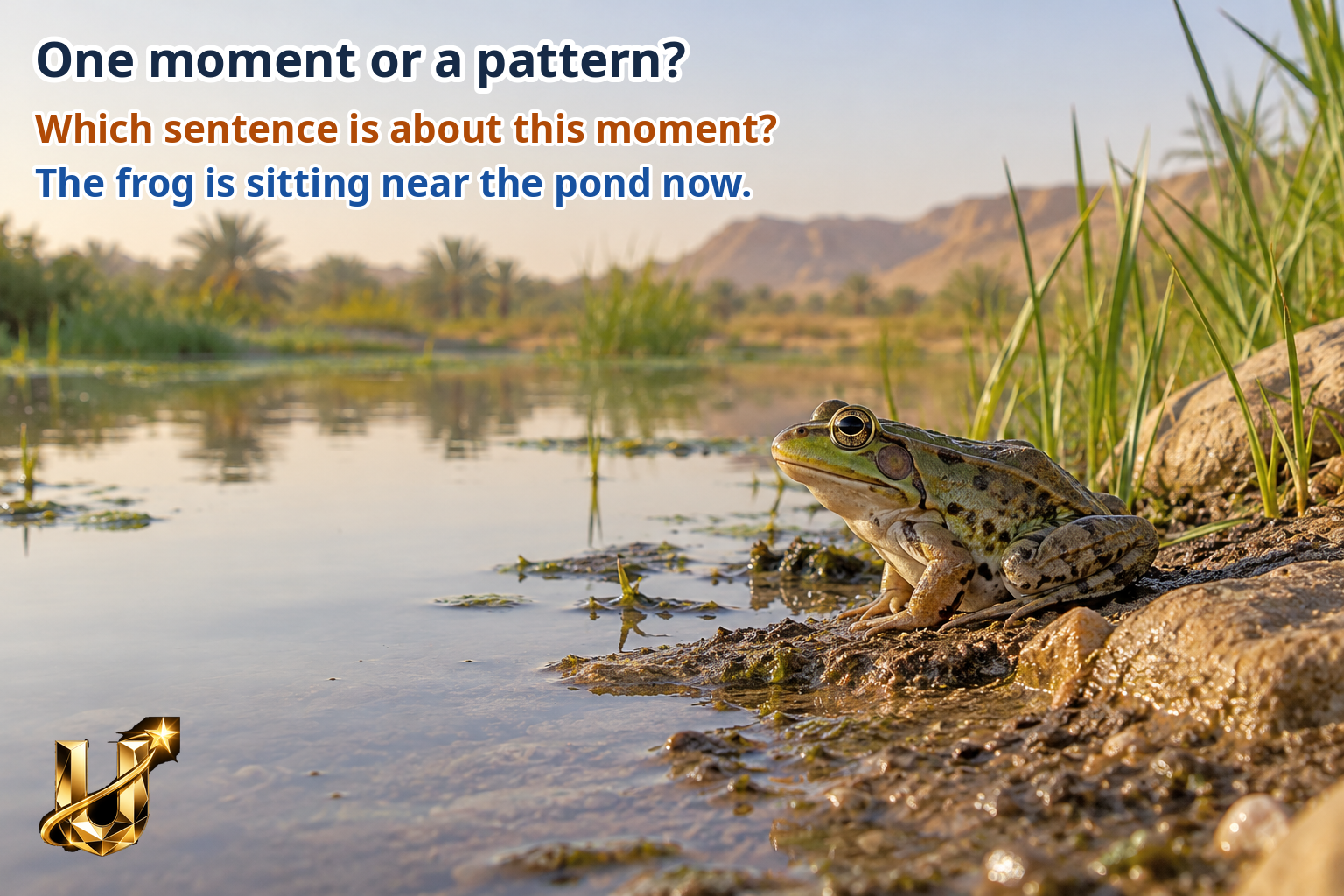
One moment or a pattern?
Open The Frog in your student book with an adult. First use this reading explanation and application. The later original examples practise language separately. Separate original practice context: In an original classroom observation note, Aisha writes, The frog is sitting near the pond now. In a general description, she writes, Frogs can jump and swim. Which sentence is about this particular moment?
Read the book: The Frog
The poem gives a frog a first-person voice to describe ponds, damp places, hopping, swimming, catching food and hiding among plants. Its tadpole stage is compared with a tiny fish; it is not classified as a fish. Damp means slightly wet; webbed describes skin joining toes. The confident voice adds feelings to a description of animal life.
Practise with the book
How can a reader separate the poem’s information from its invented voice?
- Swimming and hopping describe ways the animal moves.
- The frog’s speaking and expressions of pride personify it.
- A response can explain the observations without claiming that real frogs speak human language.
Distinguish specific and general
The frog is sitting now describes a particular action or state at the moment. Frogs can swim gives a general ability. The words now and can help distinguish the purposes. A single observation does not show every habit of every frog.
Example 1: A current observation
One frog rests near a pond in the practice note.
- Use the singular subject the frog.
- Use is sitting.
- Say: The frog is sitting near the pond now.
Make subject and verb agree
One frog sits. Two frogs sit. The frog is sitting. The frogs are sitting. In these patterns, the subject's number changes the verb form. Keep a general description separate from an invented observation. Connect ideas with and, but or because according to meaning: The frog is small, but it can jump. Hear and here are homophones; context and spelling distinguish them. Rearrange The, frog, sits into The frog sits.