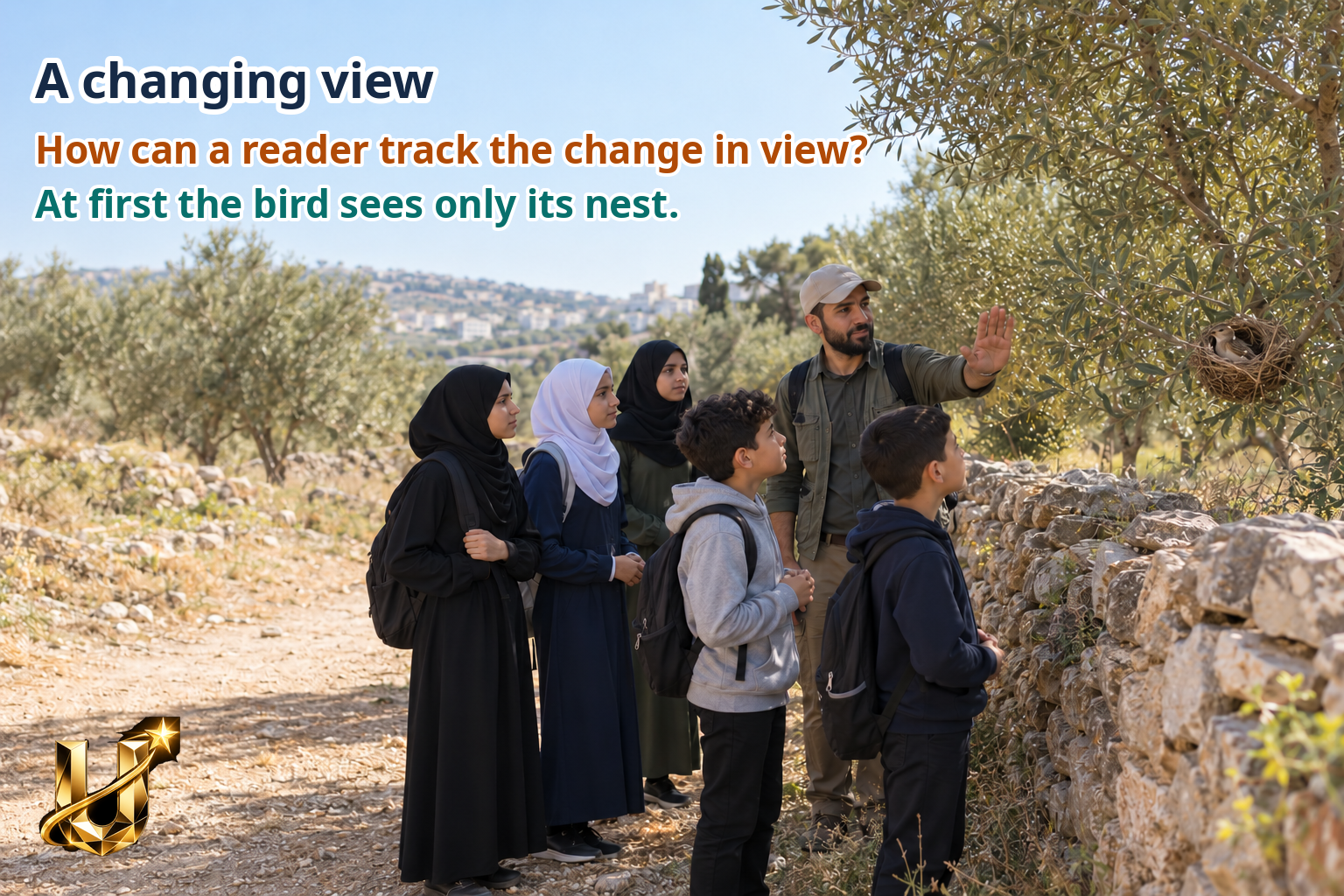
A changing view
Open What a Bird Thought in your student book with an adult. First use this reading explanation and application. The later original examples practise language separately. Separate original practice context: In a new bird scene, a young bird sees only the inside of its nest. Later it looks beyond the branches and realises its first view was incomplete. How can a reader track the change without saying the bird knew everything from the start?
Read the book: What a Bird Thought
The bird's world expands from egg to nest, leaves and the wider outdoors. Each new experience revises an earlier belief; the ending admits incomplete knowledge. Fluttered means moved with quick light wingbeats; labours means tasks. The first-person voice personifies the bird.
Practise with the book
What changes besides its home?
- Experience changes what the bird believes.
- Growing knowledge also reveals limits to its understanding.
Knowledge can be limited
A character's viewpoint depends on what it can notice at that point in the story. Its belief may be understandable but incomplete. Distinguish what the character thinks from what the narrator or reader knows.
Example 1: State the earlier limit
The bird sees only the nest.
- Identify what is visible.
- Do not add the whole landscape.
- Say: At first, its view is limited to the nest.
Track a change with contrast
At first, the bird knew only the nest. Later, it saw beyond the branches. Use at first and later for sequence, and but to contrast the earlier belief with new information. Thin, brown and pointed are adjectives in descriptions of an object. A metaphor can present one thing as another; imagery uses language that evokes sensory impressions. A symbol can suggest a wider idea, but its meaning needs support from the particular text.
Example 2: State new evidence
It looks beyond the branches.
- This is new information for the bird.