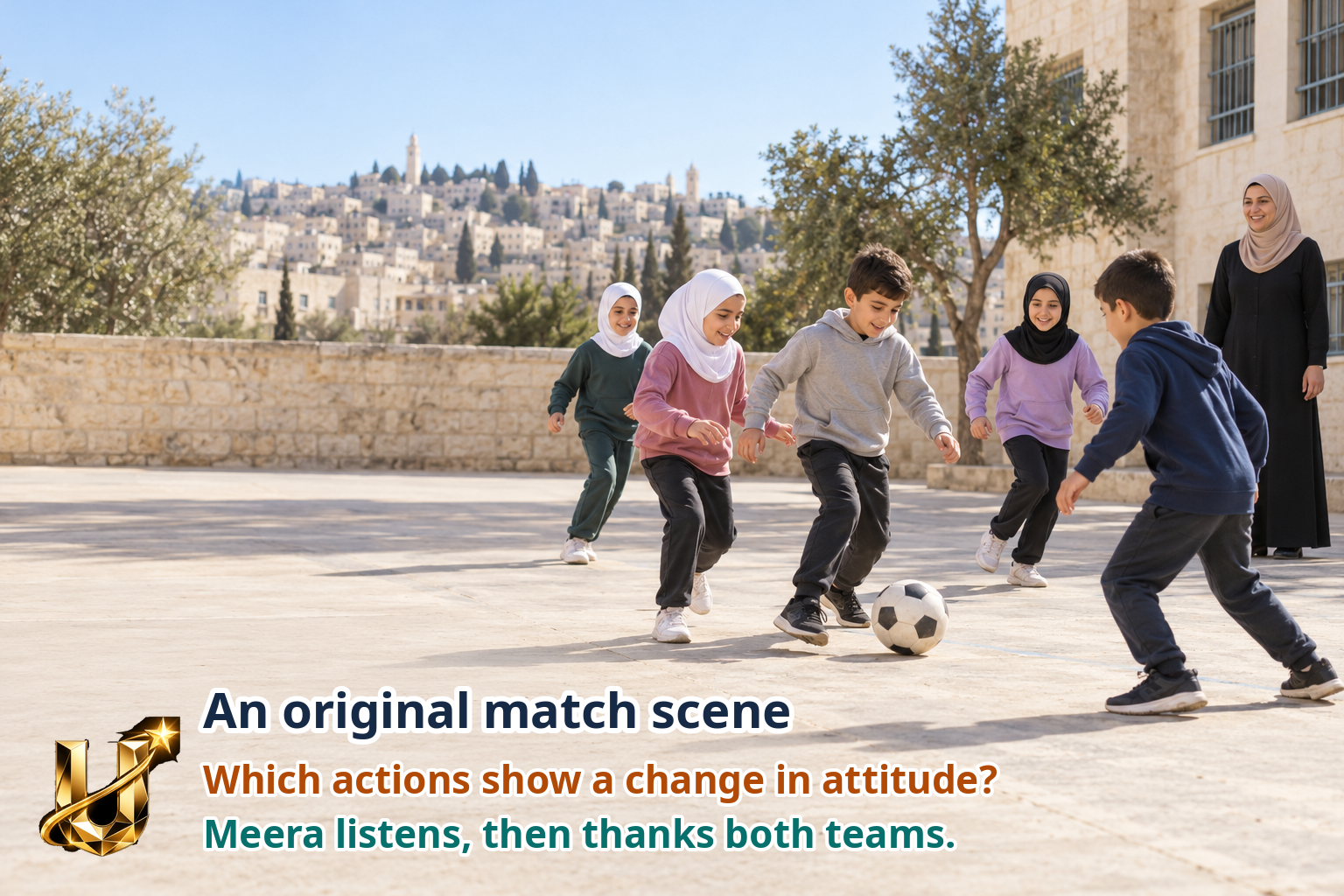
An original match scene
Open Change of Heart in your student book with an adult. First use this reading explanation and application. The later original examples practise language separately. Separate original practice context: At first, Meera refuses to congratulate a friend who wins a class game. Later, she listens to the friend's explanation of fair play and thanks both teams. Which actions could show a change in attitude?
Read the book: Change of Heart
Prabhat fears defeat and cheats while scoring against Surya. His hollow victory contrasts with Surya's enjoyment even when playing badly. Observation gradually changes Prabhat's attitude. Opponent means another competitor; sporting spirit includes fairness and respect, not winning at any cost.
Practise with the book
What causes the change?
- Victory alone fails to satisfy Prabhat.
- Surya shows that enjoyment can survive losing.
State the starting attitude
A character's attitude is inferred from words and actions. Refusing congratulations suggests disappointment or resentment in this scene, but a response should acknowledge that it is an interpretation.
Example 1: Find earlier evidence
Meera refuses to congratulate the winner.
- Name the action.
- Suggest a cautious attitude interpretation.
- Do not treat an inferred feeling as a directly quoted thought.
Show development with evidence
A changed action can support a changed attitude. Meera's later thanks and willingness to listen contrast with her refusal. Explain both stages and the event connecting them rather than simply calling her good or bad. Past perfect uses had plus a past participle: Meera had refused before she listened. The refusal happened earlier. Before and after help order actions even when the sentence mentions them in a different order.
Example 2: Find later evidence
Meera listens and thanks both teams.
- The action differs from refusal.