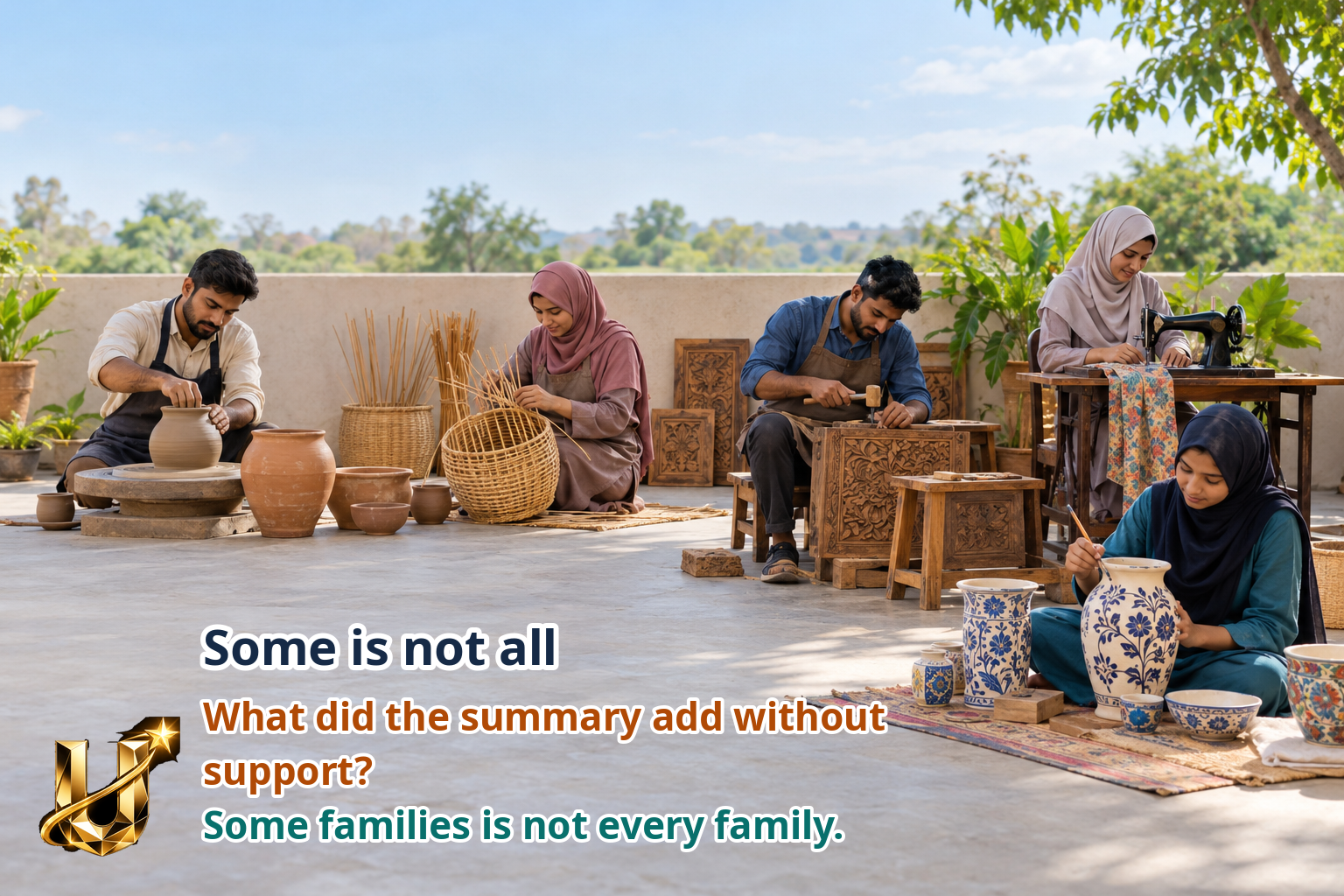
Some is not all
Open Hamara Bharat - Incredible India! in your student book with an adult. First use this reading explanation and application. The later original examples practise language separately. Separate original practice context: An original practice note says, Some families in a town make a particular craft. A summary changes it to Every family in India makes this craft. What information has the summary added without support?
Read the book: Hamara Bharat - Incredible India!
Children share regional crafts through a programme celebrating national connection: Aipan, Dhokra, coconut-shell work and Kondapalli toys. Their varied materials make diversity concrete. Craft means skilled making; unity means connection.
Practise with the book
How is diversity shown?
- Different children describe distinct materials and methods.
- Their shared exchange connects these differences.
Scope words matter
Some, many and all describe different scopes. Some does not mean every member of a group. A town is not the same scope as a whole country. Preserve both the people and the place in the original claim.
Example 1: Preserve the group
Some families make the craft.
- Keep some.
- Do not replace it with every family.
- The claim concerns a limited group.
Describe diversity respectfully
A cultural description may give examples rather than universal rules. Report which people, place or source the example concerns. Do not assign one person's food, craft or language preference to everyone from a region. Present-tense agreement depends on the subject: Some families make a craft; One family makes a craft. A cultural description should name its example rather than making it universal.
Example 2: Preserve the place
The practice note names one town.
- Keep the town-level scope.
- Do not change it to all India.