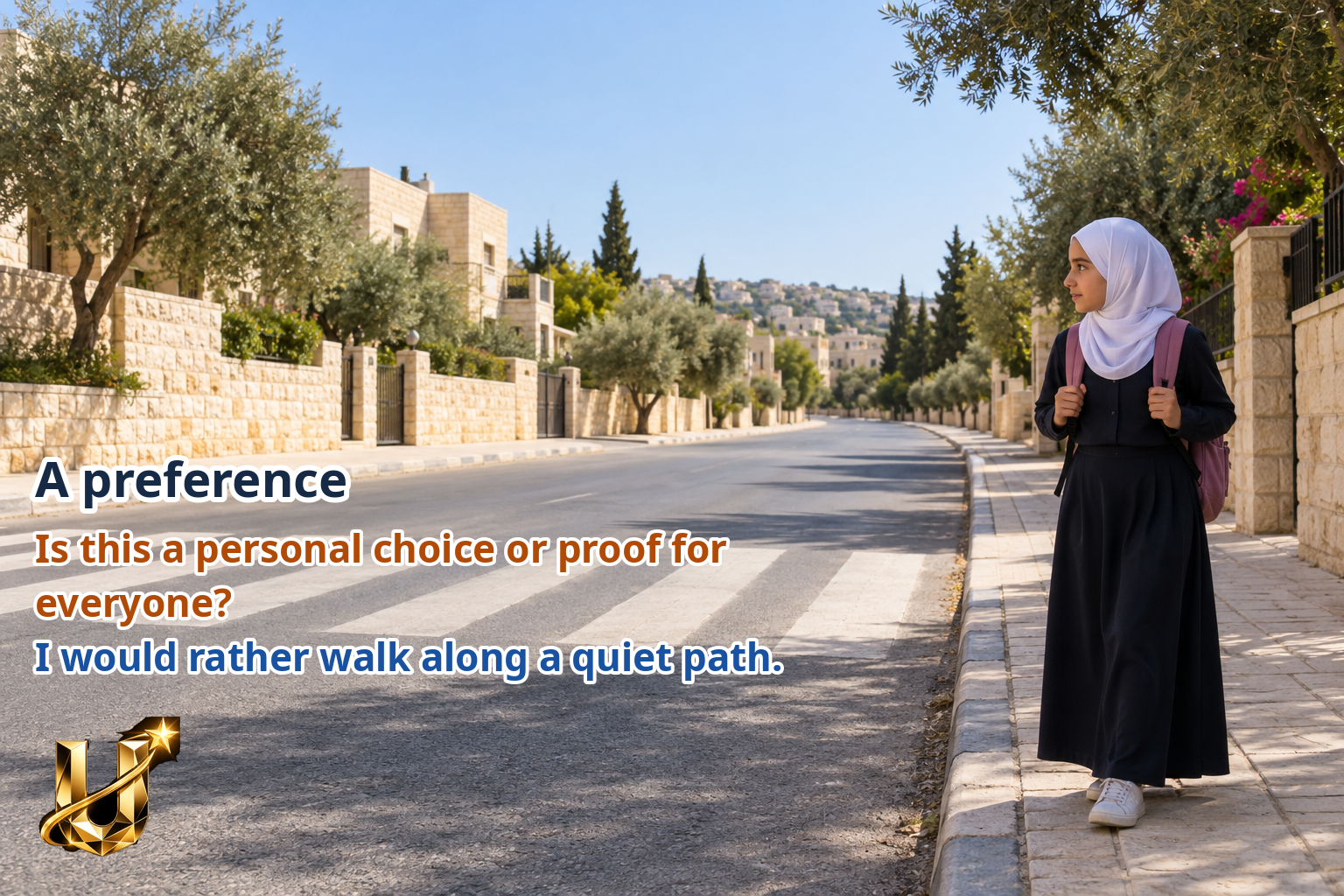
A preference in a new line
Open Travel in your student book with an adult. First use this reading explanation and application. The later original examples practise language separately. Separate original practice context: An original speaker says, I would rather walk along a quiet path than hurry through a crowded street. Does this describe a personal choice or prove the quiet path is objectively best for everyone?
Read the book: Travel
Edna St. Vincent Millay's speaker hears distant trains and imagines their night-time sparks. Warm affection for existing friends coexists with eagerness for any journey. Repeated train references sustain longing. Cinders are burnt fragments. The desire does not mean contempt for home.
Practise with the book
What tension shapes the closing stanza?
- Friendship gives present happiness.
- Travel still promises unexplored experience.
Would rather plus a base verb
Would rather walk expresses a preference. Use the base verb walk, not to walk, in this pattern. Than introduces the alternative: rather walk than hurry.
Example 1: Find the preferred action
I would rather walk ... .
- The preferred action is walk along the quiet path.
- Identify the speaker's choice.
- Keep it as a personal preference.
Keep comparison and scope clear
The statement compares two choices for this speaker. It does not mean the speaker always hates streets or that every traveller shares the view. Read a poetic preference without turning it into a universal rule. The letter c represents different initial sounds in cat and city; listen to an adult model them. Imagery suggests sensory impressions, while personification gives something non-human human-like qualities. A diamante has seven lines arranged into a diamond-shaped pattern; use a stated classroom word pattern.
Example 2: Find the alternative
... than hurry through a crowded street.
- Than introduces the other option.