A decision with a trade-off
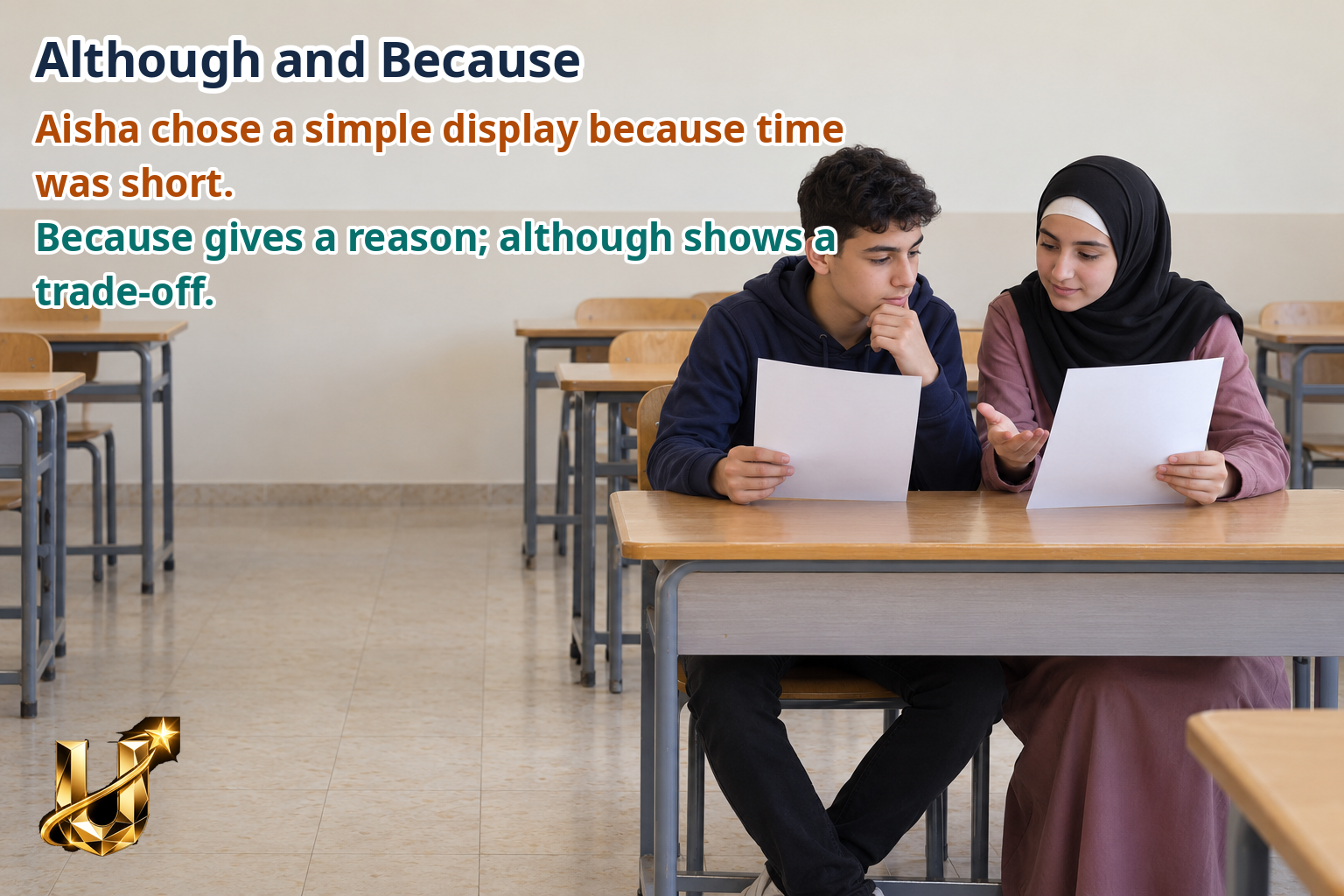
Open Wisdom Paves the Way in your student book with an adult. First use this reading explanation and application. The later original examples practise language separately. Separate original practice context: In a fictional Pune class task, Aisha chooses a simple display because the group has little preparation time. Although a more elaborate display looks attractive, it would take longer. How do because and although organise different relationships?
Read the book: Wisdom Paves the Way
Four travellers infer a camel's features from tracks and roadside clues. A merchant accuses them of theft; explaining their reasoning wins appointments as the king's advisers. Stage directions organise the confrontation. Deduce means reach a conclusion from evidence.
Practise with the book
What defeats the accusation?
- Detailed knowledge has another explanation: inference.
- The play distinguishes reasoning from having seen or stolen the camel.
Because introduces a reason
Aisha chooses the simple display because time is limited. The reason explains the choice. A good explanation connects the constraint with the proposed action rather than adding an unrelated fact.
Example 1: State the reason
Preparation time is limited.
- Connect time with choosing a simpler task.
- Use because.
- The choice is explained by the stated constraint.
Although acknowledges a contrast
Although the elaborate display is attractive, it takes longer. The first clause acknowledges a point that might favour another option; the main clause gives the contrasting consideration. Concession is not the same as cause. Can may show ability, might possibility, should advice and must a requirement in suitable examples. Ought to takes a following base verb. A noun can name a quality, as in wisdom. What a thoughtful answer! is an exclamation.
Example 2: Acknowledge the other side
The elaborate display is attractive.