Reporting a question
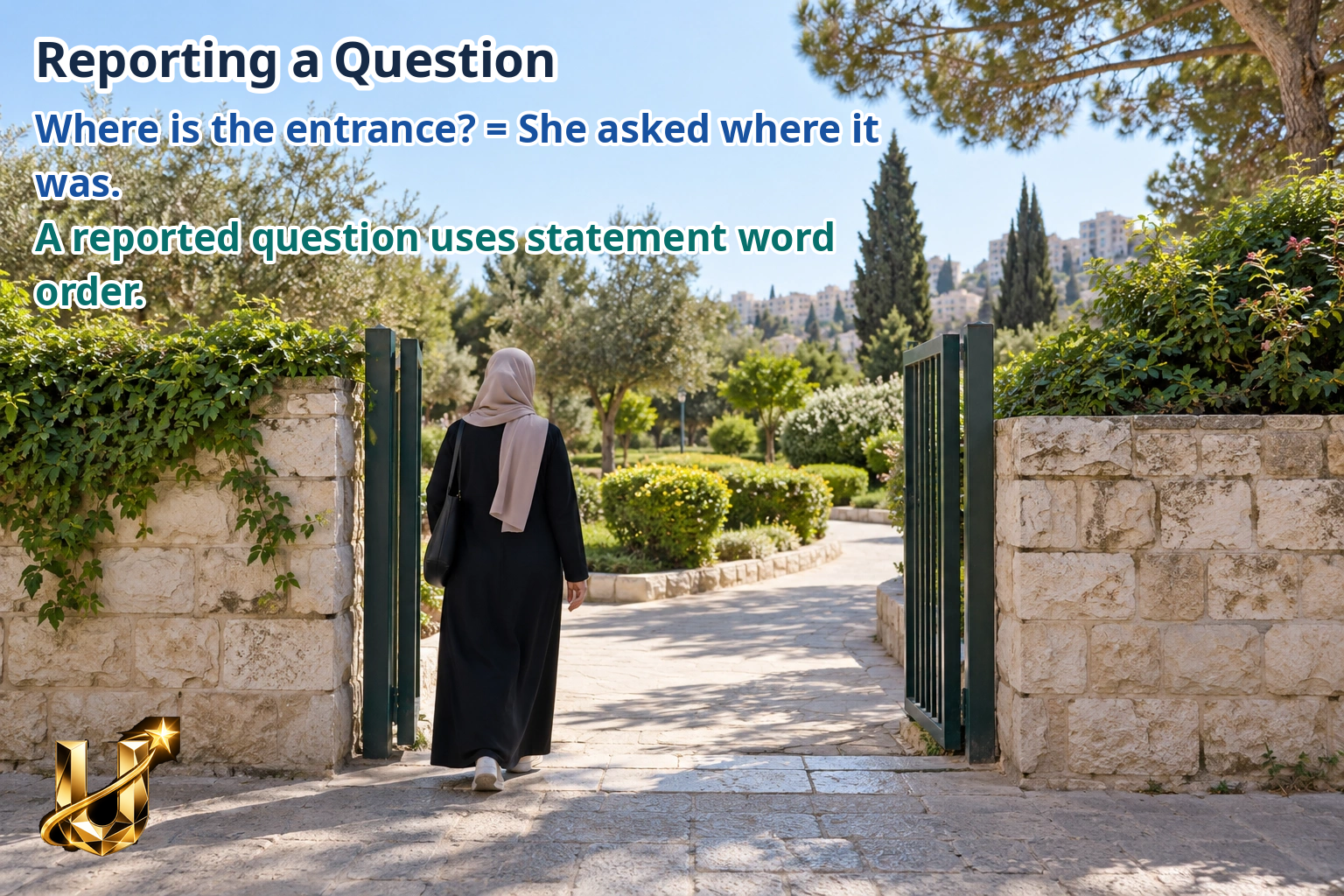
Open Somebody's Mother in your student book with an adult. First use this reading explanation and application. The later original examples practise language separately. Separate original practice context: In an original Lucknow scene, an older visitor asks, Where is the entrance? Meera reports, She asked where the entrance was. Why does the reported question not keep the direct question's word order?
Read the book: Somebody's Mother
Mary Dow Brine contrasts a hesitant older woman at a snowy crossing with hurried passers-by. One boy offers help and thinks of his own mother; her closing prayer reciprocates goodwill. Throng means crowd; heeded means paid attention.
Practise with the book
What widens the boy's sympathy?
- He imagines his mother needing assistance.
- Recognition connects an unfamiliar person with someone loved.
Direct and indirect word order
A direct question can invert subject and verb: Where is the entrance? In the taught indirect report, use statement order: where the entrance was. Do not write She asked where was the entrance in this pattern.
Example 1: Identify the direct question
Where is the entrance?
- The question asks for a place.
- Is precedes the subject entrance.
- This is direct question order.
Keep reference and context clear
She refers to the visitor. The report preserves the question's topic. A standard past-report context may shift is to was, but tense and place wording must fit the actual reporting situation. Kind is an adjective; kind and considerate can be near-synonyms here, while kind and cruel contrast. An idiom has a conventional meaning not always predictable word by word: lend a hand means help. The ed ending sounds different in walked, played and wanted; hear an adult model the words.
Example 2: Build the indirect report
She asked where the entrance was.