Two reporting situations
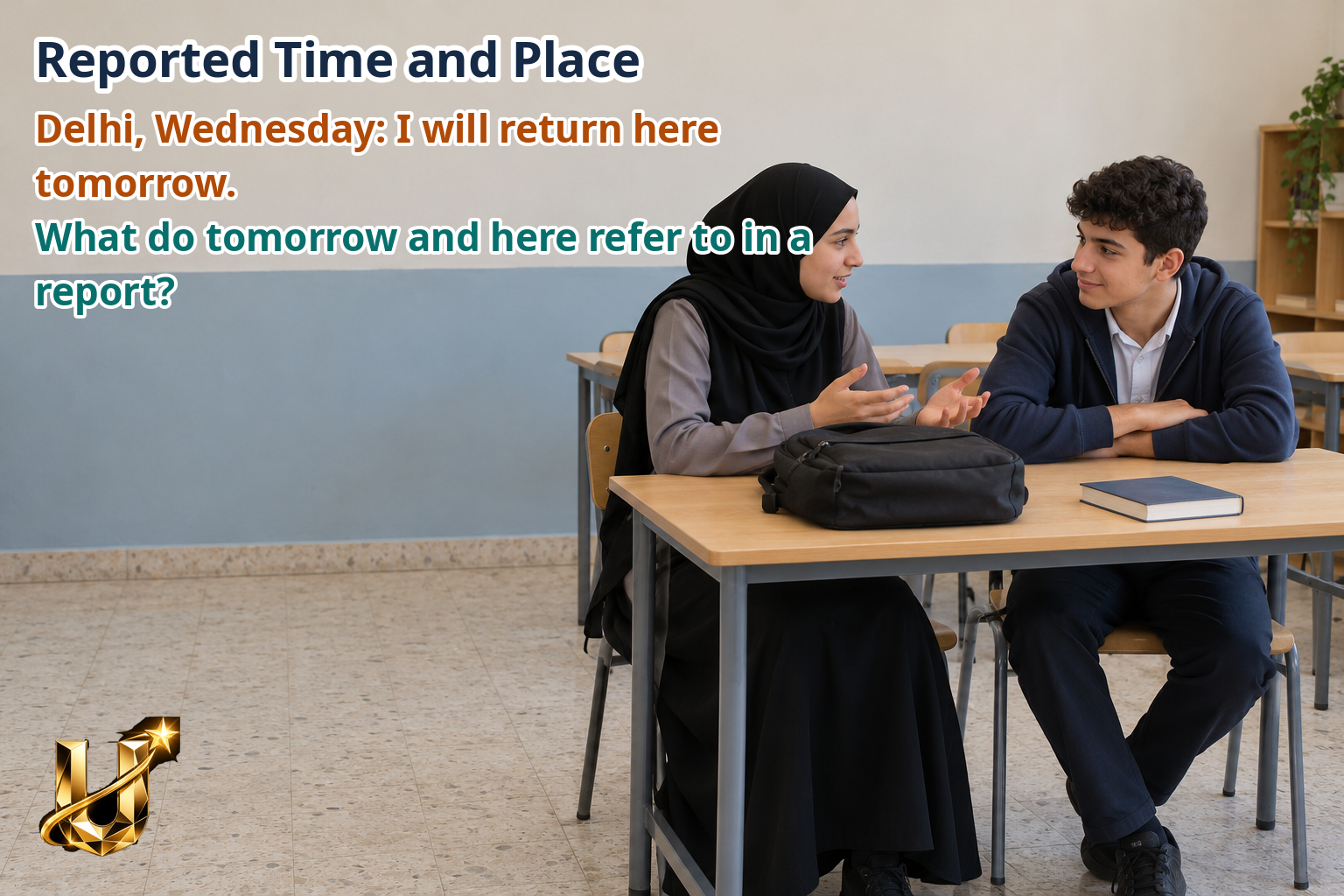
Open The Case of the Fifth Word in your student book with an adult. First use this reading explanation and application. The later original examples practise language separately. Separate original practice context: On Wednesday in Delhi, Aisha says, I will return here tomorrow. Meera reports the message from Pune on Friday. What must tomorrow and here refer to in a faithful report?
Read the book: The Case of the Fifth Word
Leroy, nicknamed Encyclopedia, helps Chief Brown interpret a dying man's calendar code. Rearranged weekday letters without day point from four clues to Friday, then fir: jewellery is beneath a fir tree. Nursery here means a place growing young plants.
Practise with the book
What makes the calendar relevant?
- It suggests days of the week.
- The unstated next day supplies the missing word.
Anchor time to the original speech
Tomorrow means the day after the original Wednesday: Thursday. A later report can use the next day or Thursday. It must not reinterpret the word as Saturday merely because the report is made on Friday.
Example 1: Resolve tomorrow
The original speech occurs on Wednesday.
- Move one day from that speech time.
- The intended day is Thursday.
- Use the next day or a clear weekday in the later report.
Anchor place and person too
Here refers to the original Delhi location. A distant reporter may use there, with Delhi made explicit. In the taught past-report pattern: Aisha said that she would return to Delhi the next day. The report states her earlier plan, not proof she actually returned. Figure out can mean solve or understand; put on a coat means dress in it. Bat can name an animal or a sports implement: the same spelling and pronunciation has distinct meanings. A dictionary gives meanings and pronunciation; a thesaurus groups related words; an encyclopedia explains topics.
Example 2: Resolve here
Aisha speaks from Delhi.