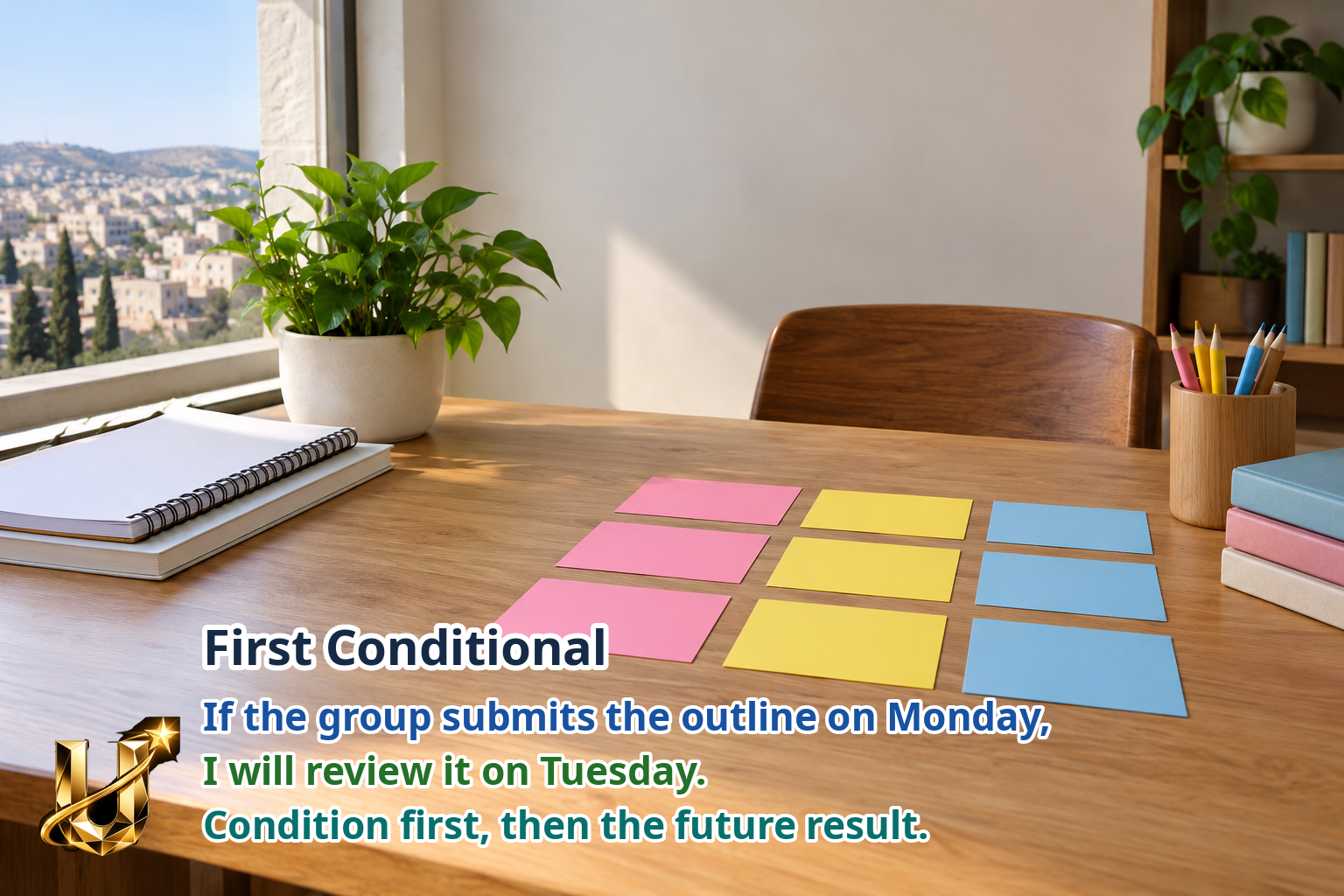
An original project plan
Open Follow That Dream in your student book with an adult. First use this reading explanation and application. The later original examples practise language separately. Separate original practice context: A fictional organiser says, If the group submits the outline on Monday, I will review it on Tuesday. What is the condition, and what result is proposed if it is met?
Read the book: Follow That Dream
Irene Chua writes to daughter Ming about passion, commitment, costs and supportive people. She recognises interrupted ambitions and dreams changing over a lifetime. Publishing her book supplies a personal example. Wistfully means with longing; imperative means necessary.
Practise with the book
Why is the advice more complex than persistence alone?
- Circumstances and responsibilities can redirect a life.
- Changed dreams can remain worthwhile.
Present form in the if clause
In this taught future-condition pattern, use submits in the if clause and will review in the result clause. The present form does not mean the submission already happened; the sentence concerns a future condition.
Example 1: Find the condition
If the group submits the outline on Monday.
- Identify the if clause.
- It states the required event.
- Do not treat the event as completed.
A plan is not confirmation
The sentence does not prove the group will submit or that the review has already occurred. Preserve the dependency: the proposed review follows if the stated submission condition is met. Reported requests can use asked plus object plus to: Please bring the outline becomes She asked them to bring the outline. A negative command can use told plus object plus not to: Do not alter the figures becomes She told them not to alter the figures. Pronouns and time words depend on the actual reporting context.
Example 2: Find the result
I will review it on Tuesday.
- This is the proposed future response.