
A question from life
Enlarge image
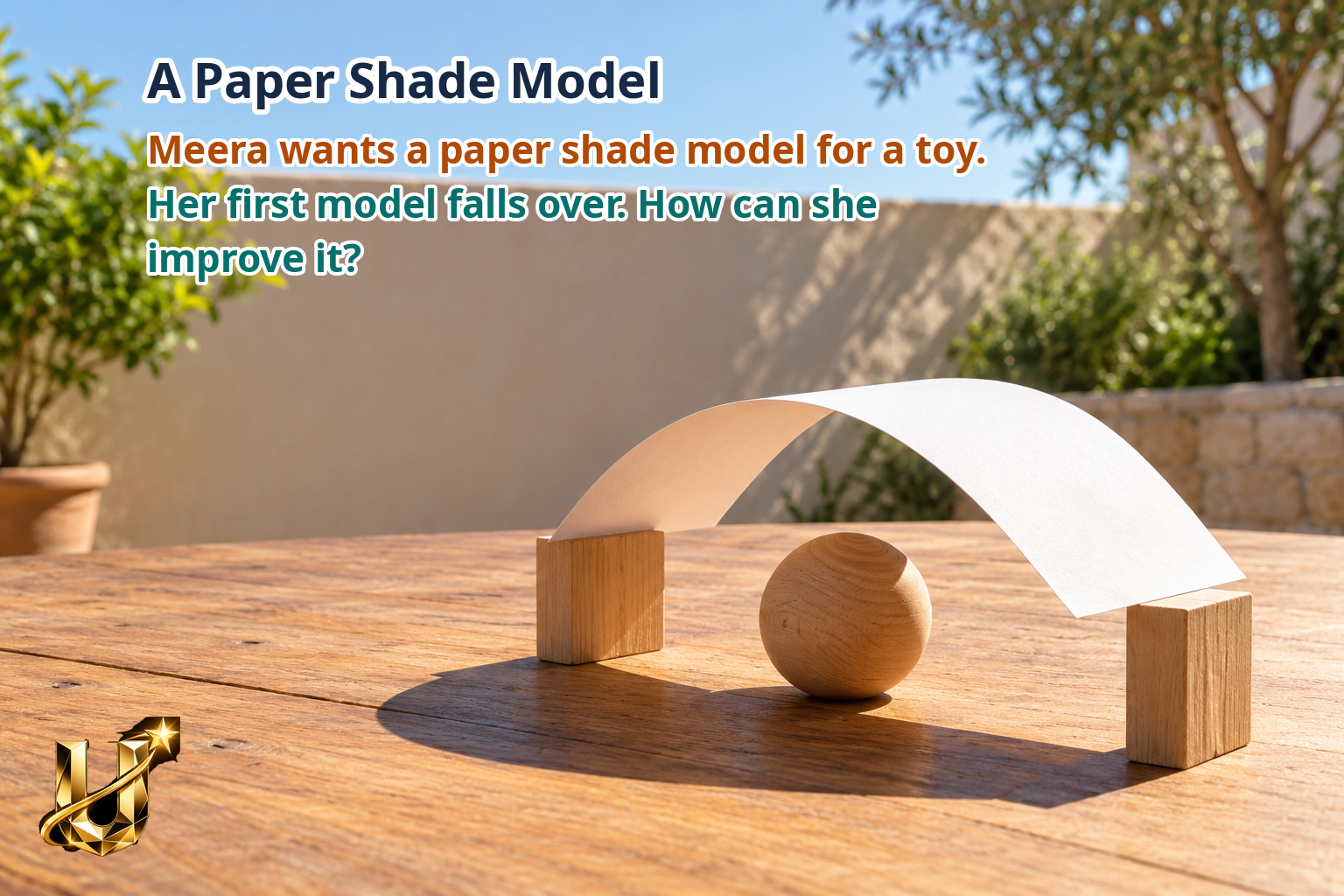
Meera wants a paper shade model for a toy in Jaipur. Her first model falls over. How can she improve it without wasting every sheet of paper?
Unit 4: Things Around Us
Meera wants a paper shade model for a toy in Jaipur. Her first model falls over. How can she improve it without wasting every sheet of paper?
A small or simple version used to explore or test an idea.
Review lesson not available yet.
Meera wants a paper shade model for a toy in Jaipur. Her first model falls over. How can she improve it without wasting every sheet of paper?
Design means planning how to meet a need. Describe what the object should do before choosing materials. A model can test a small part of the plan, but it does not prove a real structure is safe.
A model shade should keep a toy out of a lamp's direct light. What can be observed without heat or electricity experiments?
The first useful design question is:
A maker may measure, shape, join and finish materials. Different workers use different skills. A potter shapes clay; a carpenter works with wood; builders coordinate many materials and jobs. Children use safe models rather than real construction tools.
A model falls with a narrow base. Meera makes only the base wider. Why keep other parts similar?
To learn whether a wider base helps, keep:
Choose a simple check linked to the need. If a model tips, observe the base or support before changing it. Reuse safe pieces where possible and change one feature at a time so the result is easier to understand.
A wooden stool needs a strong safe joint. Should a child copy a real worker's cutting tools?
With an adult, make or discuss a folded-paper shade model. State its purpose and one safe check. If improving it, change one feature and reuse suitable pieces.
A design begins with a need. Making uses skills and stages. A safe model can help us test and improve one idea at a time.