
A question from everyday life
Enlarge image
After a snack in a Kolkata park, Aarav has a peel, a paper wrapper and a reusable bottle. Should all three be thrown away?
Unit 4: Things Around Us
After a snack in a Kolkata park, Aarav has a peel, a paper wrapper and a reusable bottle. Should all three be thrown away?
What objects are made from.
Review lesson not available yet.
After a snack in a Kolkata park, Aarav has a peel, a paper wrapper and a reusable bottle. Should all three be thrown away?
Eating, packaging, making and cleaning can leave waste. A useful object does not become waste just because we finished using it once. First ask if we need to throw it away.
Priya can carry a refillable bottle with safe water or buy a new disposable bottle each time. Which can reduce waste?
Which action is reuse?
Reduce means use less unnecessary material. Reuse means use an item again safely. Recycling turns suitable collected materials into new products. Not every item can be recycled in every place.
Meera's clean notebook has many unused pages. Must she throw it away?
Which waste should a child avoid handling?
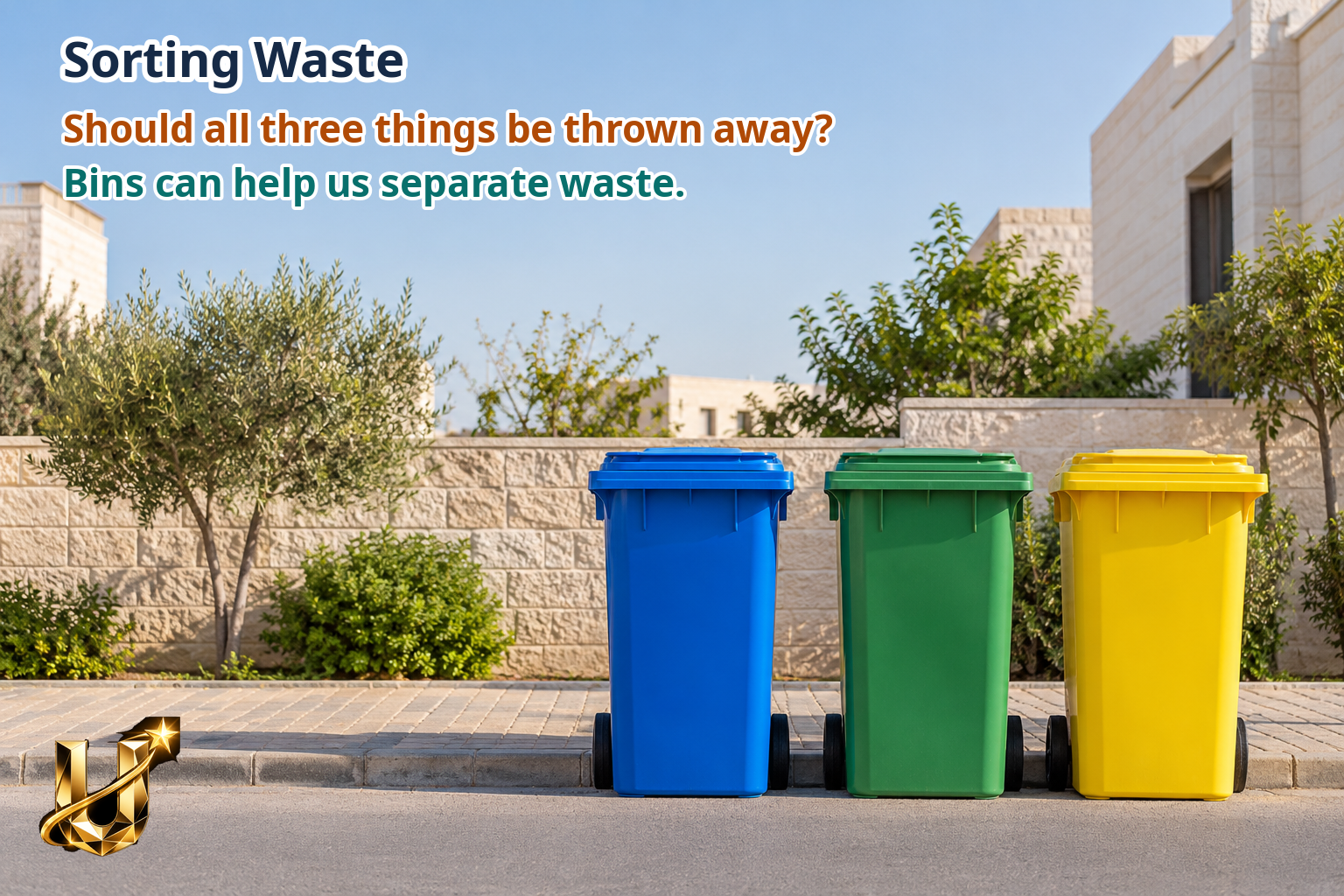
Keep suitable food scraps separate from clean dry recyclables as your adult or local service directs. Bin colours and accepted materials can vary. Children must not handle broken glass, batteries, chemicals, dirty mixed waste or unknown objects.
An adult has checked a banana peel and clean dry paper. What could happen next?
Use pictures or clean safe pretend objects with an adult. Point to one thing to reduce, one to reuse and one that might be collected for recycling locally. Never practise on mixed rubbish.
We can reduce unnecessary materials, reuse safe objects and separate waste according to local guidance. Recycling and composting need suitable materials and safe adult management.