
A question from life
Enlarge image
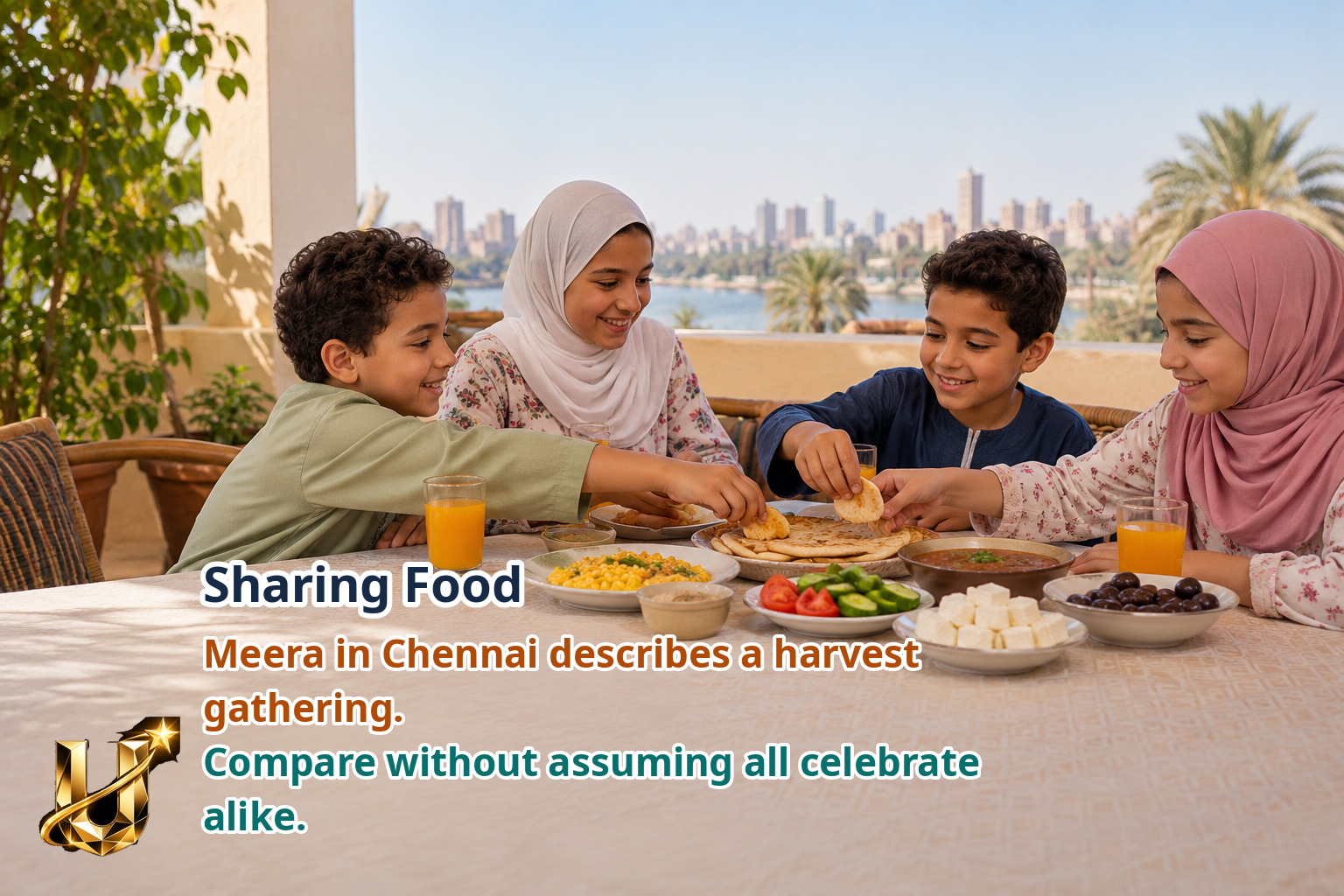
Meera in Chennai describes a gathering after a harvest. Aisha in Delhi describes a different occasion. What can we compare without assuming everyone celebrates the same way?
Unit 1: Our Families and Communities
Meera in Chennai describes a gathering after a harvest. Aisha in Delhi describes a different occasion. What can we compare without assuming everyone celebrates the same way?
An occasion people mark through activities such as gathering, sharing food or music.
Review lesson not available yet.
Meera in Chennai describes a gathering after a harvest. Aisha in Delhi describes a different occasion. What can we compare without assuming everyone celebrates the same way?
Some gatherings are connected with harvests, seasons or community events. Different regions grow different crops and have different weather. Not every celebration is seasonal, and families may mark the same occasion differently.
Aarav sees rice served at one gathering in Chennai. Can he say every celebration in Chennai serves only rice?
One family's festival meal tells us:
We can compare food, music, clothes, games or work. Describe only what the example shows. One family's meal cannot tell us what every family in a whole state eats.
Six people will sit together. Meera can place light napkins; her uncle prepares hot food. Is this a useful division?
Which job is suitable for a child with adult permission?
A small gathering needs decisions about space, food, access, tidying and waste. Share tasks by ability and availability rather than gender. Children can arrange safe items; cooking heat and electrical work are for adults.
Rain is expected during a planned outdoor meeting. What can organisers do?
Plan a pretend community meal with an adult. Name one safe child task, one adult task and one way to keep the space accessible. No event or purchase is required.
Local gatherings can reflect seasons and places. Compare examples carefully, share work fairly and adjust plans for weather and access.