
A question from life
Enlarge image
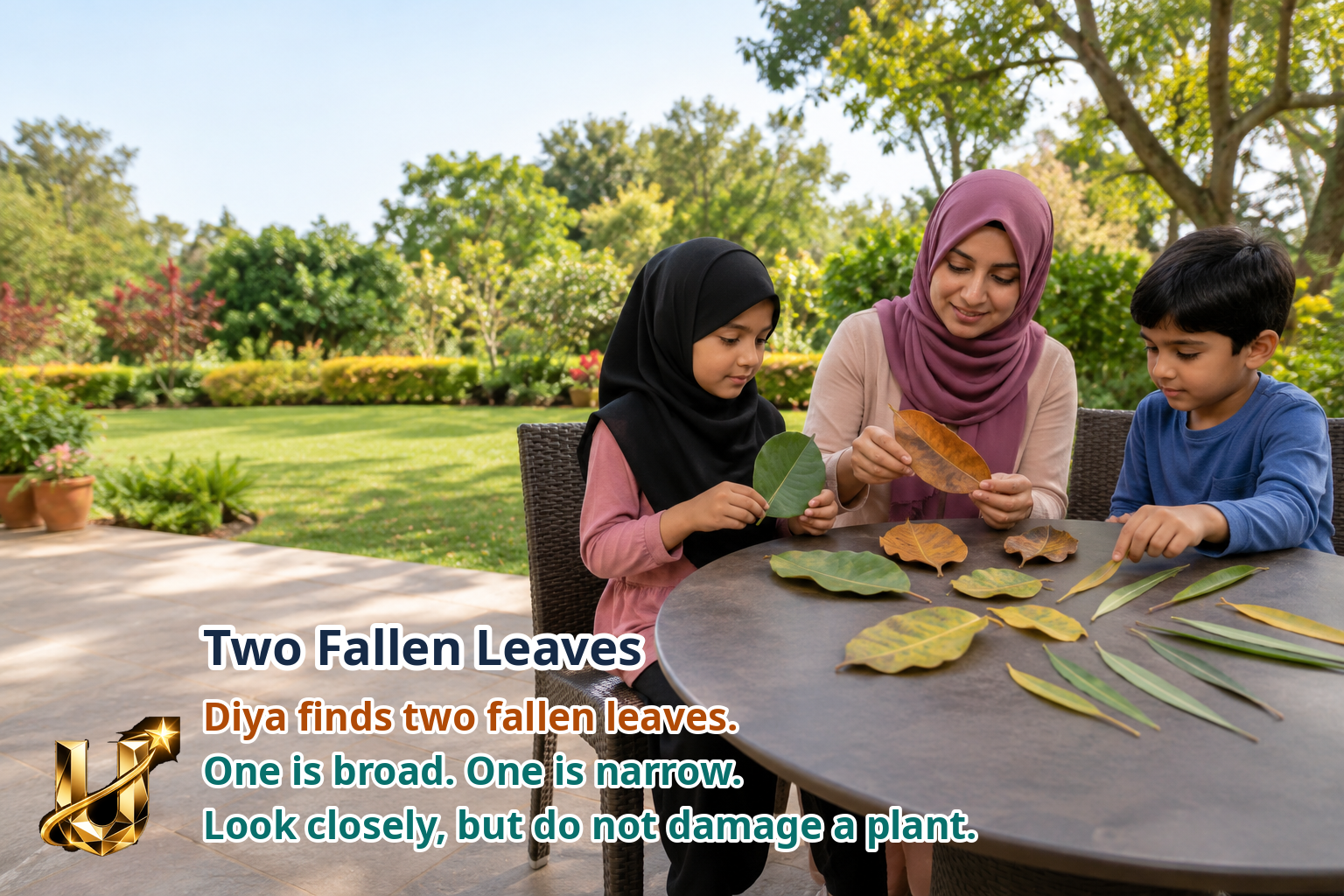
Diya in Bengaluru finds two fallen leaves: one broad and one narrow. What can she learn by observing them without damaging a plant?
Unit 2: Life Around Us
Diya in Bengaluru finds two fallen leaves: one broad and one narrow. What can she learn by observing them without damaging a plant?
A plant structure from which a new plant may grow under suitable conditions.
Review lesson not available yet.
Diya in Bengaluru finds two fallen leaves: one broad and one narrow. What can she learn by observing them without damaging a plant?
Leaves can differ in shape, edge, size, colour and visible veins. Flowers can differ in shape, colour and number of petals. Observe what is present; not every plant has flowers at the same time.
Aarav has two broad fallen leaves and three narrow ones. How many are in each group?
Which feature can you observe without plucking a leaf?
Use a drawing, a tally or a spoken description to record what you see. A tally is one mark for each counted item. Choose one rule, such as broad or narrow, and count carefully without counting the same item twice.
Meera counts three flowers on Monday and four on Thursday. Did she necessarily see four new flowers?
For a tally of leaves, one mark should represent:
A seed may grow into a new plant under suitable conditions. Many common seeds need water, air and suitable warmth to begin growing. Growing seedlings also need suitable light. Compare similar plants fairly and do not uproot them to check every day.
Two similar seedlings are observed for a week. One is in a huge pot and one in a tiny pot. Can a difference be blamed only on water?
With an adult, observe fallen leaves or plant pictures. Sort by one visible feature, count each group once and explain the rule. Leave attached leaves and flowers untouched.
Plant observation uses visible features, careful records and gentle care. Counts describe evidence, while fair comparisons avoid changing many factors at once.