
A question from life
Enlarge image
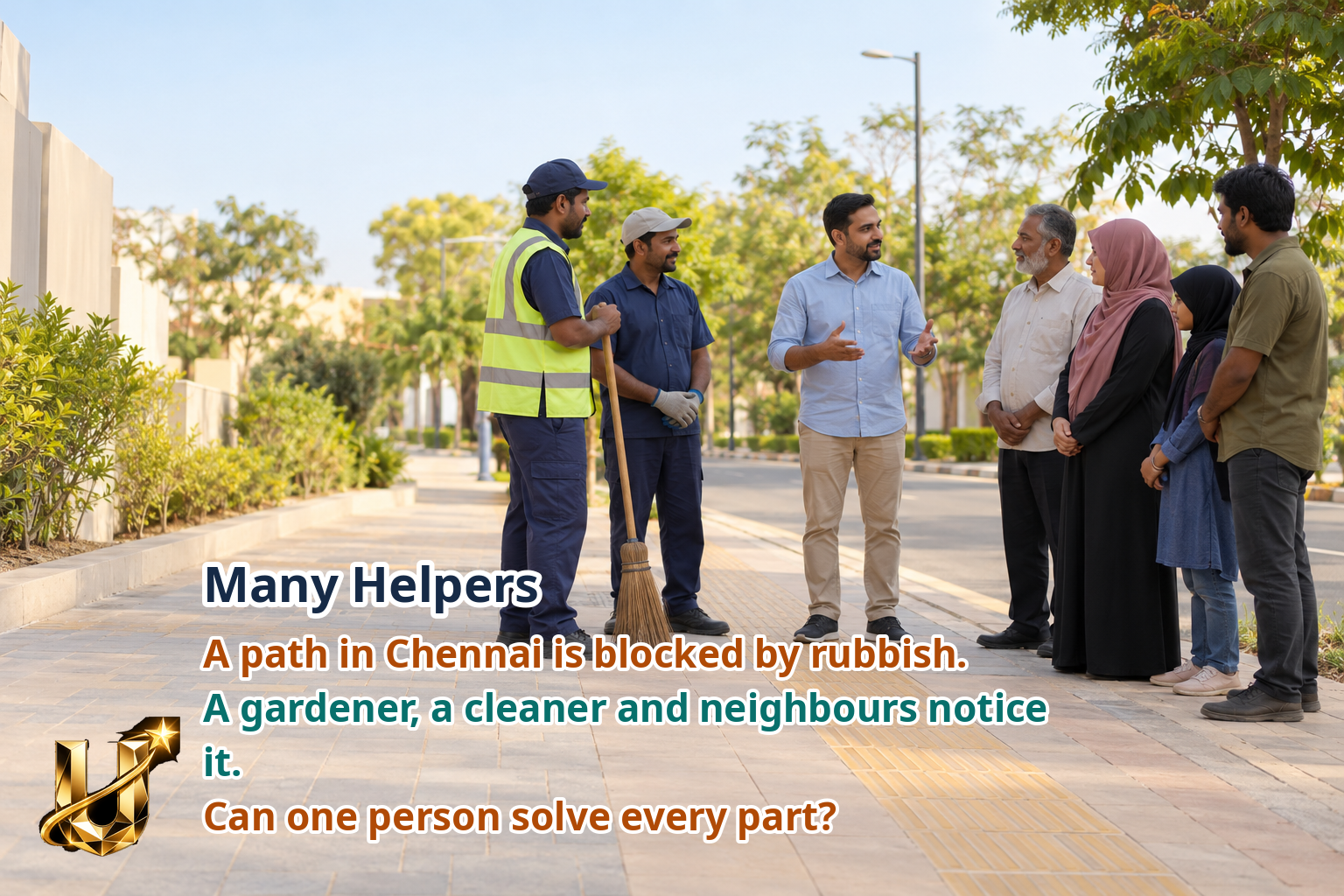
A path in Chennai is blocked by rubbish. A gardener, a cleaner, neighbours and schoolchildren all notice it. Can one person solve every part of the problem?
Unit 2: Life Around Us
A path in Chennai is blocked by rubbish. A gardener, a cleaner, neighbours and schoolchildren all notice it. Can one person solve every part of the problem?
The place and conditions in which an organism lives.
Review lesson not available yet.
A path in Chennai is blocked by rubbish. A gardener, a cleaner, neighbours and schoolchildren all notice it. Can one person solve every part of the problem?
A community includes people who share a place or activity. Teachers, health workers, transport workers, cleaners, gardeners and many others help meet needs. Services may be organised differently in different places.
Students want books returned to the right shelves. Which school worker could help guide them?
A community can be people who:
First describe the problem. Then choose an action that addresses it. A blocked drain needs adult attention and appropriate waste management; adding decorations does not clear it. Children should not enter drains or handle mixed waste.
A leaking tap wastes water. Would turning up music fix it?
A drain is blocked by mixed waste. Children should:
Listen to different needs before choosing a plan. A person using a wheelchair may need a clear route. Workers need respectful treatment and safe conditions. A useful plan identifies adult responsibilities and safe child contributions.
A group places a new plant pot in the middle of an entrance. What should they check?
With an adult, name a local service and the need it helps meet. Then use a picture to discuss a blocked path and one safe response. Do not approach rubbish, drains or road work.
Communities depend on many people's work. Identify needs, choose relevant actions and consider access and safety when making shared decisions.