
A question from life
Enlarge image
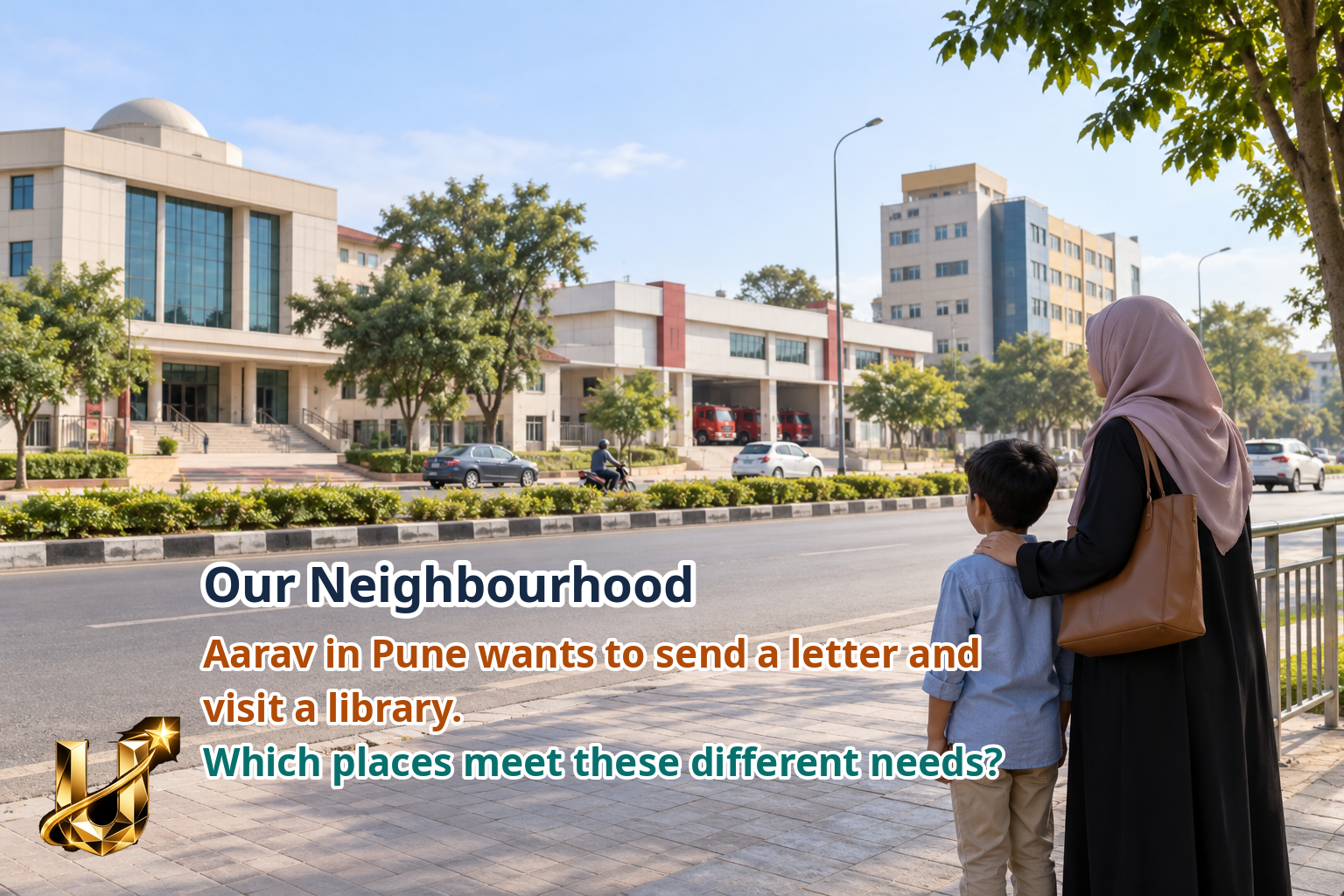
Aarav in Pune wants to send a letter, visit a library and find a bus stop with an adult. Which neighbourhood places meet these different needs?
Unit 1: Our Community
Aarav in Pune wants to send a letter, visit a library and find a bus stop with an adult. Which neighbourhood places meet these different needs?
The way from one place to another.
Review lesson not available yet.
Aarav in Pune wants to send a letter, visit a library and find a bus stop with an adult. Which neighbourhood places meet these different needs?
A post office handles postal services; a library provides reading resources; a bank provides financial services; transport stops connect journeys. A building's appearance alone may not prove its function. Ask a trusted adult and follow local rules.
Meera needs to return a borrowed book and post a letter. Where might she go?
A map key explains:
A map represents a place using agreed symbols. A key explains symbols. A direction arrow shows how to read north; east is to the right when north is at the top. Left and right depend on which way a person faces.
A map key says a small tree symbol means park. What does that symbol tell you?
Which place handles posting a letter?
People can communicate in person, by letters, telephone calls or digital messages. Methods differ in speed, access and purpose. Children use accounts, money or personal information only with trusted adult support. Faster messages still need care and privacy.
North is at the top of a map. The library is to the right of the school. Which map direction is that?
With an adult, use a pretend north-up map with a school, park and library. Point to a symbol and its key, then describe a route. No real travel, accounts or private addresses are needed.
Neighbourhood services meet different needs. A map key and direction arrow help us read a map. Communication choices need access, care and privacy.