
A question from everyday life
Enlarge image
Meera sees a pond, trees and birds in Pune. If the pond dries or becomes polluted, will only the water be affected?
Unit 5: Our Amazing Planet
Meera sees a pond, trees and birds in Pune. If the pond dries or becomes polluted, will only the water be affected?
Careful protection and use of resources and living environments.
Review lesson not available yet.
Meera sees a pond, trees and birds in Pune. If the pond dries or becomes polluted, will only the water be affected?
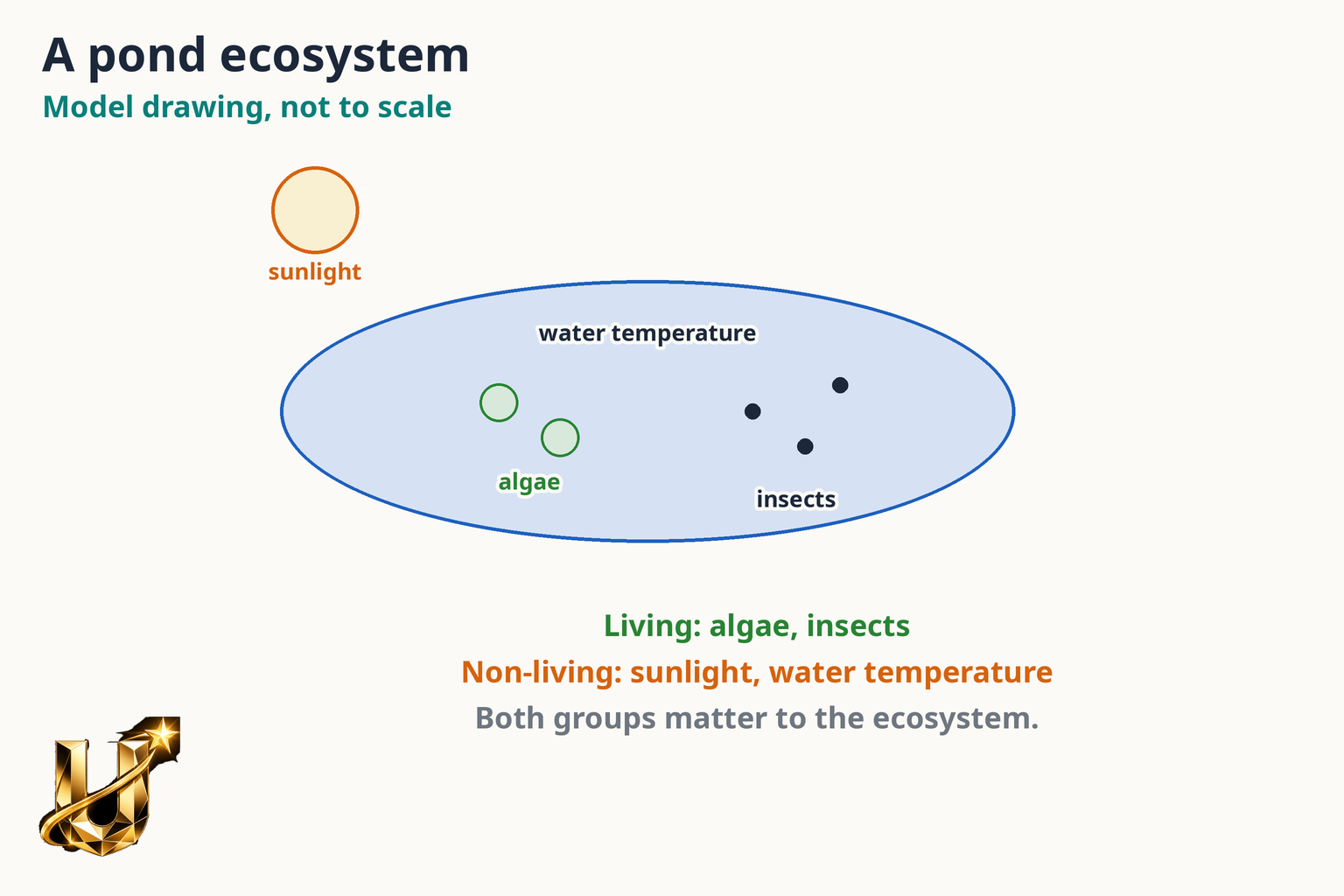
An ecosystem includes living things interacting with non-living factors. Plants, animals and microorganisms are living components; water, air, light and temperature are non-living factors. Soil contains both non-living material and living organisms.
A pond has algae, insects, sunlight and water temperature. Which are non-living factors?
An ecosystem includes:
Water, air, organisms, goods and ideas can move between places. A local action may affect downstream water or habitats elsewhere. Boundaries on a map do not make environmental effects stop automatically.
Waste enters a stream upstream from a pond. Why can the pond be affected?
Which is a non-living factor?
Protect suitable habitats, reduce unnecessary resource use and prevent pollution. Respect workers and different communities. A useful action should address an identified need and remain safe for children; adults handle hazards and system-level work.
A pond dries. Must every species respond in exactly the same way?
Use a fictional pond picture. Point to two living and two non-living factors, then describe one possible effect of changed water conditions.
Earth's ecosystems connect living things, conditions and places. Shared care needs relevant safe action and respect for varied communities.