
A question from everyday life
Enlarge image
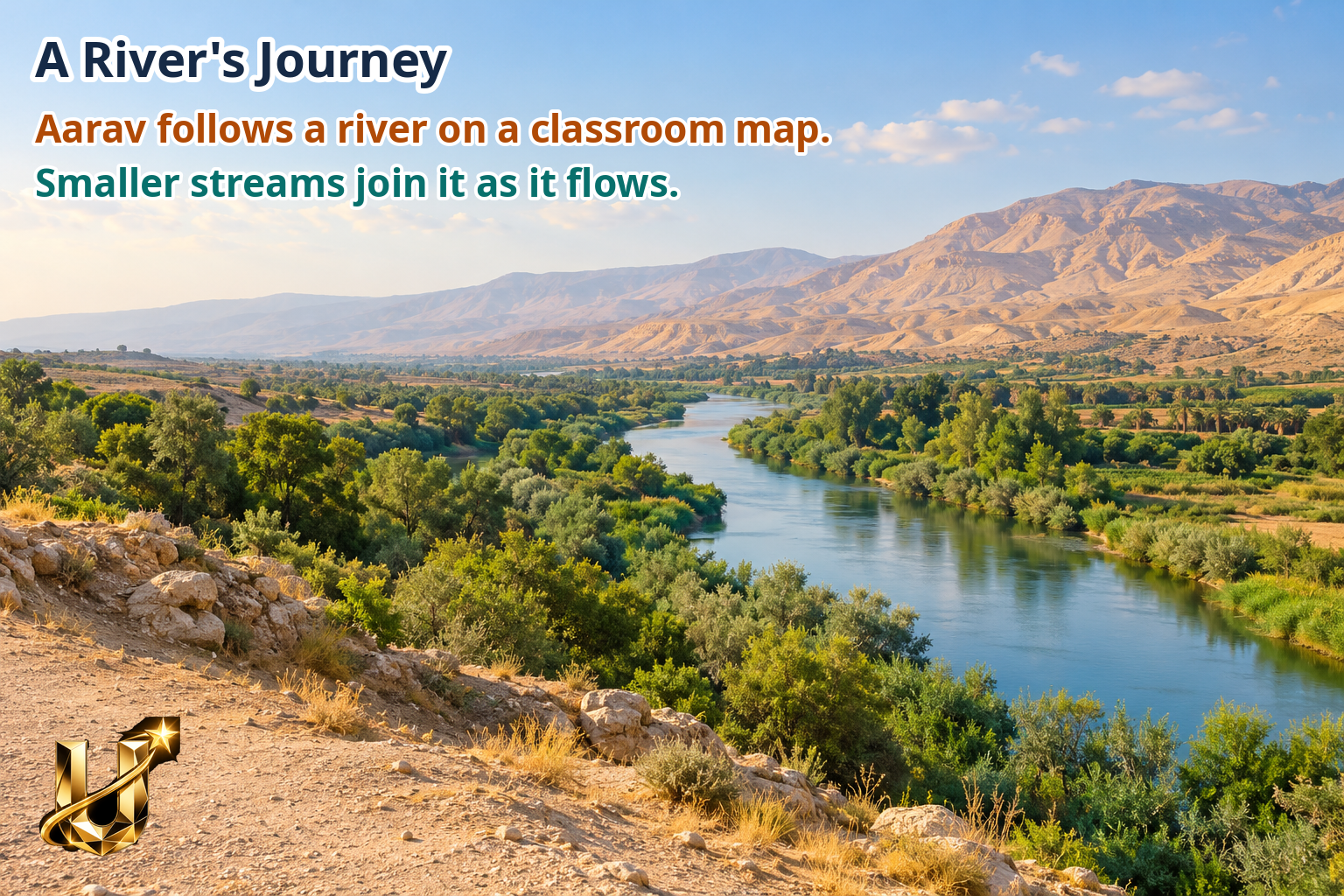
Aarav follows a river on a classroom map in Delhi. Smaller streams join it and the water later reaches a wider channel. What can happen along the journey?
Unit 1: Life Around Us
Aarav follows a river on a classroom map in Delhi. Smaller streams join it and the water later reaches a wider channel. What can happen along the journey?
A place from which water is obtained.
Review lesson not available yet.
Aarav follows a river on a classroom map in Delhi. Smaller streams join it and the water later reaches a wider channel. What can happen along the journey?
A river flows along a channel from higher toward lower ground overall. Streams joining it are tributaries. The source is where its journey begins; its mouth is where it enters another water body. Not every river has the same route or ending.
A small stream joins a larger river. What is the smaller stream called?
A tributary is:
Flowing water can wear away and carry soil and rock fragments. Wearing away and removal is erosion; carrying sediment along is transport, and its settling is deposition. A river may be muddy from suspended sediment even without a visible rubbish source.
Fast flow carries sand and slower flow later leaves it behind. What is the second process?
Settling of transported sand is:
Rivers can provide habitats and water for many uses. Use and pollution upstream can affect places downstream. Water must be assessed and treated for its intended use; river water is not automatically safe to drink.
Waste enters a stream above a town. Why can it matter farther along?
Trace a fictional river map with an adult. Identify a tributary and say which place is downstream. Do not visit riverbanks or collect water for this activity.
Rivers connect sources, tributaries and downstream waters. They transport sediment and can carry pollution, linking people's responsibilities.