
A question from everyday life
Enlarge image
Enlarge image
A school in Pune wants every pupil to use the library, playground and classroom. What makes a place happy and welcoming for different learners?
Unit 2: Health and Well-being
A school in Pune wants every pupil to use the library, playground and classroom. What makes a place happy and welcoming for different learners?
How easily different people can reach and use a place or service.
Review lesson not available yet.
A school in Pune wants every pupil to use the library, playground and classroom. What makes a place happy and welcoming for different learners?
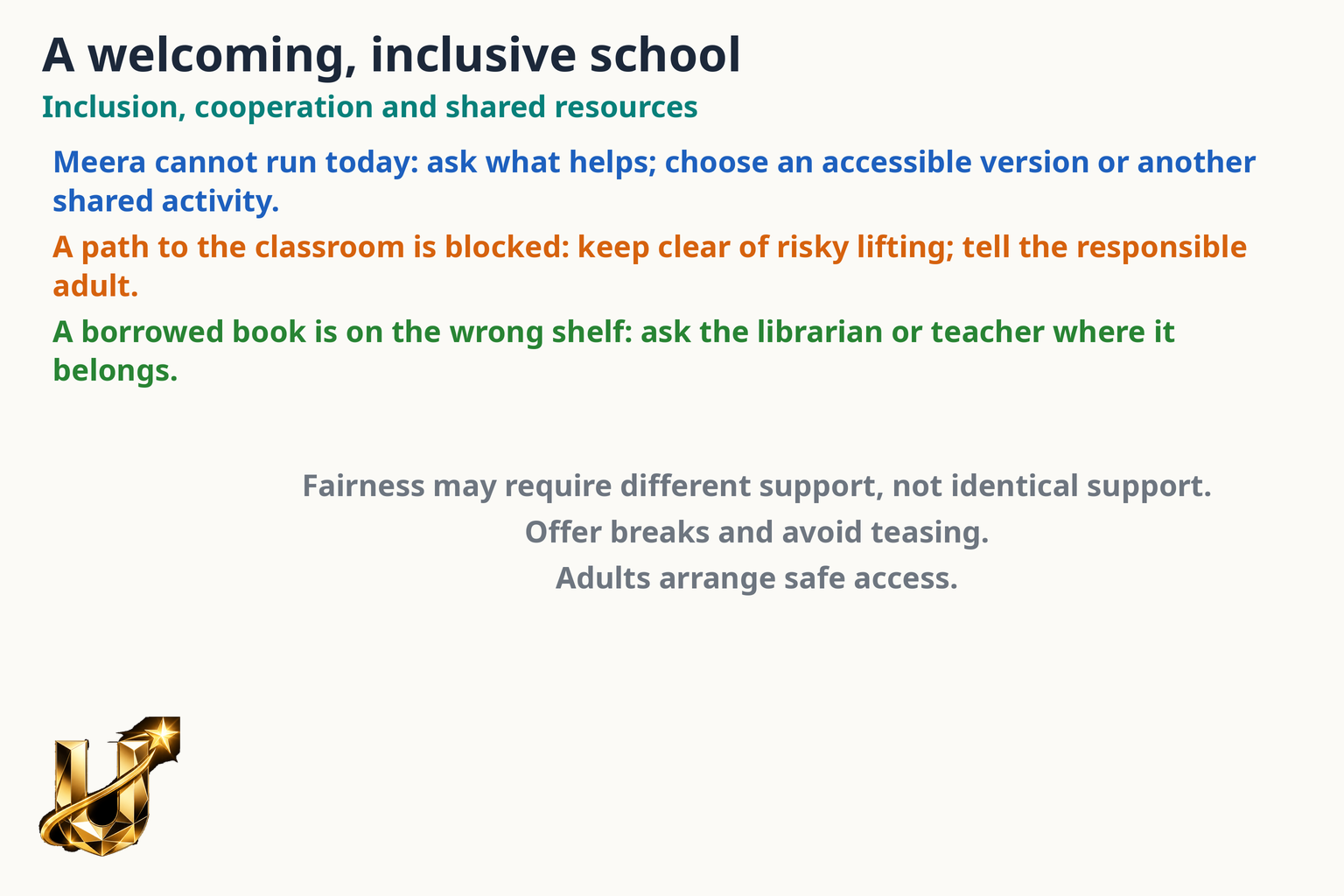
A welcoming school respects differences in language, interests, family circumstances and abilities. Fairness may require different support, not identical treatment in every situation. Teasing or exclusion makes participation harder.
Meera cannot run today but wants to join a game. What can classmates do?
Fairness in school can mean:
Teachers, cleaners, office staff, cooks, librarians and pupils contribute in different ways. Books, water, learning materials and shared spaces need care. Work should match skills, responsibilities and safety.
Aarav finds a borrowed book on the wrong shelf. What is useful?
Which task is a safe pupil contribution?
Describe a problem clearly, listen to people affected and seek responsible adult help. A blocked route needs an access solution; a missing book needs a clear borrowing system. Children do not fix electrical, structural or sanitation hazards.
A path to the classroom is blocked by heavy furniture. What can pupils do?
Use a fictional classroom plan. Identify one shared resource and one access need, then suggest an adult-supported safe improvement.
A happy school combines belonging, fair support, safe shared work and thoughtful care of resources.