
A question from everyday life
Enlarge image
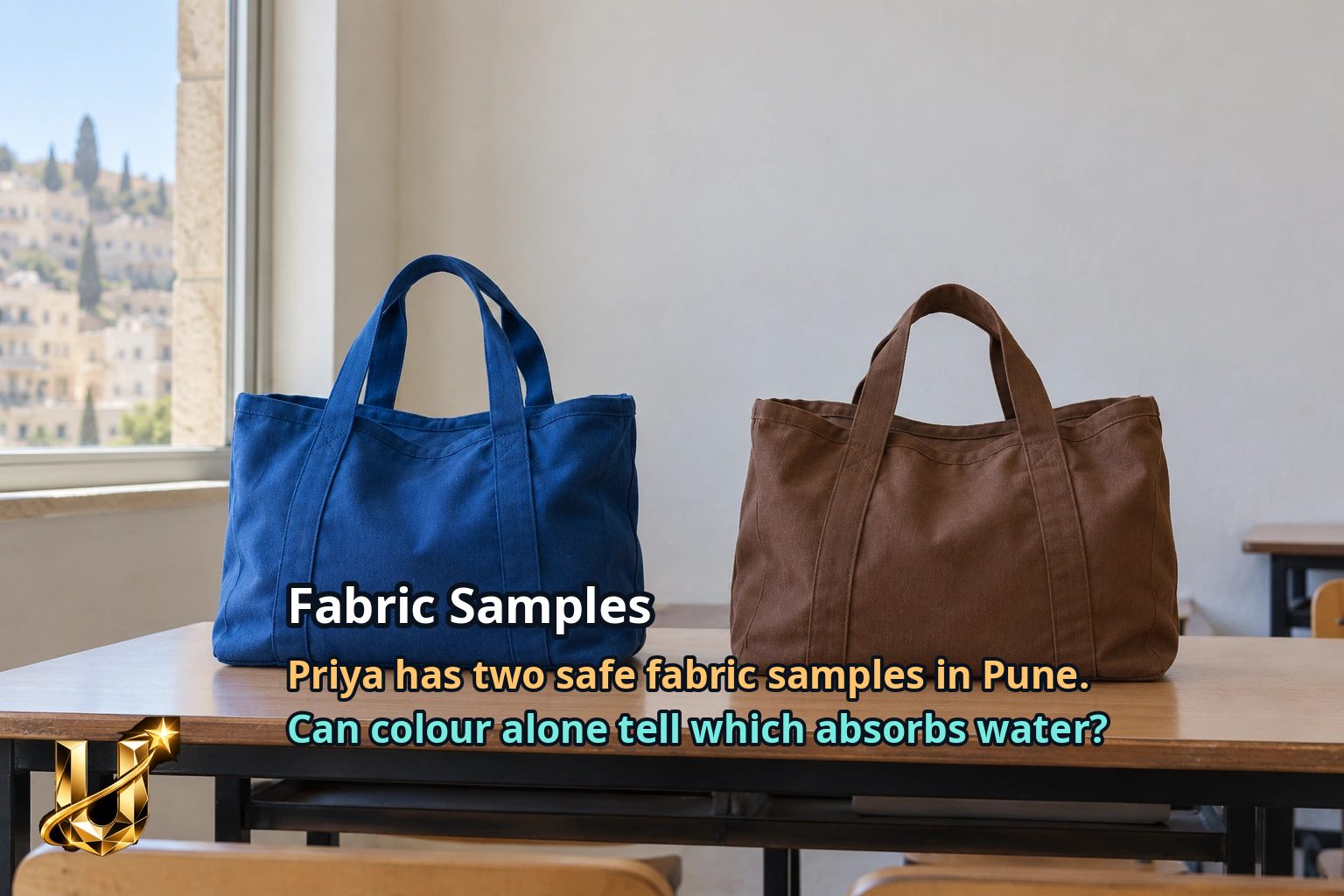
Priya has two safe fabric samples in Pune. Can she decide which absorbs a small water drop by looking only at the colour?
Unit 4: Things Around Us
Priya has two safe fabric samples in Pune. Can she decide which absorbs a small water drop by looking only at the colour?
A textile material made from fibres or yarn through suitable processes.
Review lesson not available yet.
Priya has two safe fabric samples in Pune. Can she decide which absorbs a small water drop by looking only at the colour?
A fair absorption comparison uses similar-sized suitable samples and equal small drops. Record what happens over the same observation time. Colour alone does not establish absorbency, strength or warmth.
One test uses a large cloth and five drops; another uses a tiny cloth and one drop. Is this a fair direct absorption comparison?
A fair absorption test uses:
Suitable cleaning, storage and repair can keep clothes useful. Adults follow care instructions and handle sewing needles, irons and chemicals. Repair or reuse should not involve unsafe materials or ignore a person's needs.
Aarav notices a loose button. Should he handle a needle or hot iron alone?
Colour alone proves:
Natural or manufactured origin alone does not prove a textile is always environmentally best. Growing, processing, transport, durability and use all matter. Avoid unnecessary purchases and value workers' skills without making unsupported universal claims.
A label says a fabric is natural. Does that alone prove every environmental impact is lower?
Use pictures or equal safe fabric samples with adult approval. Discuss one property, a fair comparison and a safe care action. No heat, needles or unknown liquids.
Choose tests that match the property, care for materials safely and avoid environmental claims based on a single label.