
A question from life
Enlarge image
Priya has twenty-three blocks. Aarav adds fourteen. How can groups of ten help?
Chapter 8: Fun with Numbers
Priya has twenty-three blocks. Aarav adds fourteen. How can groups of ten help?
One group of ten ones.
Review lesson not available yet.
Priya has twenty-three blocks. Aarav adds fourteen. How can groups of ten help?
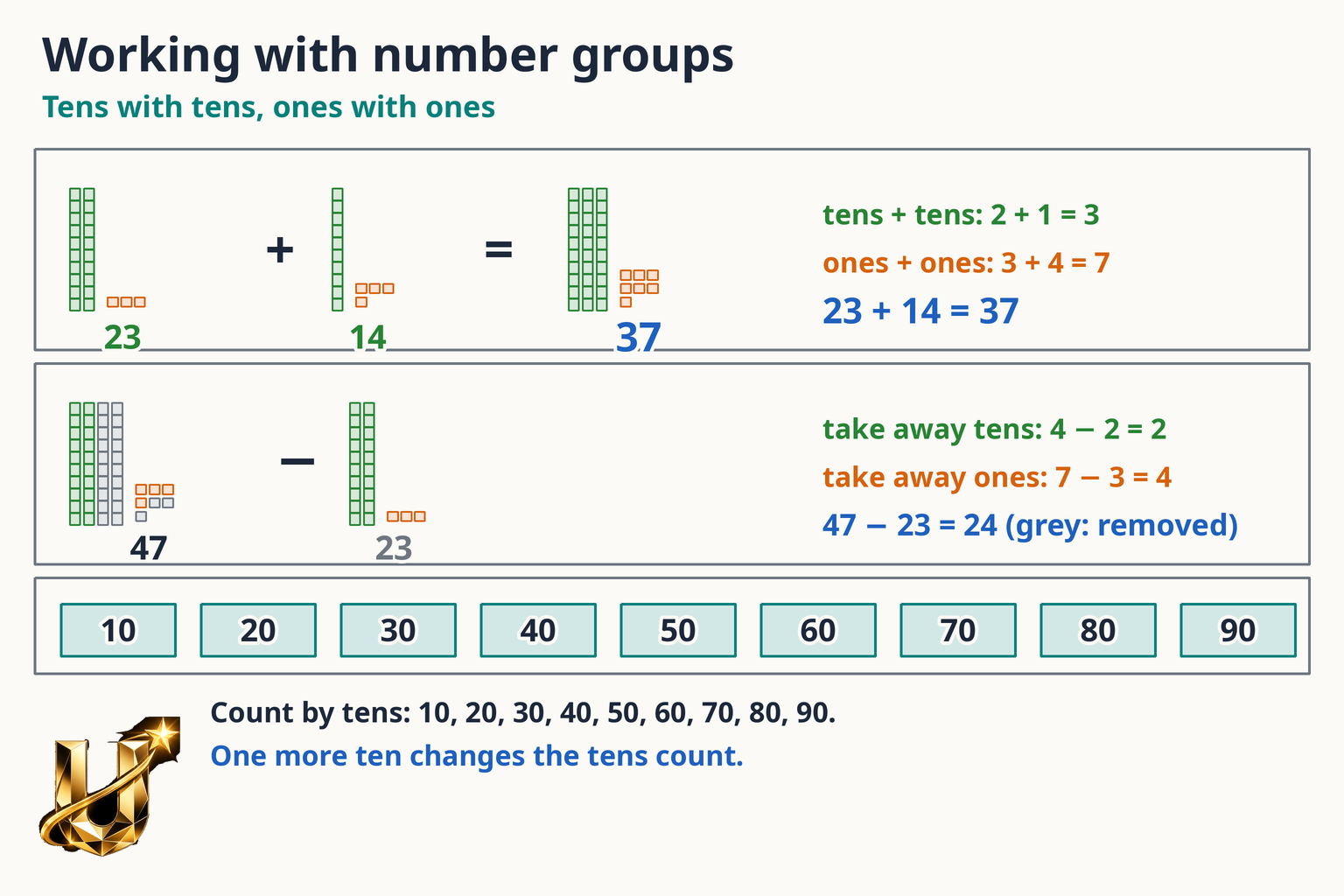
Count by tens: ten, twenty, thirty, forty, fifty, sixty, seventy, eighty, ninety. One more ten changes the tens count.
Forty-eight and ten more make what?
To join two-digit groups, join tens with tens and ones with ones. We first practise examples where ones stay below ten.
Twenty-three blocks and fourteen more.
Thirty-two plus twenty-five equals:
To subtract, remove tens from tens and ones from ones. Use blocks whenever a step is unclear.
Forty-seven blocks, take away twenty-three.
Sixty-eight minus thirty-four equals:
Twenty is two tens. Add another equal group of twenty each time: twenty, forty, sixty, eighty. To count back in twenties, say eighty, sixty, forty, twenty. These are whole groups of twenty below one hundred.
Priya makes three equal groups, with twenty blocks in each. How many blocks altogether?
A number can be split into parts without changing its value. Forty-six is forty and six. Forty can also be split into twenty and twenty, so forty-six is twenty, twenty and six. Join the parts to check.
Show sixty-four using full groups of twenty and loose ones.
Count by twenties: twenty, forty, sixty. What comes next?
Use groups of ten to count and calculate. Join or remove tens and ones separately in these examples.
With an adult, model twenty-three plus fourteen and forty-seven minus twenty-three using tens groups and loose blocks.