
A question from everyday life
Enlarge image
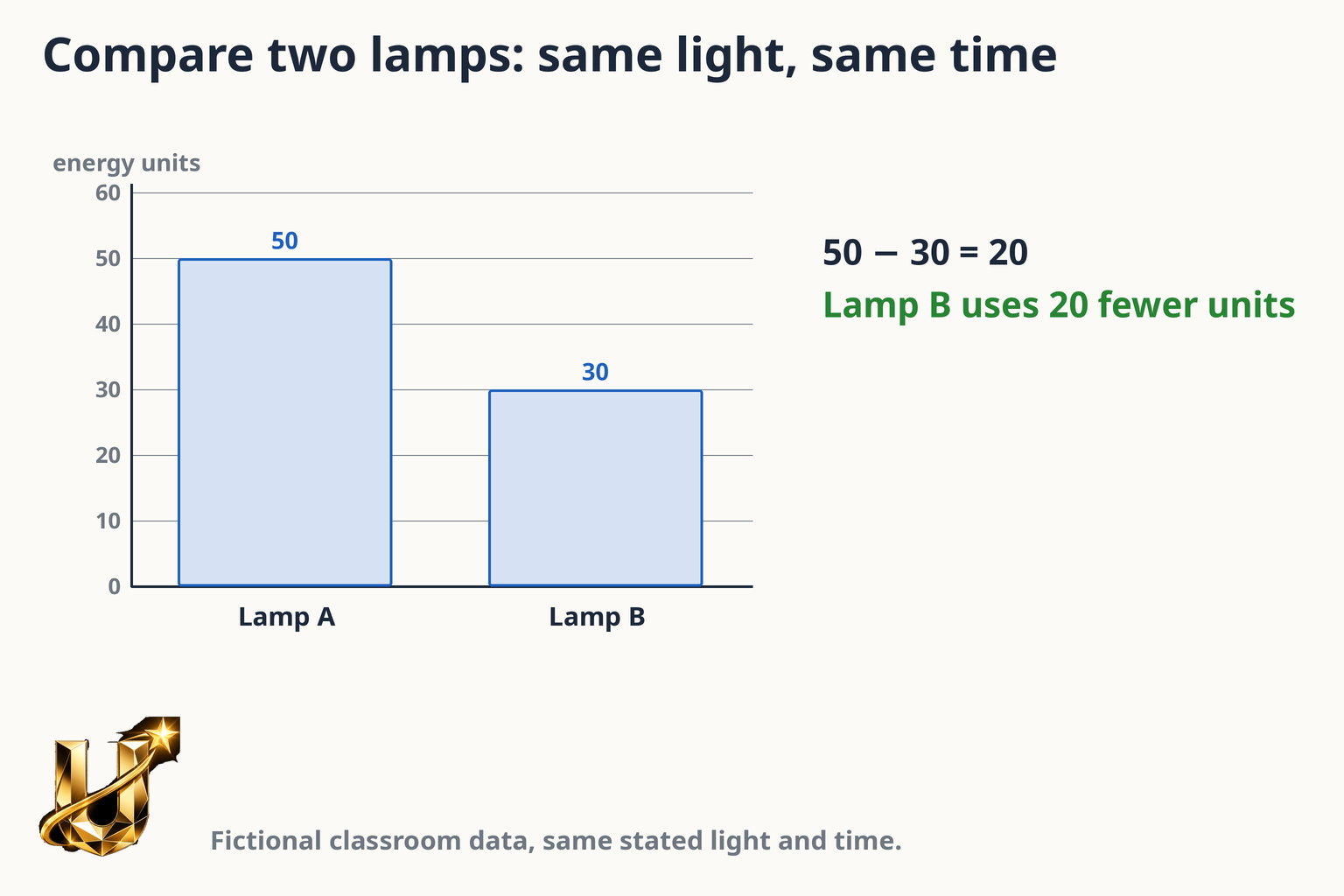
Meera's class in Delhi compares two fictional lamps giving the same light for the same time. One uses 50 energy units and the other 30. What can the data support?
Working review group 6; official unit label pending
Meera's class in Delhi compares two fictional lamps giving the same light for the same time. One uses 50 energy units and the other 30. What can the data support?
Processing suitable collected material into new products.
Review lesson not available yet.
Meera's class in Delhi compares two fictional lamps giving the same light for the same time. One uses 50 energy units and the other 30. What can the data support?
Reduce means avoid unnecessary consumption. Reuse means use a suitable item again. Recycling processes suitable collected material into new products. Not every material is accepted everywhere; adults follow local collection guidance.
Two lamps provide the same stated light for the same time, using 50 and 30 units. What is the difference?
Using a suitable bag again is:
Efficiency comparisons need the same useful service and time. A lower use figure is not meaningful if the second device gives much less needed service. Classroom values are invented data, not product recommendations.
Priya uses a suitable cloth bag repeatedly. Is that recycling?
50 units minus 30 units is:
Protect sources from pollution, report leaks and avoid unnecessary waste. Adults handle hazardous waste, electronics and system repairs. Solar and wind options have conditions and impacts; compare evidence rather than assuming a perfect solution everywhere.
A school tap leaks. Which action addresses the need?
Calculate the fictional lamp difference and classify three safe action cards as reduce, reuse or recycle. No real purchase or device opening.
Reduce, reuse and recycle differ. Compare equal services and choose relevant safe actions using evidence.