
A question from life
Enlarge image
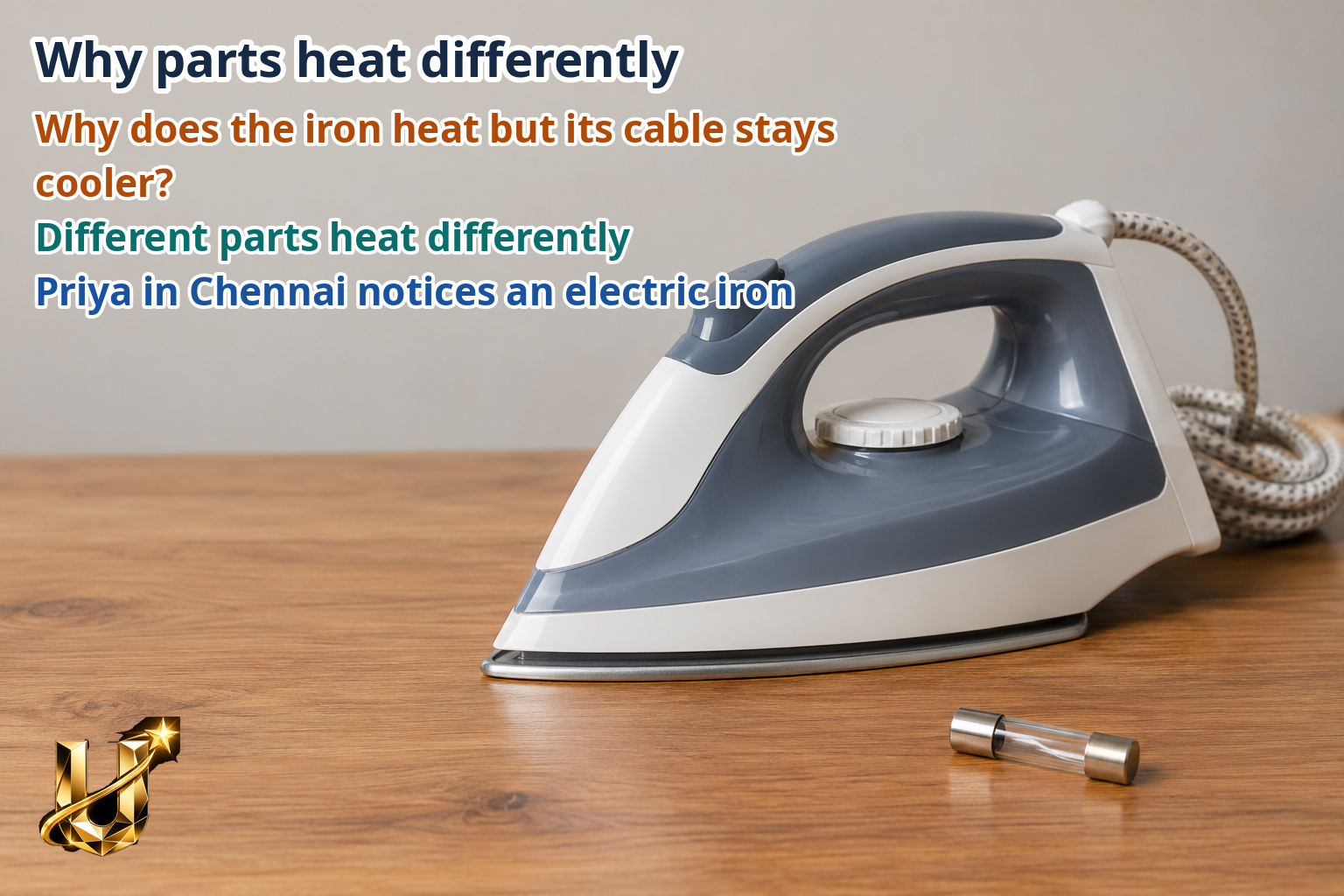
Priya in Chennai notices that an electric iron heats strongly while its connecting cable should remain much cooler. Why do different parts heat differently?
Working review group 2; official unit label pending
Priya in Chennai notices that an electric iron heats strongly while its connecting cable should remain much cooler. Why do different parts heat differently?
The rate of flow of electric charge through a section of a circuit.
Review lesson not available yet.
Priya in Chennai notices that an electric iron heats strongly while its connecting cable should remain much cooler. Why do different parts heat differently?
When current passes through a resistive element, electrical energy can transfer as thermal energy. Heating depends on current, resistance and time. A device is designed to concentrate useful heating in a suitable element.
A fictional heater uses electrical energy to warm water.
What useful conversion occurs in a heater?
Heaters and traditional filament lamps use heating effects. A hot filament emits light; an LED produces light by a different mechanism. Loose connections and excessive current can cause dangerous unwanted heating.
A teacher-prepared comparison gives temperature rises of 2 °C and 5 °C for identical samples heated for different times.
Why must a fuse not be bypassed?
A suitable fuse melts when excessive current heats it enough, opening the circuit. A circuit breaker also interrupts current under specified fault conditions. Never replace a fuse with random wire or bypass a protective device; adults arrange qualified repairs.
Excessive current flows through a correctly rated fuse.
Sort pictures into intended heating, unwanted heating and protection. Explain a fuse using an existing animation or diagram; do not heat wires, open appliances or use mains circuits.
Current can cause heating. Useful heating elements are designed for their task; protective devices interrupt excessive current and must never be bypassed.
An electrochemical cell converts chemical energy into electrical energy delivered through a suitable circuit. A common dry primary cell contains a paste electrolyte and is not intended for recharging. Rechargeable cells have chemistry designed to be restored using the correct charger; they are not an unlimited energy source. Dry does not mean no electrolyte.
Compare a labelled primary dry cell and a rechargeable cell. Does the same physical size mean both may be recharged?
A common primary dry cell is: