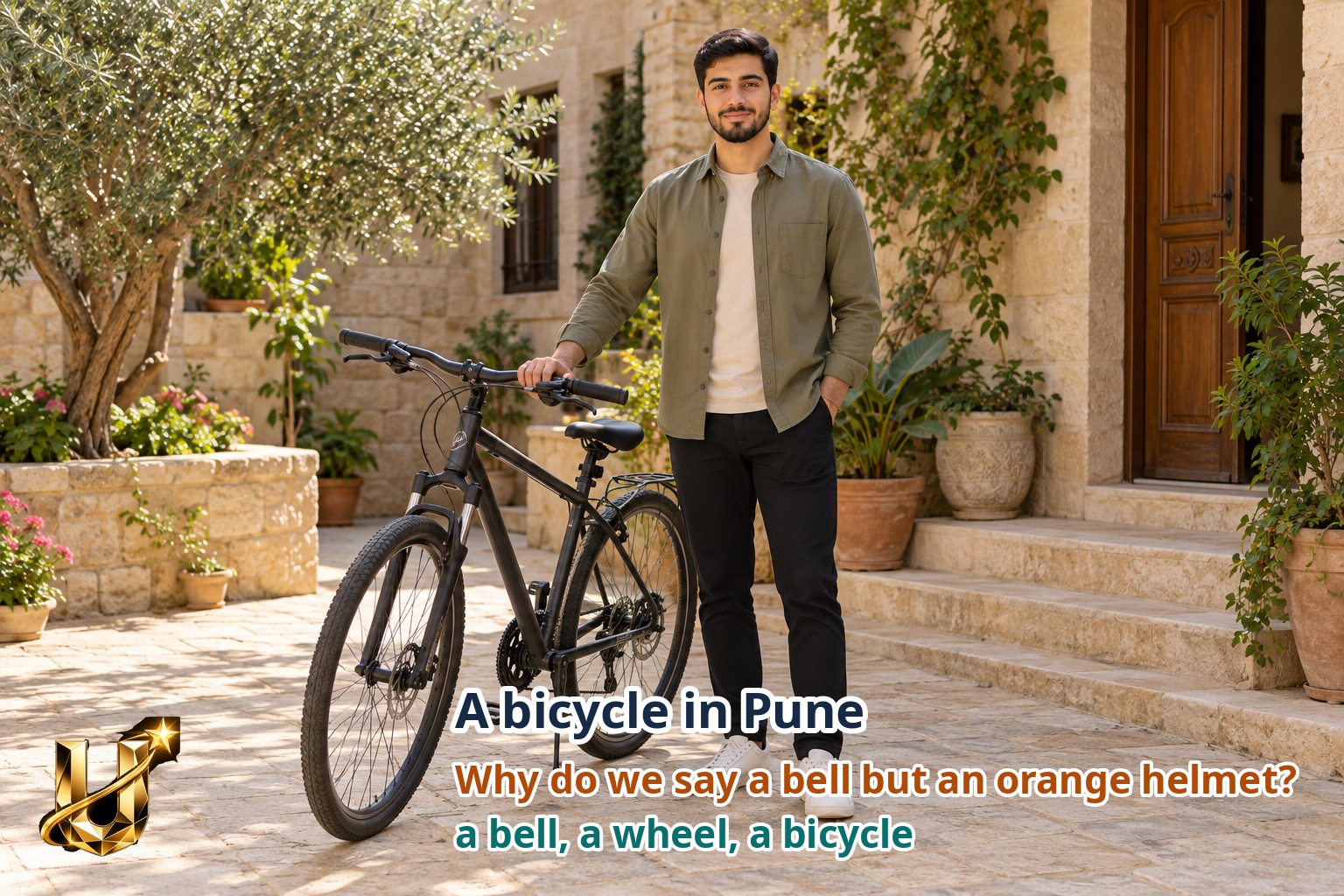
A bicycle in Pune
Open My Bicycle in your student book with an adult. First use this reading explanation and application. The later original examples practise language separately. Separate original practice context: Aarav checks a bicycle with an adult before riding in a safe place. He sees a wheel, a bell and an orange helmet. Why do we say a bell but an orange helmet?
Read the book: My Bicycle
The poem’s speaker describes a red bicycle with a blue seat and black tyres and pedals. Its ringing bell asks others to move aside. The rider sometimes goes fast and sometimes slowly, and wears a helmet. Pedal can name a bicycle part or the action of pushing it with the feet. Notice how colours and sounds make the description specific.
Practise with the book
Distinguish the whole bicycle from one part.
- The speaker calls the bicycle red.
- The blue colour belongs to its seat.
- Describing a blue seat does not turn the whole bicycle blue.
Name bicycle parts
A bicycle has wheels, pedals and handlebars. A bell makes a warning sound. An adult checks the brakes. Use a for one thing before a consonant sound: a wheel, a bell. Say bicycle naturally with an adult: bi, cy, cle. Tap its three spoken beats, called syllables. Now say this new sound pattern: bright brown bicycles. These words repeat the beginning sound; this is alliteration.
Example 1: Name one part
Priya points to one wheel.
- Wheel begins with a consonant sound.
- Choose a.
- Say: This is a wheel.
Listen before choosing a or an
Use an before a vowel sound: an apple, an orange helmet. Use a before a consonant sound: a helmet, a bicycle. Listen to the next word's sound, not only its first letter.
Example 2: Choose an
Aarav has an orange helmet.
- The word after the article is orange.
- Orange begins with a vowel sound.