Near and far
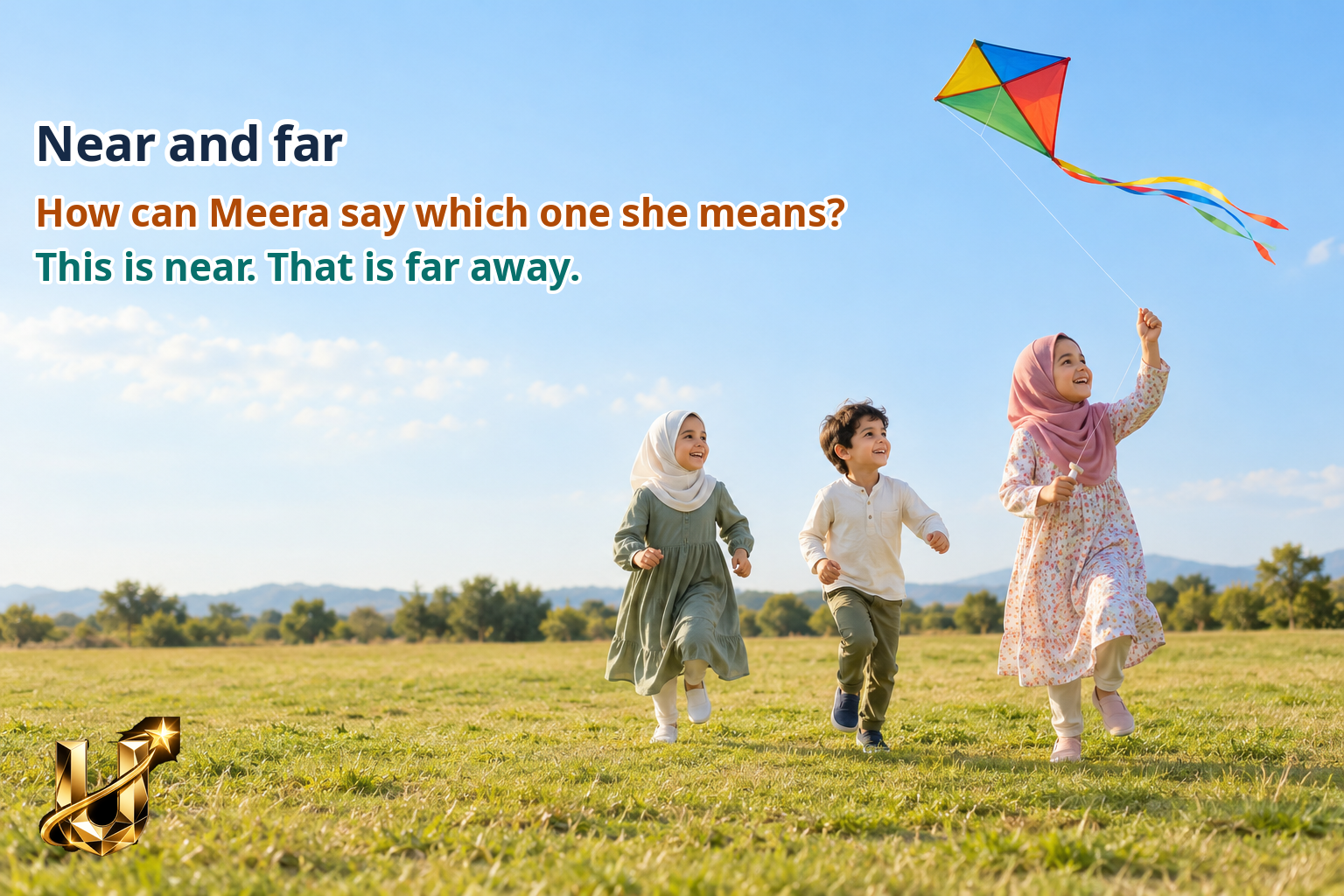
Open Picture Reading and OUT! OUT! in your student book with an adult. First use this reading explanation and application. The later original examples practise language separately. Separate original practice context: Meera stands with an adult in a Chennai park. A ball is near her. A kite is far away in the sky. How can she tell a friend which one she means?
Read the book: Picture Reading and OUT! OUT!
Jeet and Babli play on a holiday. Their ball goes into Mohit’s locked garden, so Babli makes another from rags, paper, wool and string. When Jeet hits it, the new ball breaks apart. Babli catches a rag and calls out as if completing a catch. Rags are pieces of old cloth; scattered means spread in different directions.
Practise with the book
Why is the ending playful?
- The children solve the lost-ball problem with available materials.
- Their replacement breaks apart during play.
- Catching one piece turns that mishap into another moment of make-believe fun.
This and that
Use this for one thing close to the speaker: This is a ball. Use that for one thing farther away: That is a kite. A description must say whose position near and far are measured from. Look at a checked printed page with an adult. English runs from left to right; move to the next line when one ends. A sentence starts with a capital and can end with a full stop. A question ends with a question mark. Fast and slow are opposites.
Example 1: Point near
A ball is beside Meera.
- The ball is near Meera.
- She says: This is a ball.
- This refers to one nearby thing.
Say what is happening
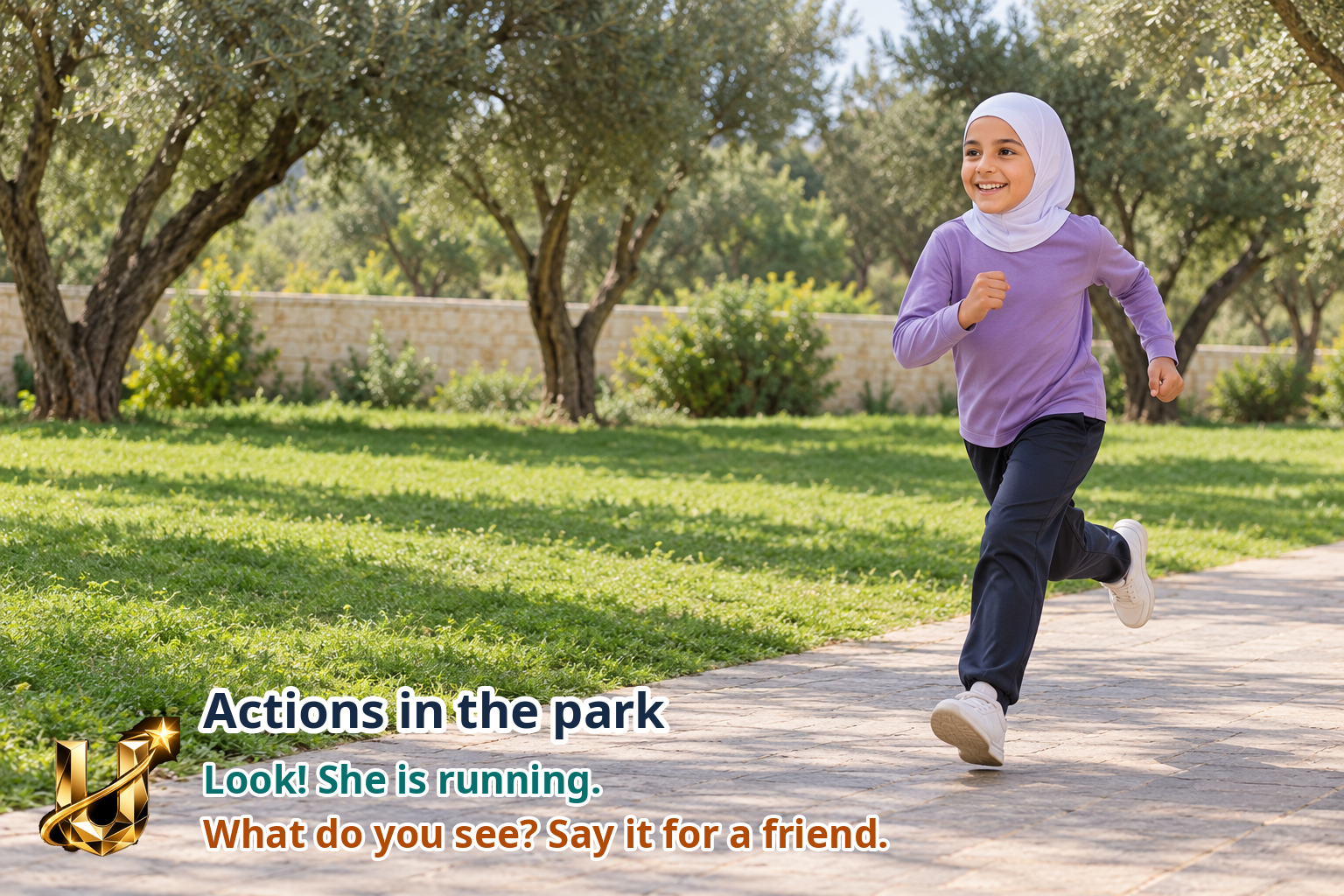
The child is running. The birds are flying. Is goes with one child here; are goes with more than one bird. The action ending ing helps tell what is happening now.
Example 2: Point far
A kite is far from Meera.
- The kite is farther away.