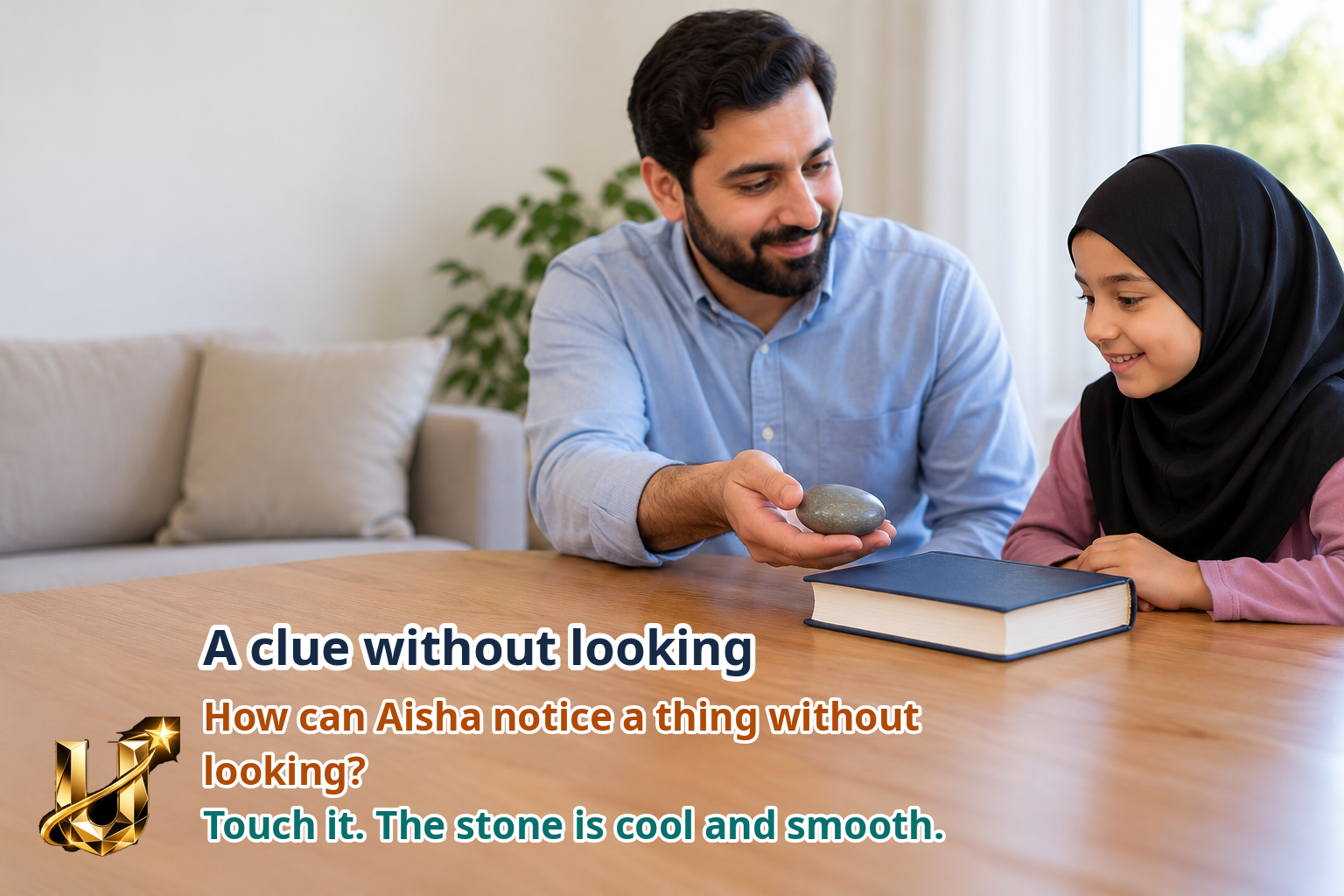
A clue without looking
Open Seeing without Seeing in your student book with an adult. First use this reading explanation and application. The later original examples practise language separately. Separate original practice context: An adult safely rings a small bell while Aisha looks at a book. Aisha hears the sound. How can she notice the bell without looking at it?
Read the book: Seeing without Seeing
Onshangla asks her mother Ava how a new classmate who cannot see will manage. In their game, touch and smell help identify a rose, and sound identifies a bell. Ava explains that there are other ways to find things out, while difficulties may remain. Sniff means smell with a short inward breath. The important response is friendship and asking what support the person wants.
Practise with the book
What does the bell episode demonstrate?
- Ava makes the bell ring.
- Onshangla identifies it from its sound.
- This supplies one example of using hearing; it does not prove that every blind person has identical experiences or needs.
Words for senses
See, hear, smell, taste and touch name ways people notice things. People use senses and tools in different ways. Aisha hears a bell; Aarav smells a flower. Do not taste unknown things or touch hot objects. Keep a conversation going: Would you like help? Yes, please. What would help? Please tell me where the chair is. Listen to the person instead of assuming what they need.
Example 1: Use hear
Aisha notices a bell sound.
- The clue is a sound.
- Use hear.
- Say: I can hear a bell.
Offer help respectfully
Ask: Would you like help? Listen to the reply. A person may say Yes, please or No, thank you. People who are blind or have low vision can use sound, touch, tools and learned skills; they do not all need the same help.
Example 2: Use touch safely
An adult offers a cool smooth stone for a voluntary activity.