A family visit
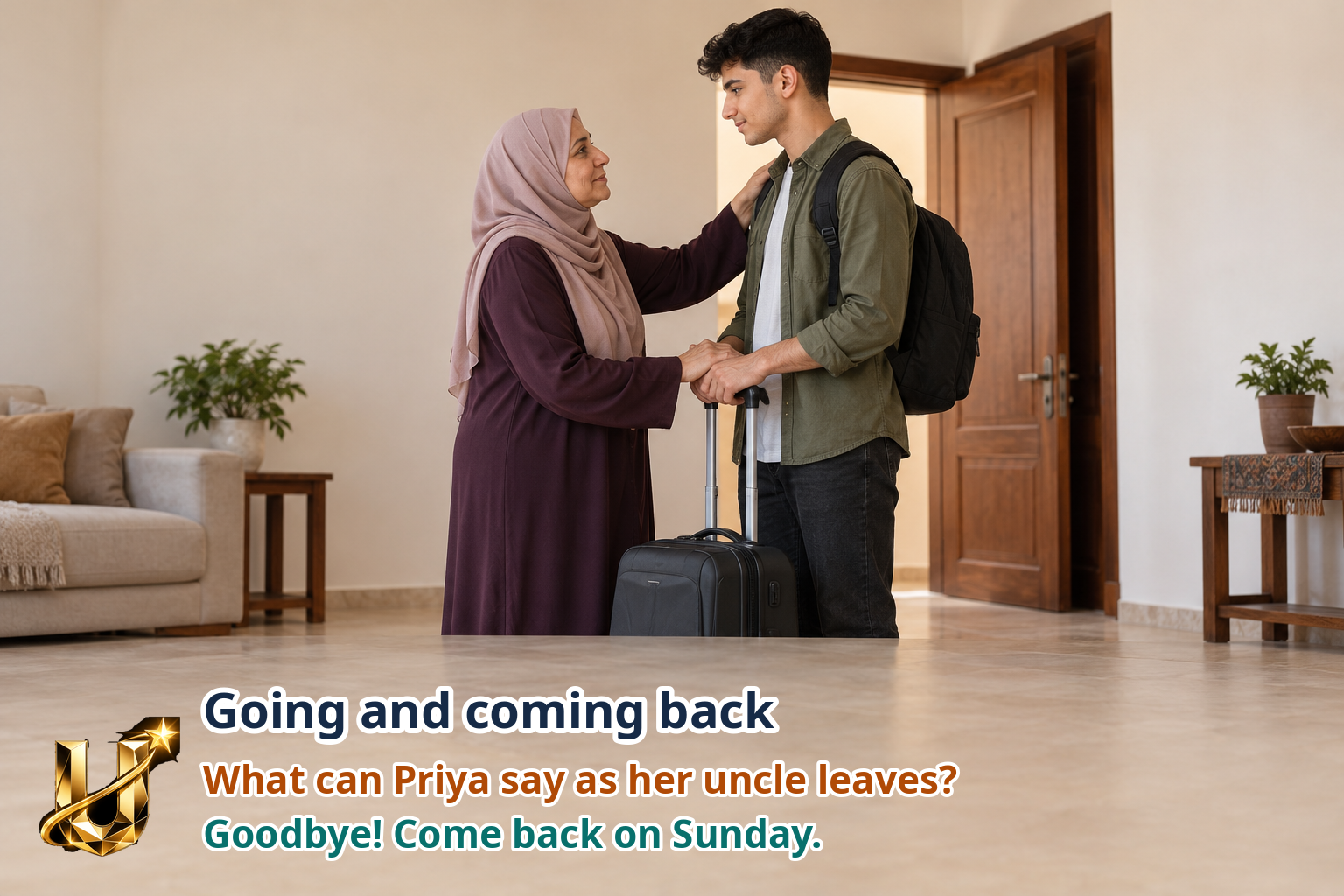
Open Come Back Soon in your student book with an adult. First use this reading explanation and application. The later original examples practise language separately. Separate original practice context: Priya's uncle is going from Delhi to Jaipur for a visit. He plans to return on Sunday. What can Priya say as he leaves? This is our original practice scene.
Read the book: Come Back Soon
The poem lists journeys by bus, train, boat, plane, taxi and car, then imagines a rocket trip to the Moon. Whatever the distance, its friendly wish is for the traveller to return. Near and far contrast distance; soon expresses a short expected wait without naming a date. The Moon trip gives the list an imaginative ending.
Practise with the book
Why is the final wish more important than choosing one vehicle?
- The list allows several different ways to travel.
- The ending connects them with the hope of a return.
- It does not set an actual Moon-trip plan or a precise timetable.
Use leaving and return words
Go means move away or travel to a place. Come back means return. Soon means after a short time, but it does not name an exact day. Goodbye and Come back soon are friendly leaving phrases. Here is a new two-line rhyme: We take a train. We watch the rain. Train and rain rhyme. Recite with a steady beat, then invent a new line or travel rhyme with adult help.
Example 1: A friendly goodbye
Priya's uncle is at the door.
- Say: Goodbye.
- Add: Come back soon.
- Soon expresses a wish without a date.
Talk about a plan with will
He will go by train. He will come back on Sunday. Will comes before the simple action word: will go, will return. A plan can change, so listen for the actual day if you need an exact answer.
Example 2: Name a way to travel
The uncle plans to take a train.