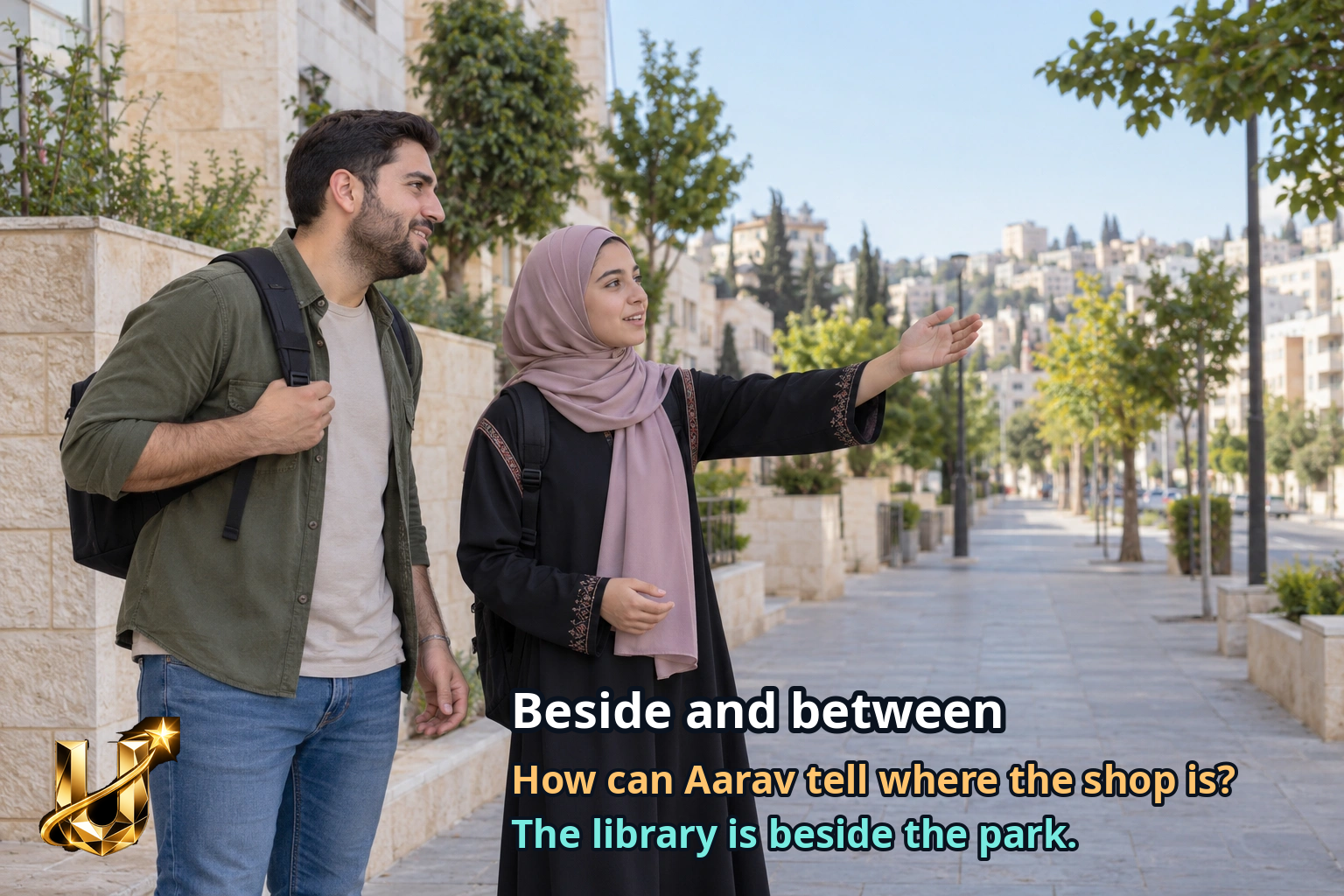
A pretend route
Open Between Home and School in your student book with an adult. First use this reading explanation and application. The later original examples practise language separately. Separate original practice context: Aarav walks with an adult in a made-up Pune neighbourhood. A library is beside a park. A small shop is between the park and a school. How can he describe the shop?
Read the book: Between Home and School
Ravi describes walking to school with a friend through paddy fields, a mango grove and towards the main road. Their route has things to watch and places to play, yet the account says they reach school on time. Paddy is rice growing in a field; a grove is a group of trees. This is Ravi’s route, not the invented route used later in our practice.
Practise with the book
Put Ravi’s route landmarks in order.
- He first names the paddy fields.
- The mango grove follows, before the main road.
- Retell the account; do not imitate risky actions near canals or roads.
Place words
Near means not far away. Beside means next to. Between tells that something is in the middle of two named places in our simple route: The shop is between the park and the school. The letters c and h work together for one beginning sound in chair and chain. This two-letter sound spelling is called a digraph, not a two-sound consonant blend. An adult models the sound and blends each whole word.
Example 1: Say beside
A library stands next to a park.
- Name the library.
- Use beside.
- Say: The library is beside the park.
Use a sequence for a route
First, leave home with an adult. Next, walk beside the park. Last, reach the school. This is a language activity, not directions for a real child to follow alone.
Example 2: Say between
In our pretend row, the order is park, shop, school.
- Find the two outside places: park and school.