Friends from different places
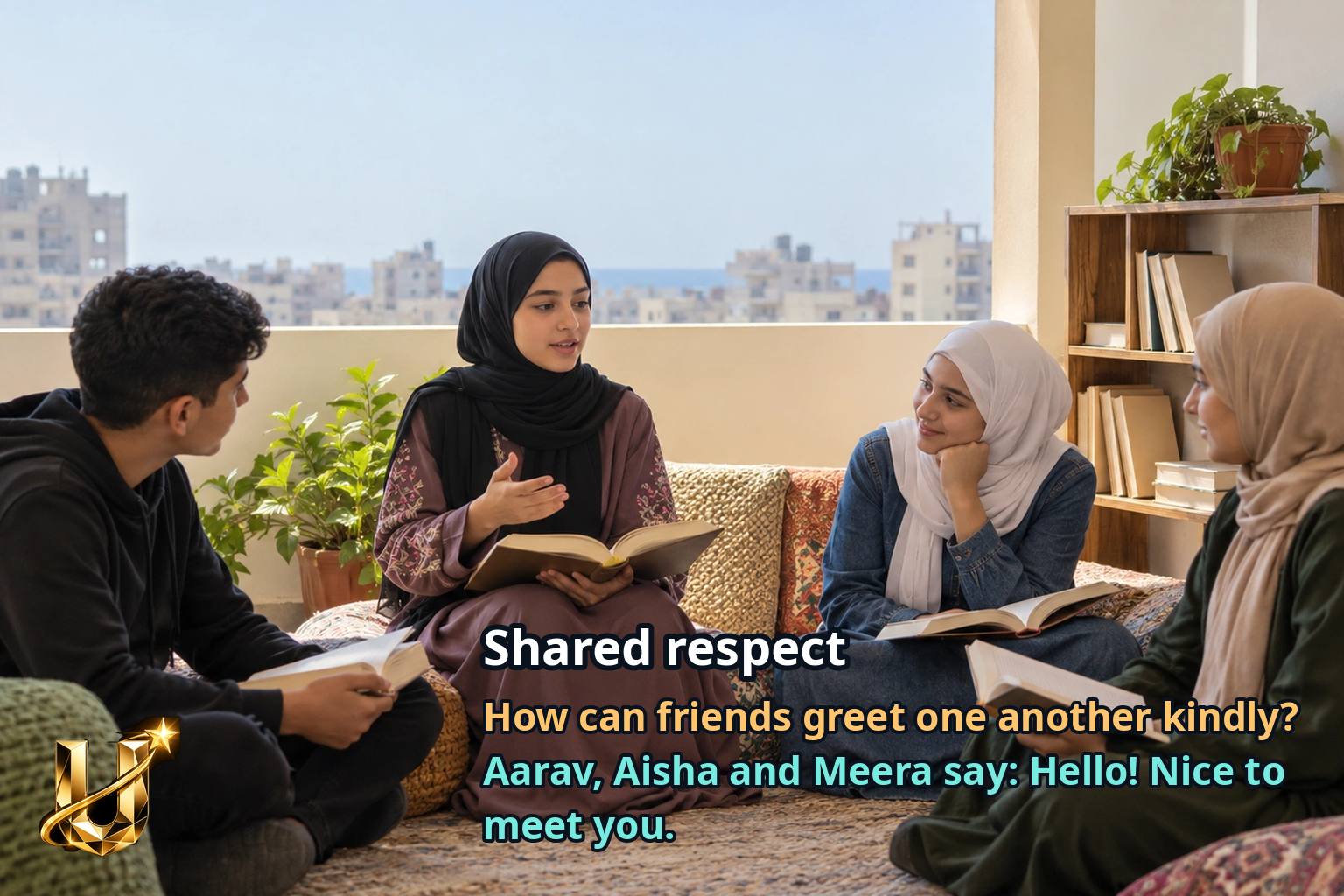
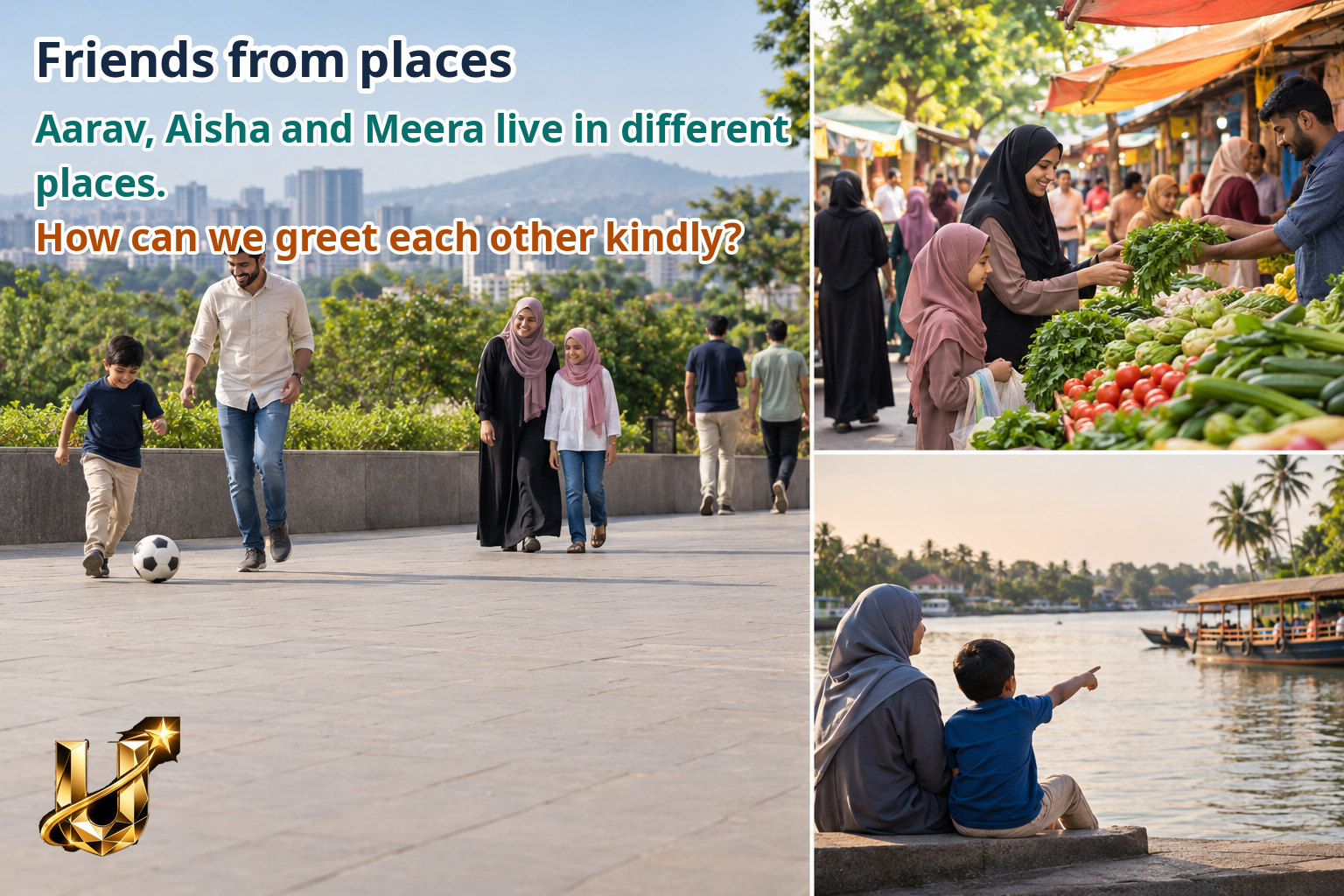
Open We are all Indians in your student book with an adult. First use this reading explanation and application. The later original examples practise language separately. Separate original practice context: Aarav is from Pune. Aisha is from Kochi. Meera is from Delhi. They meet in an imagined school group. Their home languages and favourite foods may differ. How can they greet one another kindly?
Read the book: We are all Indians
Children introduce themselves through places, languages, activities and preferences. Meenakshi speaks Tamil and names Pongal; Ramu speaks Gujarati and enjoys Garba; other voices add more experiences. Their differences coexist with a shared Indian identity. Unique means having a distinct character. These introductions describe the named children, not a rule that everyone from a state has identical interests.
Practise with the book
Use one introduction without turning it into a stereotype.
- Meenakshi names Tamil as a language she speaks.
- That gives information about her, not every person in Tamil Nadu.
- A new speaker may describe several languages or a different preference while still belonging.
I, we and they
I am Aarav. We are friends. They are classmates. We includes the speaker and at least one other person. In this example, they refers to the other people being talked about, excluding the speaker from that named group. In these examples, they names the other pair, while we includes the speaker. Talk about a chosen or imagined Indian place without assuming that every person there eats the same food or speaks one language.
Example 1: Use I
Aarav introduces himself.
- Aarav is one speaker.
- He says: I am Aarav.
- He gives a first name, not private details.
Respect differences
People in India live in many places and use many languages. A child may use more than one language. Speak kindly, learn how a person says their own name, and invite everyone to join without making them represent a whole region.