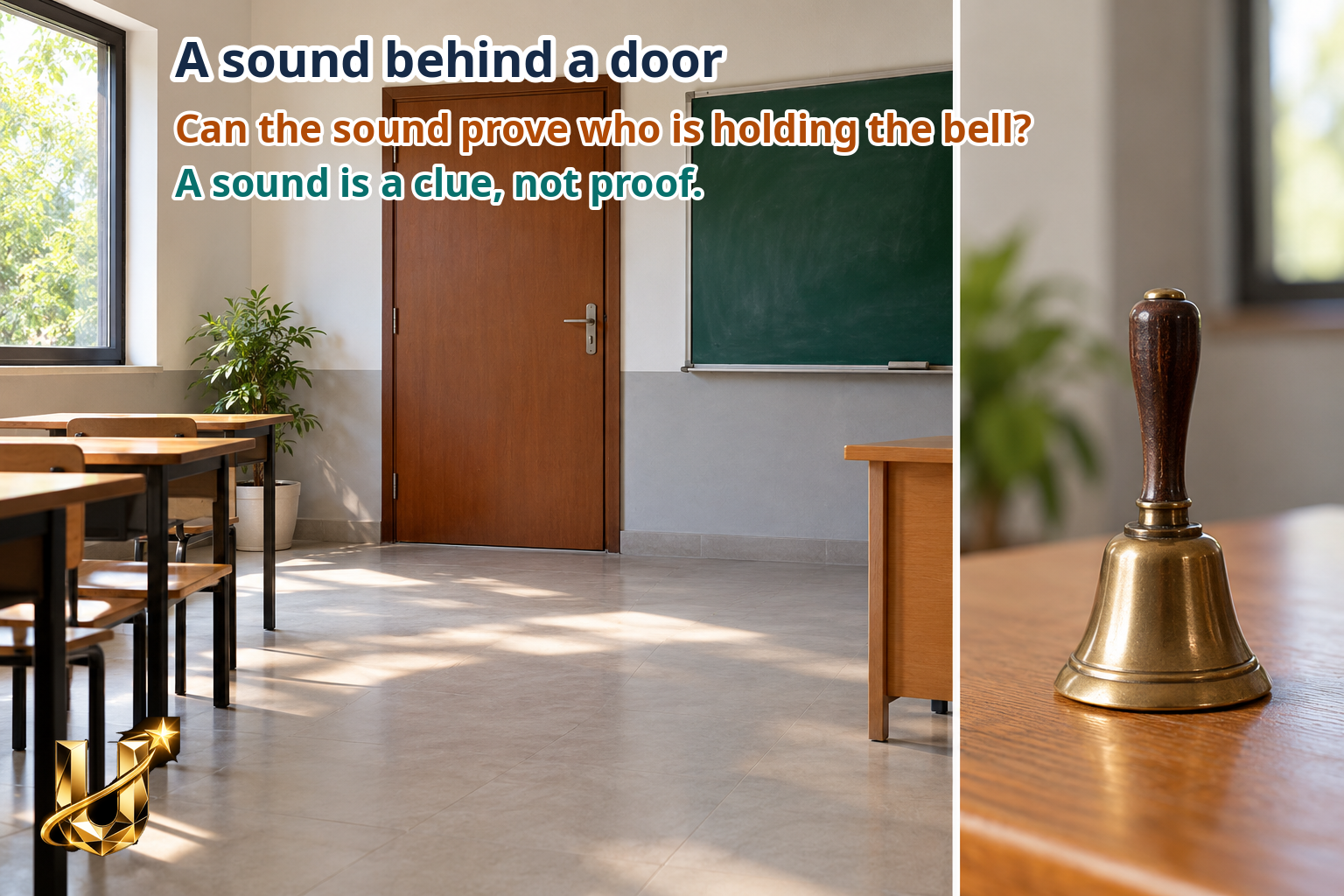
A sound behind a door
Open The Tinkling Bells in your student book with an adult. First use this reading explanation and application. The later original examples practise language separately. Separate original practice context: In our new Delhi classroom scene, Aisha hears a gentle tinkle behind a door. She thinks a small bell may be there. Can the sound prove exactly who is holding it?
Read the book: The Tinkling Bells
Chinna wants bells for his pet goat Tara but discovers his money is missing. Later a seller gives too much change. Kamala asks him to connect the seller’s possible loss with his own earlier sadness. Chinna returns the extra money, then buys the bells with the money his mother provides. Tinkling means making a light ringing sound; honest describes truthfulness and fairness in the choice.
Practise with the book
How does the earlier loss help explain the later decision?
- Chinna remembers being sad when his own money was missing.
- Kamala links that feeling to the seller’s mistake.
- Returning the excess change shows that he applies this understanding rather than merely describing it.
Words that suggest sounds
Tinkle suggests a light ringing sound. Buzz suggests a steady insect-like sound. Bang suggests a sudden loud sound. Such words help a reader imagine hearing a scene. Different sound sources may sound alike.
Example 1: Name the clue
Aisha hears a light ringing sound.
- The clue is the sound itself.
- The word tinkle describes it.
- Say: I hear a tinkle.
Separate clue from conclusion
A clue is information we notice. An inference is an idea drawn from clues. Hearing a tinkle may suggest a bell, but it does not prove a person's name or the bell's colour. Soft, softer, softest compare descriptions in these examples. A soft sound is the opposite of a loud sound. For long describing words, we may use more or most: more beautiful, most beautiful. Do not use more softer.
Example 2: Make a cautious inference