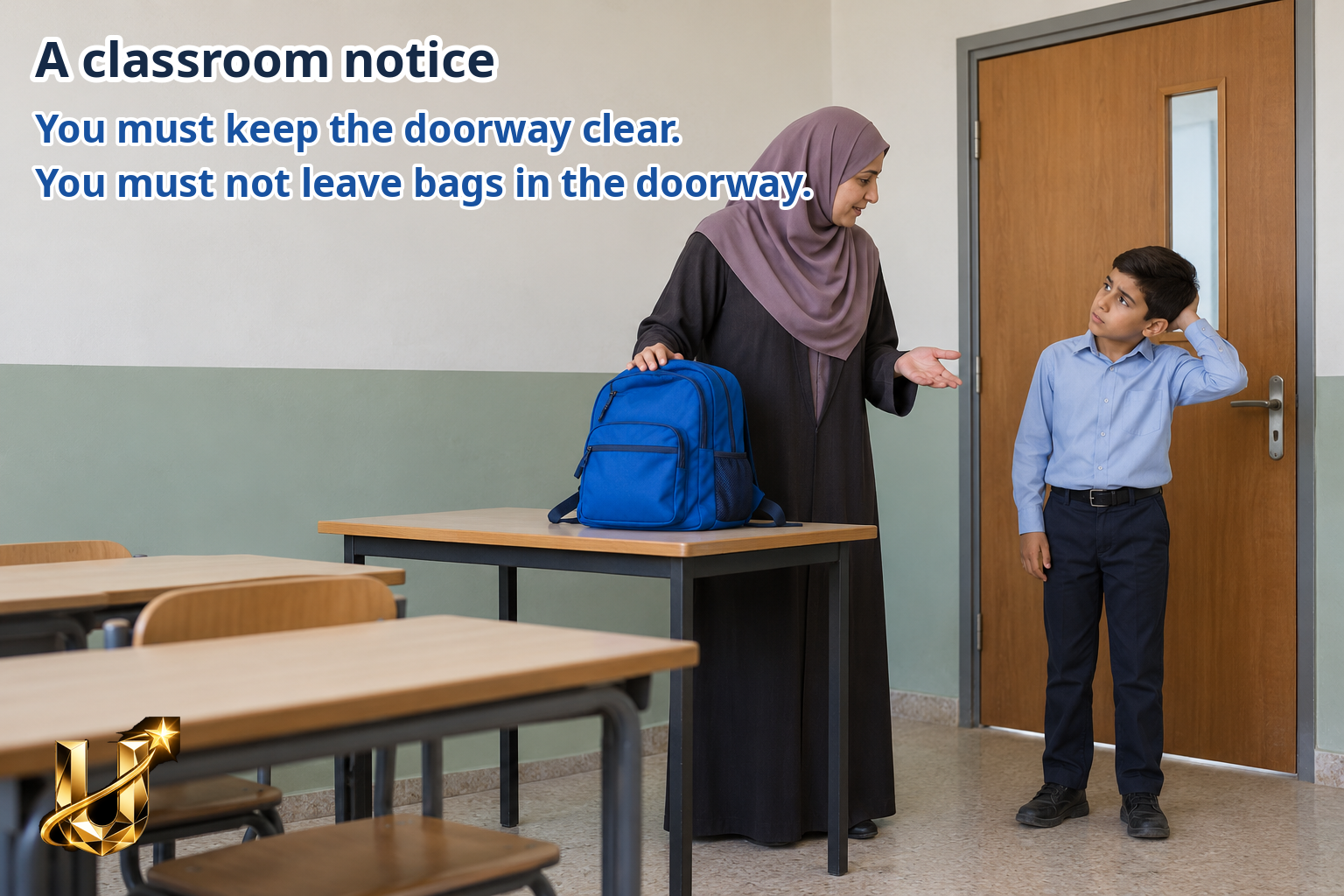
A classroom notice
Open Be Smart, Be Safe in your student book with an adult. First use this reading explanation and application. The later original examples practise language separately. Separate original practice context: An adult in a Pune school reads an invented rule: You must keep the doorway clear. You must not leave bags in the doorway. How do these two sentences express the same safety idea?
Read the book: Be Smart, Be Safe
The reading is presented as a letter from the traffic police to children. It explains pedestrian crossings, signals, footpaths, adult support, visibility and attention near roads. Pedestrian means a person travelling on foot; reflective material sends light back towards its source. The letter’s greeting, purpose and closing make instructions into direct communication with an audience.
Practise with the book
How do purpose and audience shape this letter?
- Its audience is children travelling near roads.
- Its purpose is to explain protective actions in clear language.
- The greeting addresses the audience, and the main section gives reasons and instructions rather than telling a fictional adventure.
Must tells a requirement
You must keep the doorway clear. Must is followed by the simple action word: must keep, must wait. It expresses a strong requirement in the rule being read.
Example 1: Find the required action
You must keep the doorway clear.
- Find must.
- Read the action after it: keep.
- State the required action clearly.
Must not tells a prohibition
You must not block the doorway. Must not, also written mustn't, tells what is prohibited. This language lesson uses invented classroom rules, not a complete road-law guide. Bags and doors are countable: one bag, two bags. Water and traffic are normally uncountable in these meanings: some water, heavy traffic. We can count named units, such as two bottles of water.
Example 2: Find the prohibited action
You must not leave bags in the doorway.