Describe, do not guess
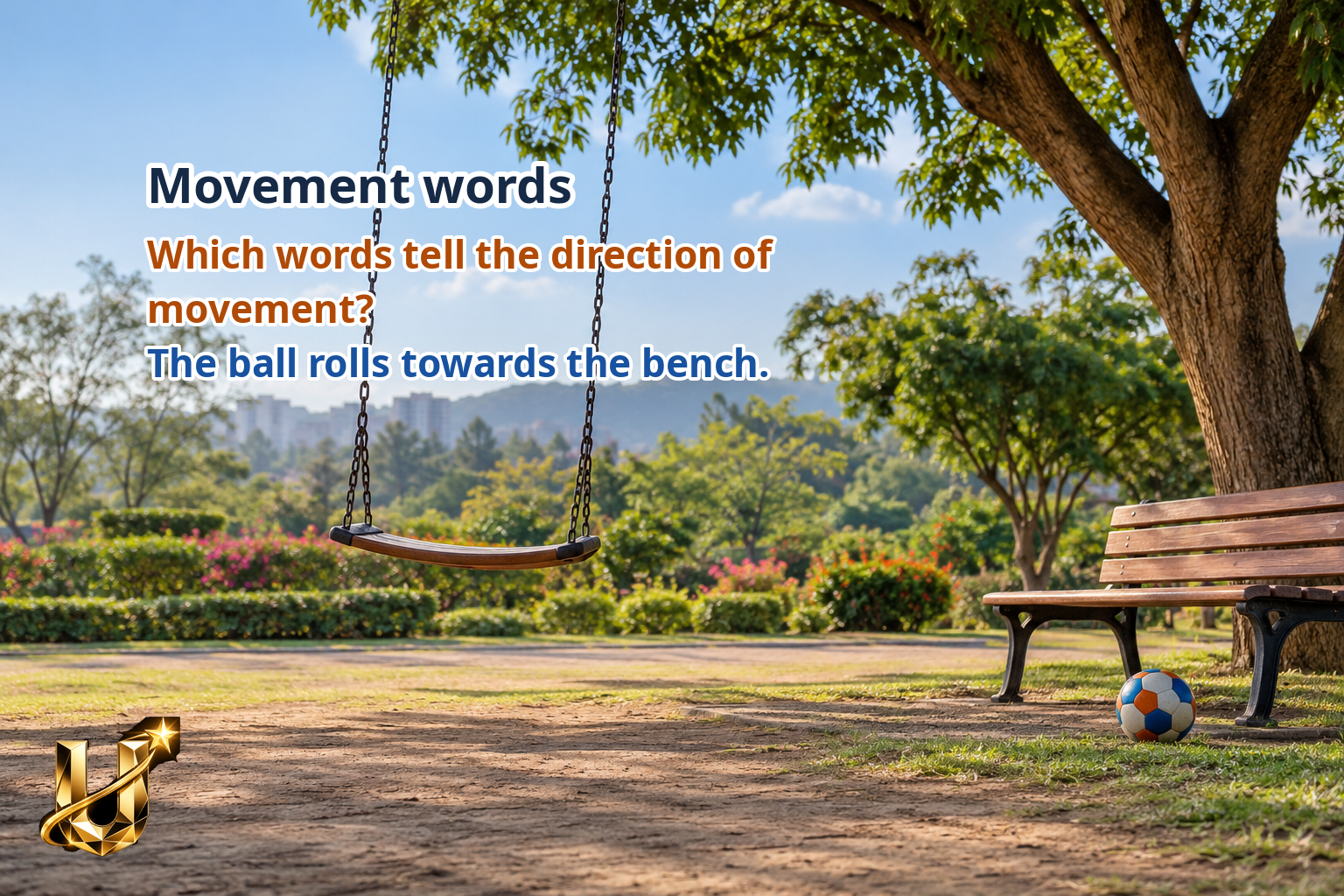
Open The Swing in your student book with an adult. First use this reading explanation and application. The later original examples practise language separately. Separate original practice context: In an original garden scene in Pune, a child watches an empty swing move gently. A ball rolls towards a bench. Which words tell the movement's direction?
Read the book: The Swing
Robert Louis Stevenson’s speaker enjoys rising and falling on a swing. At the high point, the view opens beyond a wall to rivers, trees, cattle and countryside; looking down returns attention to the garden and roof. Countryside means land away from towns; pleasantest means most enjoyable here. The repeated changes of height make movement felt through the view.
Practise with the book
How does the changing view support the poem’s movement?
- Rising allows the speaker to see beyond the wall.
- Looking down brings nearer objects into view.
- The alternating perspectives accompany the swing’s repeated up-and-down motion.
Name a direction
Up describes movement to a higher position. Down describes movement to a lower position. Towards means in the direction of something; away from means increasing distance from it. Name the reference object.
Example 1: Compare up and down
An adult moves a toy slowly higher, then lower.
- Higher: the toy moves up.
- Lower: the toy moves down.
- The words describe opposite directions.
Make a movement sentence
The ball rolls towards the bench. The ball rolls away from the bench. The subject and action can stay the same while the direction changes. Use the full phrase away from when naming the reference. Swing can be a naming word or an action word: The swing is empty; I swing gently. High and sky rhyme. In the word we, begin with the sound an adult models while rounding the lips; this is different from the letter name W.
Example 2: Use towards
A ball gets closer to a bench.