A new fantasy scene
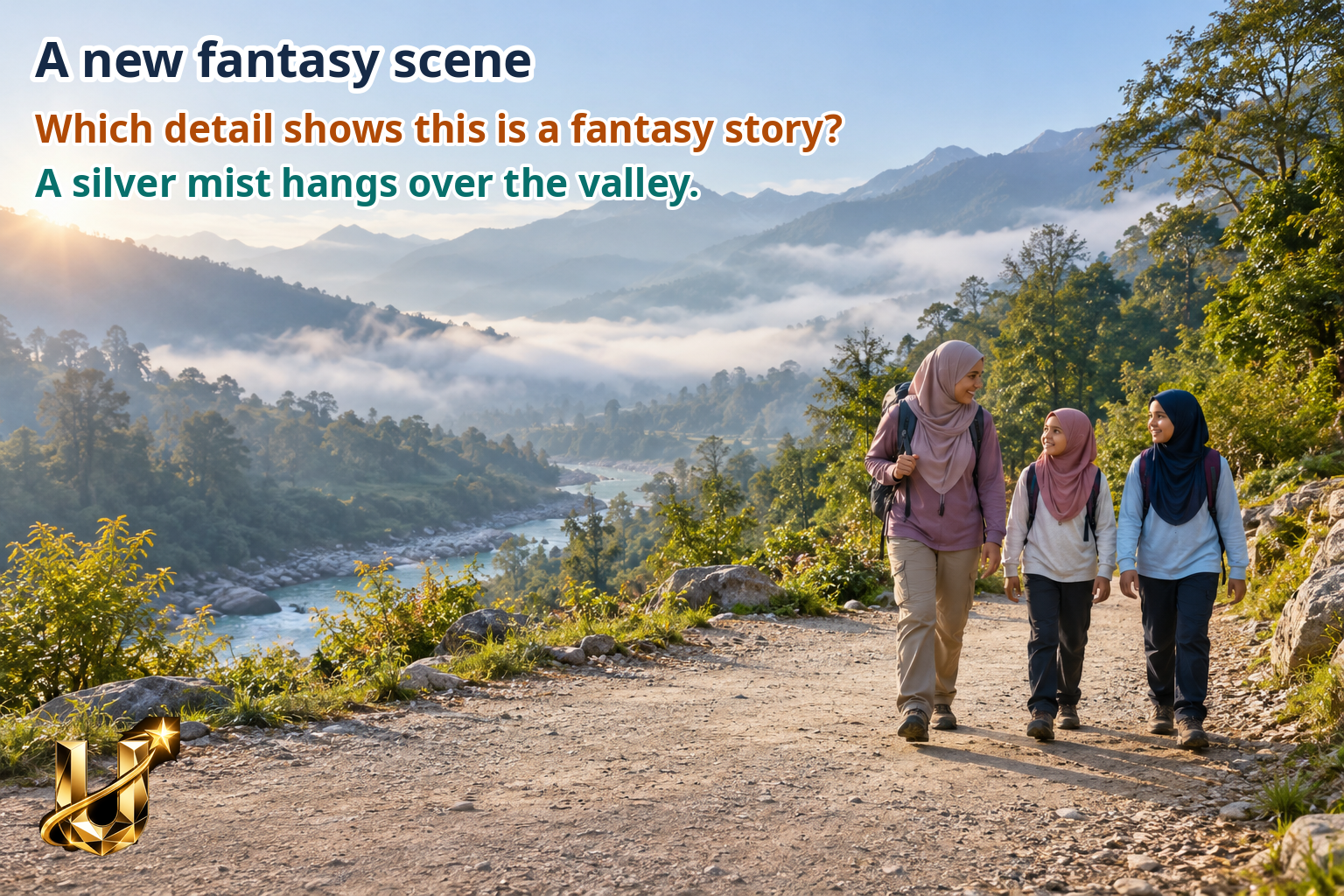
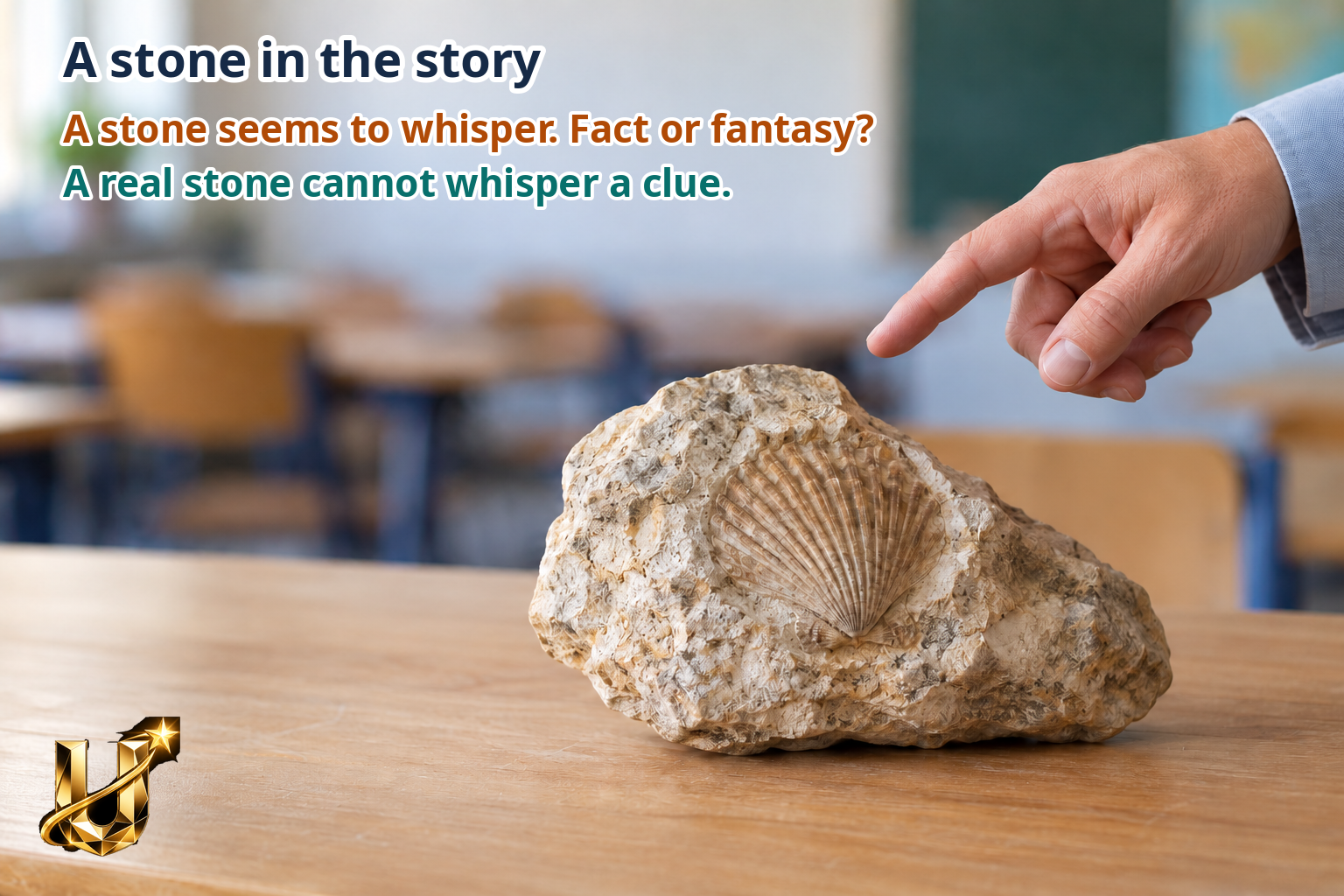
Open A Journey to the Magical Mountains in your student book with an adult. First use this reading explanation and application. The later original examples practise language separately. Separate original practice context: In our invented story, Aisha and Meera walk with a guide towards imaginary mountains. A silver mist hangs over a valley. A stone seems to whisper a clue. Which detail signals that this is a fantasy rather than a factual travel report?
Read the book: A Journey to the Magical Mountains
Minam walks into the Himalayas with her grandfather. They notice plants and birds, rest by a river, encounter yaks, play in snow and admire mountain peaks. The return includes music and mountain goats. Minam promises to respect and protect the mountains. Journey means travel from one place to another; mighty means powerful or impressive. Magical expresses wonder at nature in this reading, not the later invented whispering-stone scene.
Practise with the book
What connects Minam’s observations with her final promise?
- The walk gives her particular experiences of mountain life.
- Her grandfather asks her to respect what she has enjoyed.
- The promise connects appreciation with responsibility rather than treating the landscape only as entertainment.
Find the setting
Setting tells where and when a story happens. Our scene takes place in an imagined mountain valley early in the morning. Place and time help a reader picture the scene.
Example 1: Name where and when
The scene begins in a valley early in the morning.
- Where? An imagined mountain valley.
- When? Early morning.
- Together, these details establish the setting.
Add details with a purpose
A cool breeze describes touch. A soft rustle describes sound. Silver mist describes appearance. A whispering stone is a fantasy element, not a real scientific claim. Choose details that help the reader imagine one clear scene. Conjunctions join ideas: We rested because we were tired; We were tired, but we continued. Some body-part words also name parts of other things, as in the foot of a mountain or the mouth of a river. They are not literal human body parts there.