An instruction that is too vague
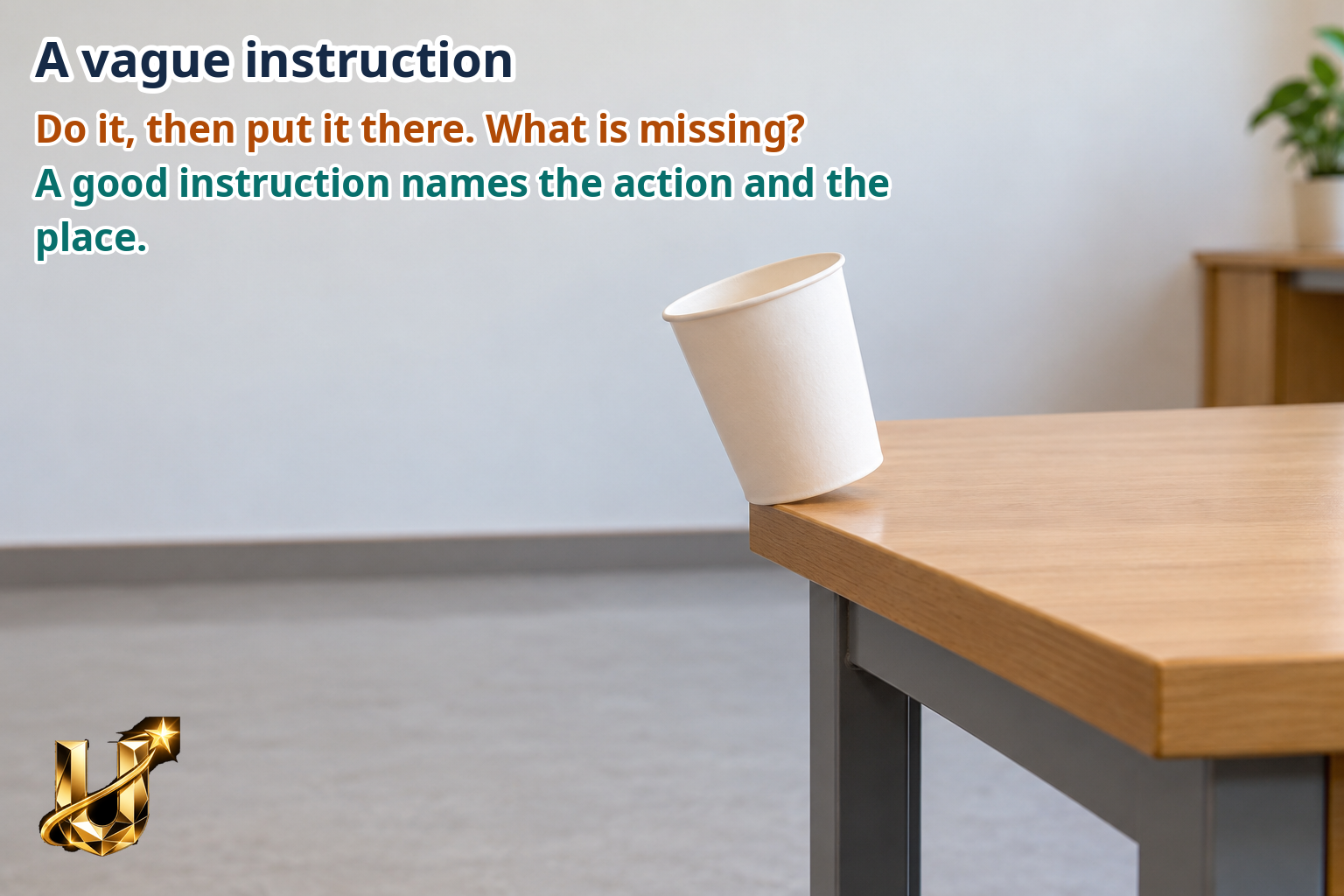
Open Gilli Danda in your student book with an adult. First use this reading explanation and application. The later original examples practise language separately. Separate original practice context: In an original classroom language activity in Jaipur, a learner says, Do it, then put it there. A listener cannot tell what to do. What information is missing? This is not a verified rule set for Gilli Danda.
Read the book: Gilli Danda
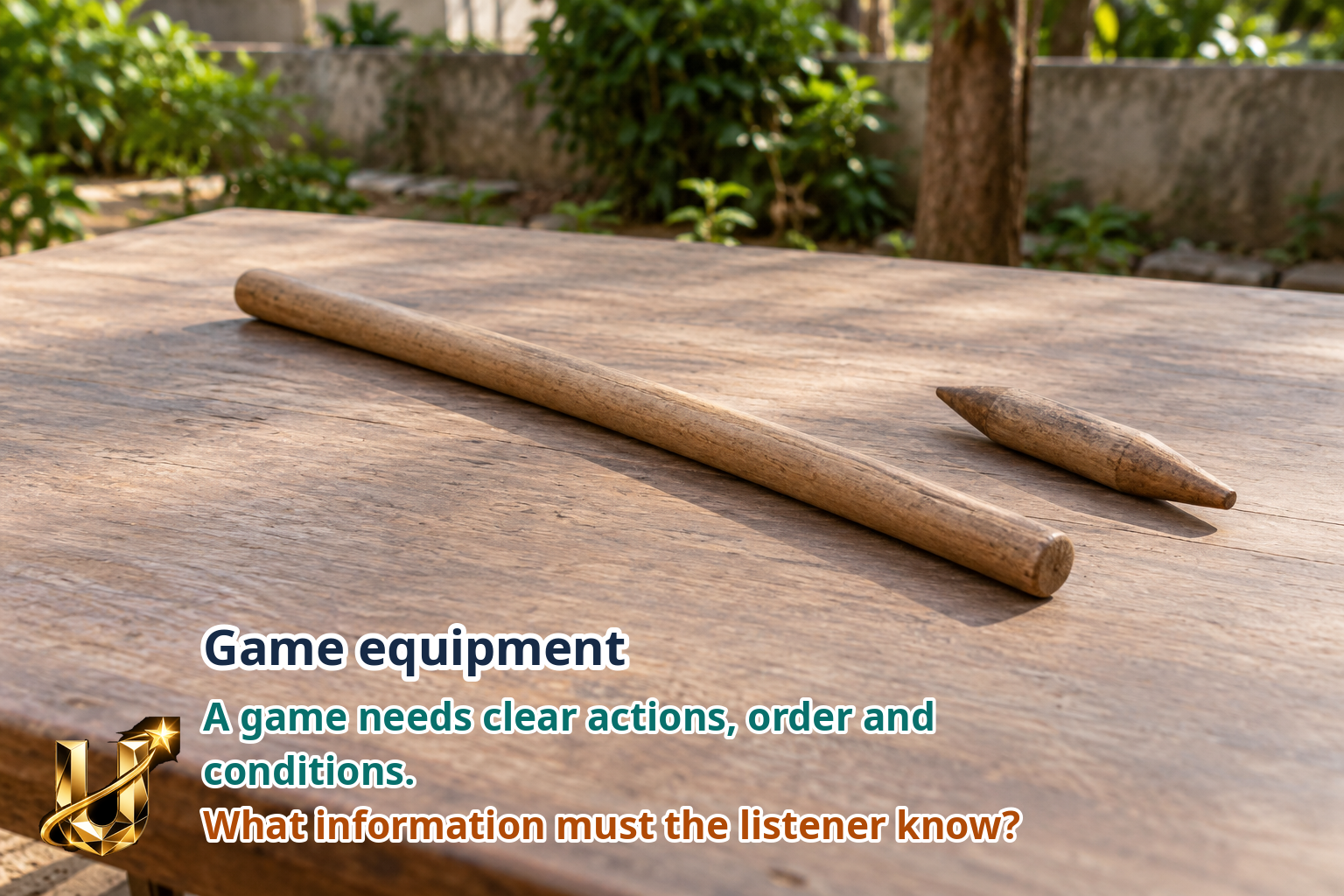
The poem presents friends gathering outdoors to enjoy a game with a small gilli and a longer stick. The struck gilli rises through the air, and the shared movement creates excitement. Gather means come together; quit means stop or give up. Repeated group words and action sounds give the verse its lively tone. It celebrates play rather than providing a complete rulebook.
Practise with the book
What details establish a shared outdoor scene?
- The friends gather in a playground.
- The flying gilli is described beneath the sky and sunlight.
- These details support an account of communal outdoor play, not a claim about every player’s exact rules.
Name the action and object
A clear instruction names what to do and what it affects: Place the paper marker beside the cup. Replace vague it and there when the listener does not know their references. Keep one main action per step.
Example 1: Replace a vague reference
Put it there.
- Name it: the paper marker.
- Name there: beside the cup.
- Say: Put the paper marker beside the cup.
Order and conditions
First and next arrange steps. If introduces a condition: If the marker falls, place it back on the paper. A condition tells when a particular instruction applies. Our marker activity is invented language practice. A prefix comes before a base: un plus fair makes unfair. A concrete noun names something perceived through the senses, such as a ball; an abstract noun names an idea or quality, such as fairness. This marker is mine uses a possessive pronoun. Happy and unhappy contrast in meaning. Happy, letter and summer have doubled consonant letters.