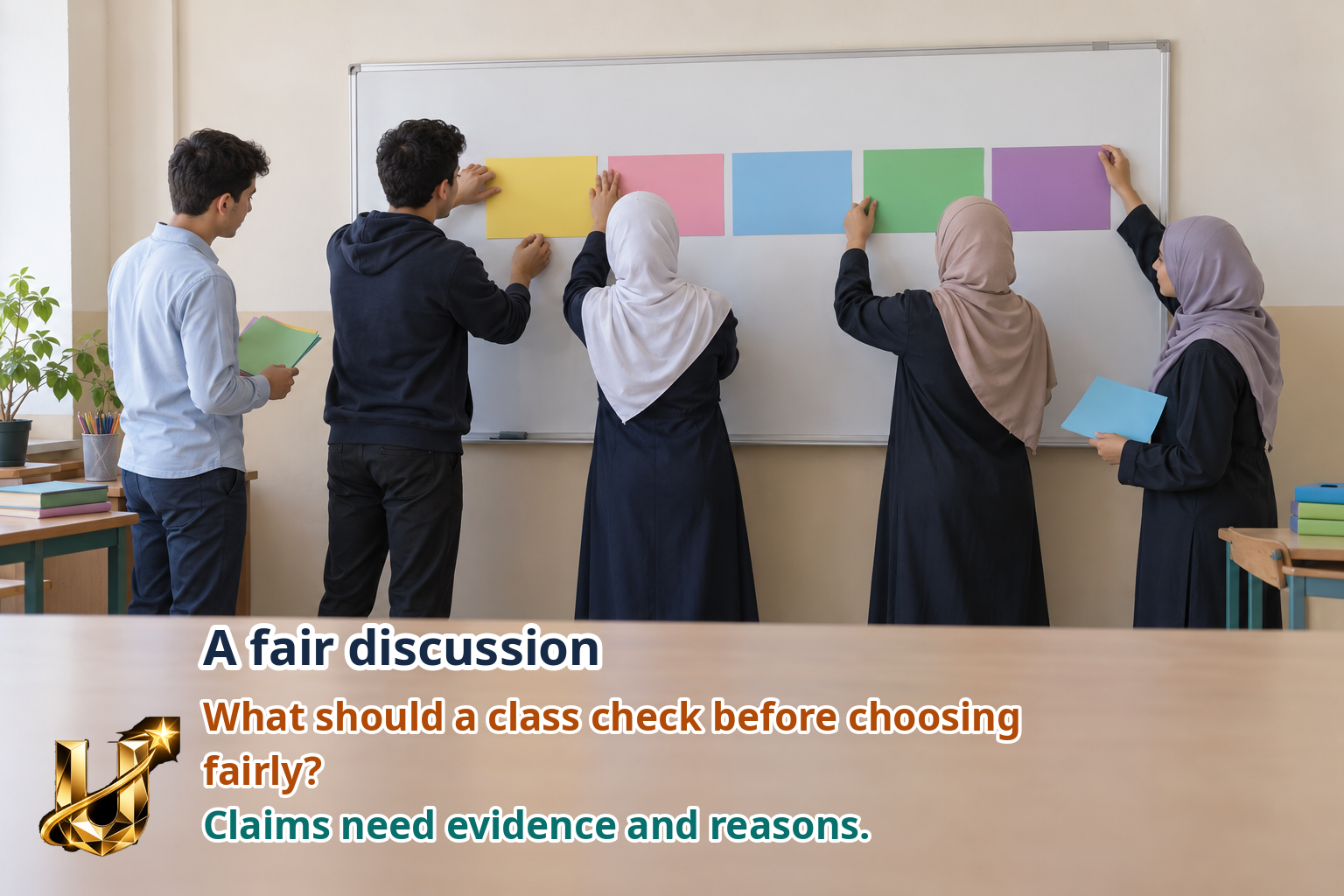
An invented class disagreement
Open The Decision of the Panchayat in your student book with an adult. First use this reading explanation and application. The later original examples practise language separately. Separate original practice context: Two groups in a Bhopal classroom want the same display space. One says it booked the space first; the other says its poster is ready now. What should a class discussion check before choosing a fair arrangement? This is not the textbook dispute or legal advice.
Read the book: The Decision of the Panchayat
A farmer buys a well to water his land. The seller then claims he sold the structure but kept its water. The village council turns this distinction back on him: water he claims to own cannot simply remain in another person’s well. The story ends with a penalty and apology. Adamant means refusing to change one’s position; cunning suggests cleverness used to deceive here.
Practise with the book
How does the judgement answer the seller’s own claim?
- The seller separates ownership of the well from ownership of its contents.
- The council follows that claim to its consequence for storing water in the buyer’s property.
- The tale exposes an attempted unfair advantage; it is not a statement of present-day water or property law.
Identify each claim
A claim is what someone states or argues. Separate the groups' claims before judging them. Being ready and booking first are different kinds of information. Ask what records or agreed rules are available.
Example 1: Separate the claims
One group says first booking; the other says ready poster.
- Restate each claim accurately.
- Do not merge them into one statement.
- Acknowledge both before checking evidence.
Connect a decision to evidence
A fair explanation names the relevant agreement and evidence: The class record gives Group A this time, so we will follow the agreed turn order. This is an invented classroom example. Do not assume local legal procedures from it. Prepositions locate things: beside the board, under the notice. First, next and finally can order events. An informal letter can include a date, greeting, clear message, closing and name. A story continuation must be identified as your own possible ending.