An original neighbourhood note
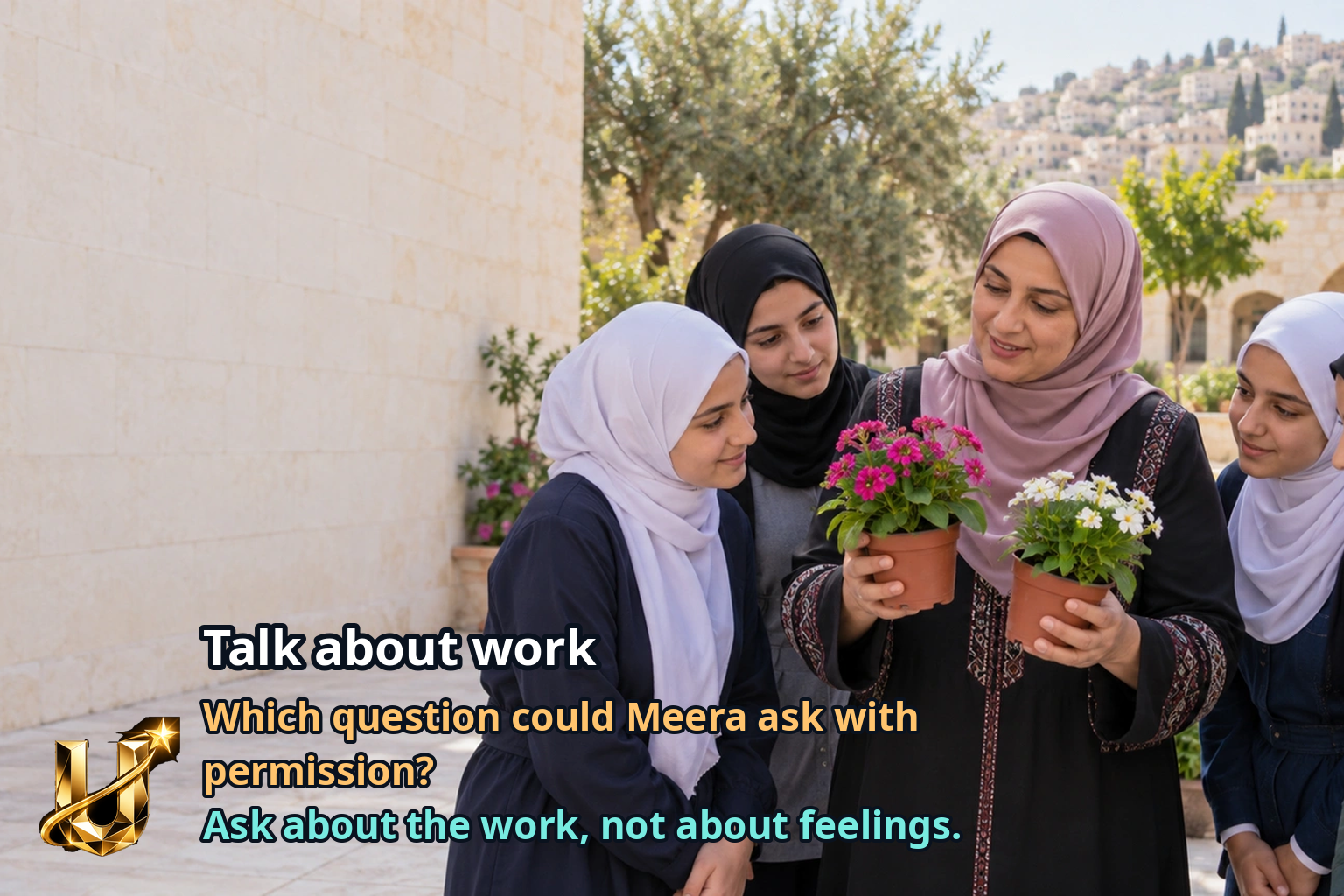
Open Vocation in your student book with an adult. First use this reading explanation and application. The later original examples practise language separately. Separate original practice context: On an imagined walk in Lucknow, Meera notices a gardener tending plants and a shopkeeper arranging goods. She wants to learn about their work without guessing their feelings. Which question could she ask with permission?
Read the book: Vocation
Rabindranath Tagore’s child speaker sees a hawker on the way to school, a gardener after school and a watchman near bedtime. Each appears free from a restriction the child feels. A hawker sells goods while moving about; a spade is a digging tool; a lantern is a portable light. The wishes reveal the child’s viewpoint, not complete knowledge of the workers’ obligations.
Practise with the book
Why should the claim that the watchman never goes to bed be read cautiously?
- The child sees him working when the child must sleep.
- That observation does not cover the watchman’s whole day.
- The exaggerated impression expresses a wish for freedom rather than a reliable full work schedule.
Name work and actions
A gardener tends plants. A shopkeeper sells or arranges goods. Job names and action words help describe work. A person's job does not tell us their whole life, wishes or feelings.
Example 1: Describe an observed action
A gardener waters a plant in the practice note.
- Name the person by the stated role.
- Name the observed action.
- Say: The gardener is watering a plant.
Ask open questions
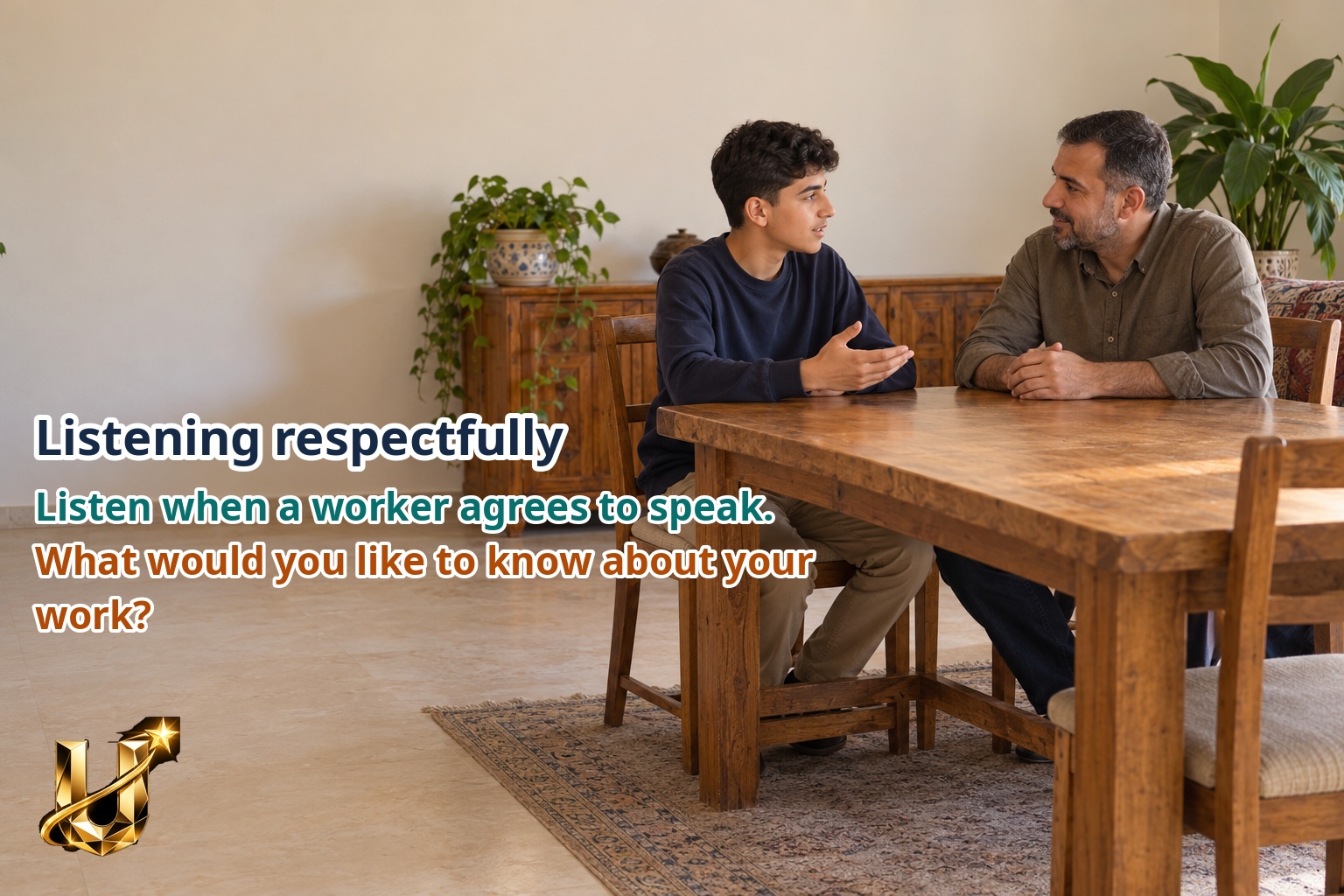
What do you do during your workday? invites a description. Which task do you enjoy? asks about preference. A respectful interviewer asks permission and accepts a refusal. Do not invent an answer on the worker's behalf. Who asks about a person, what about a thing or action, where about a place, when about a time, why about a reason and how about manner. Correct an error by checking the whole pattern: She work becomes She works. Work roles should not be restricted by gender.