Starting sounds or ending sounds?
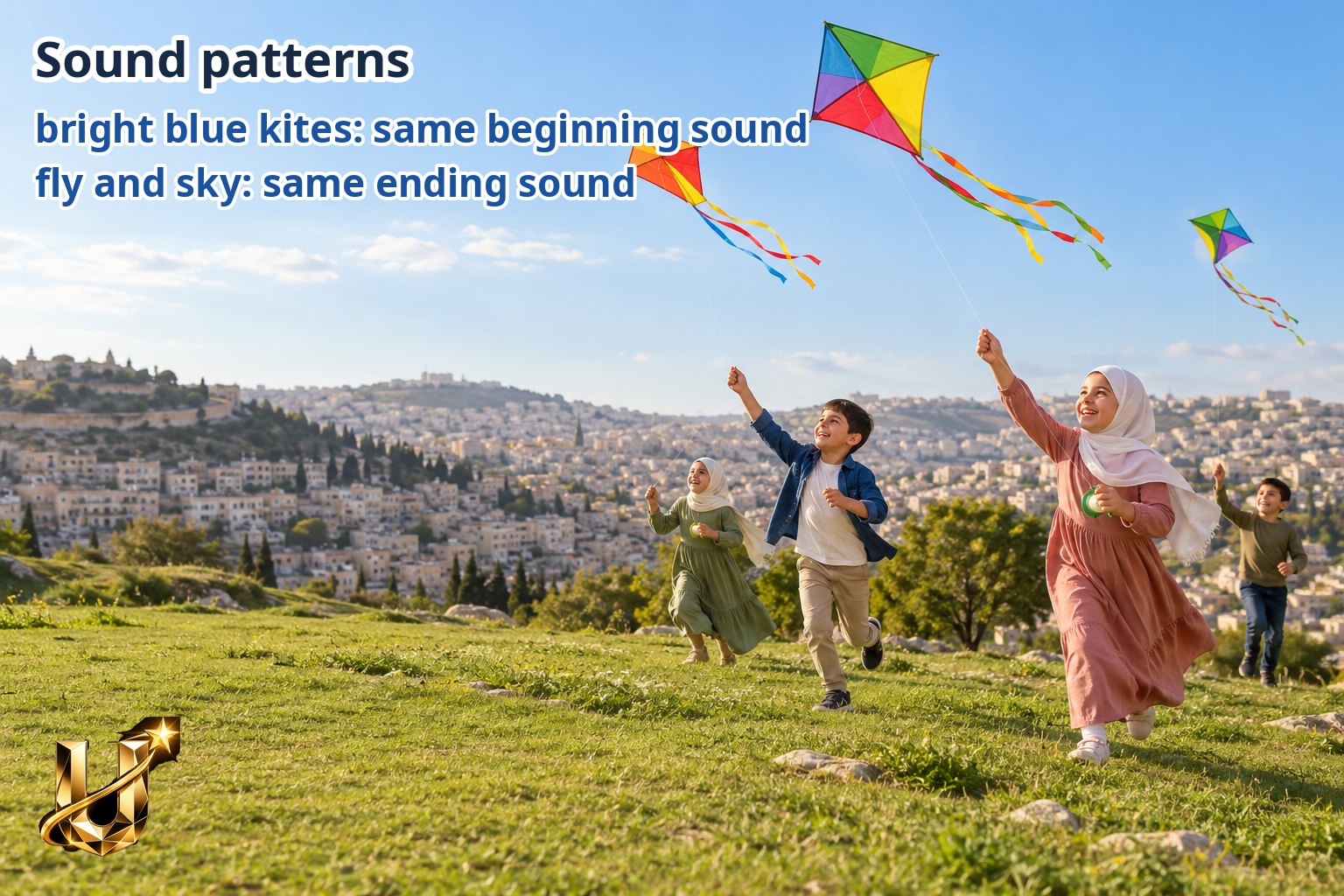
Open The Kites in your student book with an adult. First use this reading explanation and application. The later original examples practise language separately. Separate original practice context: An original phrase says bright blue kites. Another pair is fly and sky. Which pattern repeats a beginning sound, and which repeats an ending sound?
Read the book: The Kites
Daphne Lister's speaker imagines riding a kite above the town. Comparisons with birds and singing wind create freedom and wonder. Drift means move gently. This is an imagined viewpoint, not practical travel.
Practise with the book
What changes in the imagined view?
- The speaker looks down over familiar rooftops.
- Height makes an ordinary place seem different.
Alliteration repeats beginnings
Alliteration repeats an initial sound in nearby words: bright blue repeats the b sound. It is about sound, not simply identical spelling. Kite and cloud begin with the same k sound although their first letters differ.
Example 1: Identify the beginning pattern
Bright blue.
- Say both words naturally.
- Both begin with the b sound.
- Name the repeated beginning as alliteration.
Rhyme repeats endings
Fly and sky have matching ending sounds. This is rhyme rather than initial alliteration. A writer may use both patterns for emphasis or musical effect. Explain the actual sounds instead of naming a device without evidence. A simile compares using like or as: The kite drifts like a leaf. Drift suggests gentle movement. A cinquain has five lines; different versions follow different word or syllable patterns, so state the pattern you choose.
Example 2: Identify the ending pattern
Fly and sky.
- Compare their endings.
- The ending sounds match.
- Call this rhyme.